
















In a visit to India in January, U.S. President Barack Obama said women everywhere should be able to “walk the street or ride the bus and be safe.” They should be “treated with respect,” he said. Yet less than two months before that visit, a 26-year-old woman from Delhi said she was raped by a taxi driver for Uber, a Web-based taxi firm that allows passengers to book rides using a phone app.

Twenty-five years of breathing in dust has led Mireille Mbale to drink milk when she can afford it; it is what she believes will guard her against lung disease. She makes less than $5 a day. Years of the eastern Democratic Republic of Congo’s brash sun have dried her exposed skin.

While the news cycle in January was dominated by reports on Japanese hostages held by the militant group Islamic State and the Paris attacks on the offices of the satirical newspaper Charlie Hebdo, some stories didn’t receive as much attention.

The conflict in eastern Ukraine, now in its 10th month, has taken a heavy toll on the country’s population. Wide-ranging violations of international humanitarian law have been documented on both sides of the conflict, following clashes between Russian-backed rebels and the Ukrainian government forces in the eastern regions of the country.
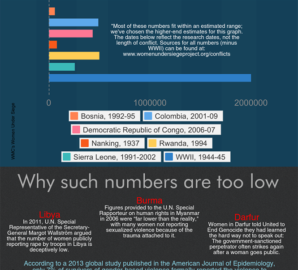
We know there’s a problem but we don’t know how big it is. That’s what governments, scholars, and others argue when trying to figure out how to allot funds toward this problem of sexualized violence in conflict. If we don’t know the numbers, they ask, how can we help properly? How can we mount prosecutions? Offer reparations? Put in place proper advocacy? So the thinking goes.
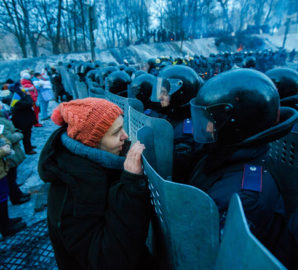
Thirty-year-old Anna Guz was held by pro-Russian rebels for six days in May. (Guz is not her real name; she asked to be identified by a pseudonym for safety reasons.) Men in military uniforms abducted the pro-Ukrainian activist, along with her boyfriend, from her Donetsk apartment in the middle of the night.

With the 16 Days of Activism Against Gender Violence starting tomorrow, November 25, I thought I’d share some of my favorite recent reads on gender-based violence, whether close to home or far afield.
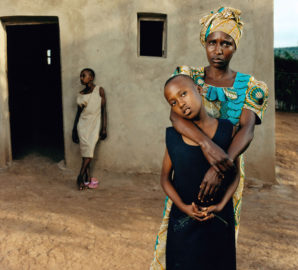
Countless women and girls have been raped to death, held as sexual slaves, gang raped, and subjected to sexual mutilation in conflicts during the last century—in the Rwandan genocide, the Nanking massacre, the war in the former Yugoslavia, Sierra Leone’s civil war, and Burma’s long-running armed conflict, to name a few.

On May 28, 2014, most Indian newspapers ran front-page stories about two teenage girls, cousins, who had been hanged in the Indian state of Uttar Pradesh after being allegedly gang-raped. Some papers also printed the disturbing image of the girls’ bodies hanging from a mango tree in their village. The public display of the young girls, wearing blood-stained clothes and riddled with thorns, caught India’s attention.

Just like any other population caught up in a war zone, people with disabilities suffer displacement, injury, and trauma. About 6.5 million of the 43.51 million people who have been displaced due to conflict live with a disability. Yet in conflict, when the social fabric is vulnerable and resources are limited, people with disabilities face increased violence while their protection needs often go ignored.

Irom Sharmila, 42, has long advocated for the repeal of India’s Armed Forces (Special Powers) Act, or AFSPA, which gives the Indian army legal immunity for various brutal actions. She has been arrested again and again since starting a hunger strike in November 2000. “I have spent 14 years of my life chewing my tongue just for violence on all sides to end,” she has said.
A young woman seems to have attached herself to me one day at Zaatari, a refugee camp holding at least 120,000 Syrians in the middle of the Jordanian desert. Her name is Abeer and she is the less obviously beautiful, older sister to a 16-year-old girl who has been married off to a much-older Libyan food distributor. He gave the girl a watch, perfume, and water when they met.

A study by Physicians for Human Rights published today in the peer-reviewed online publication PLOS One has found that the pattern of sexual assault perpetrated during the period following the contested 2007 presidential elections in Kenya is consistent with the patterns of mass rape documented in conflict settings elsewhere.

Indoor air pollution might not be a problem for you and me, but it is a deadly issue for roughly 3 billion people in the world. According to the WHO, household air pollution killed 4.3 million people in 2012. That accounts for nearly 8 percent of global deaths that year.


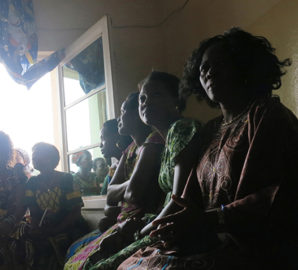
A woman sits, microphone in hand, behind a billowing, black curtain—further obscured by a black veil that hides her face, her body, and even her hands—as she finds the courage to recount her rape by government soldiers in Minova, Democratic Republic of Congo.