
















Women, mostly, are not encouraged in society to share their opinion. In 2012, the Columbia Journalism Review published an article in which they revealed that women only wrote 20 percent of op-eds in the nation’s leading newspapers.

Four hundred people gathered last night at the 2019 WMC Women’s Media Awards at the Mandarin Oriental in New York City to honor a variety of women whose work embodies the WMC mission of making women visible and powerful in media.
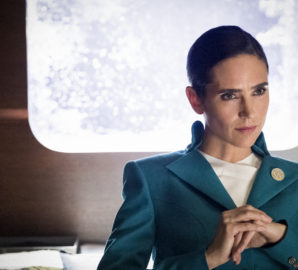
Showcases at New York Comic Con, an annual event for pop culture fans, indicate that the future is getting brighter for on-camera female representation in superhero/sci-fi films and TV. Behind the camera, progress has been much slower.
Although we may always question whether or not we will be reprimanded for publishing a certain story, female journalists must continue to make ourselves and those around us aware of the issues self-censorship creates in the long run.

Even though Latinos are 18.3 percent of the U.S. population, research has found that only 4.5 percent of all speaking characters in top films are Latino — a number that has changed little over the years.

Last week, the nonprofit organization Sandy Hook Promise released a graphic back-to-school PSA entitled “Back To School Essentials.”

In early September, the news broke that Adele Lim, a screenwriter for the 2018 movie Crazy Rich Asians, was no longer involved with writing the next two sequels in the franchise. Why? Lim reportedly learned that while her white, male co-writer was offered between $800,000 to $1 million for this work, she was offered significantly less — around $110,000.

Since the start of the MeToo movement, journalists have played a key role in holding perpetrators accountable for the sexual violence they allegedly committed. Unfortunately, instead of challenging society's instinct to protect powerful men, some reporters covering #MeToo have reproduced this bias.

Gen Z makes light of things like hypothetical WWIII drafts, climate change, and the forthcoming political apocalypse because dark humor is their response to being born into a world seemingly already on fire is to laugh at the flames.

In the recently published book There’s No Crying in Newsrooms, award-winning journalism scholars Kristin Grady Gilger and Julia Wallace investigate how gender has shaped the experiences of female journalists.

Each week, Houston-based activist Diamond Stylz and her rotating cast of co-hosts serve up candid conversations about topics ranging from gender reveal parties to the latest installment of the television show Pose from a black, trans, and feminist perspective.

Wry, humorous, and dark, Pity Boy captures the inner turmoil of being an LGBTQ+ adult trying to navigate relationships with family, friends, and partners; the songs on this album explore self-destructive habits, and self-doubt, that emerge from this exploration.
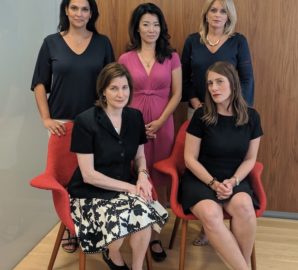
Separate lawsuits against Charter Communications allege that the company’s Spectrum News NY1 cable channel discriminates against female reporters and anchors who are over the age of 40. The case sheds light on treatment of older women in the field of television news.
There is still too much focus on men's fears of false accusations and not enough on the serious effects of sexual harassment and assault.

In the increasingly competitive world of YouTube, few women are among the top earners — and the problem seems to be getting worse.

Her adaptation of the film — the eighth — will not only highlight the feminist understones already present in the novel, but also examine the text with a modern eye, drawing on society’s increased sensitivity to gender fluidity.
Many assumed the famously red-headed Ariel would remain as such in the live action version, and Halle Bailey clearly does not fit that image. Shortly after Bailey was cast, #NotMyAriel started trending on Twitter.
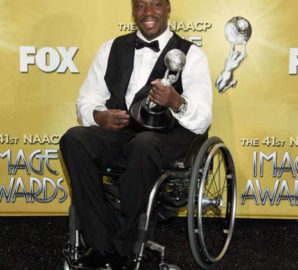
There is still a considerable disparity between the experiences of people with disabilities and the representation of them in the entertainment industry. CBS recognizes this and is one of the first major networks to commit to taking action to change it.

In an excerpt from Sarah Barnett’s interview on “Women’s Media Center Live With Robin Morgan,” which aired June 9 and is available by podcast at wmclive.com and other podcast platforms, Barnett talks about her work promoting women on screen and in TV’s executive suites.

This film takes place in 2006, at the height of over-surveillance of Arab and Muslim communities in a post 9/11 United States and gives viewers a much-needed view into the inner life of a Muslim American teen girl.

I found that story after story included images of survivors of sexual violence that were gory and denigrating. They often depicted survivors in shredded clothes, fear-stricken eyes, and arms outstretched in appeal.

DuVernay’s artful depiction of Linda Fairstein — prosecutor and head of the sex crimes unit of the Manhattan District Attorney’s office at the time of the Central Park Five case — exposes the process through which white women’s pain can be used as a pawn for white patriarchy.

Before Stonewall, lesbians were all but invisible in media. Fifty years of activism and advocacy have made a remarkable impact.

Now that season 3 has premiered (it came out on June 5), it’s worth asking: Is it fair to characterize these depictions of violence against women in season 2 as “torture porn” and dismiss watching this season or any future seasons, or did those depictions have value?
- All Categories
- Arts and culture
- Body image and body standards
- Disability
- Economy
- Education
- Environment
- Feminism
- Free Speech
- Gender-based violence
- Girls
- Gloria Steinem
- Health
- Immigration
- International
- Jane Fonda
- LGBTQIA
- Media
- Misogyny
- Online harassment
- Politics
- Race/Ethnicity
- Religion
- Robin Morgan
- Science and tech
- Sports
- Violence against women
- WMC Loreen Arbus Journalism Program