















Many in media distort the framing of #MeToo
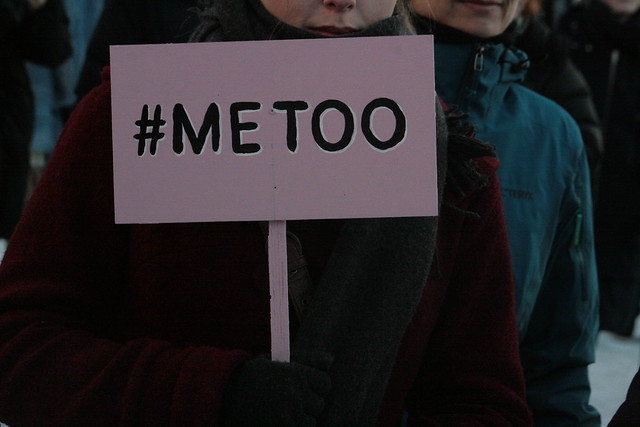
Since the #MeToo movement took over Twitter in 2017, 11 years after Tarana Burke founded it in 2006, some people have been clamoring for the backlash or the event that would allow them to claim #MeToo had gone too far. Along with stories in the media that show just how pervasive sexual assault and harassment is, there has also been a consistent focus on how women telling their stories of sexual assault affects men. One pervasive story is that male managers are now scared to mentor women. A recent poll by Leanin.org found that 60% of male managers don’t want to mentor women out of fear of a false accusation in the current climate. Despite the framing of this story, male managers refusing to mentor women started long before #MeToo. Furthermore, fears of false accusation aren’t supported by statistics. Our media must stop supporting the narrative that #MeToo is bad for women’s careers because men are scared.
In 2013, Sheryl Sandberg published her book Lean In, in which she cited male managers not working with women as a major reason women have trouble advancing in the workplace. Her claim was supported by a 2010 study that found that two-thirds of men are reluctant to work one on one with junior women employees out of fear of the appearance of an affair. The practice of not being alone with a woman who isn’t your wife dates back to 1948, when it was dubbed the “Billy Graham rule.” The evangelist adopted the practice as a way to avoid sexual temptation, accusations of sexual harassment, or even the appearance of doing anything inappropriate. Far from upholding any kind of moral integrity, this practice sexualizes all women in workplace environments, harms women’s careers, implies men and women alone are always suspicious, and conflates concerns of affairs with sexual harassment (not to mention supports extreme heteronormativity). In 2017, when Mike Pence’s 2002 statement that he subscribes to this rule by never dining alone with a woman who isn’t his wife was publicized, employment lawyer Joanna Grossman pointed out that is probably illegal under Title VII when applied to working dinners. Unfortunately, this ridiculous belief just continues to persist, with two Mississippi gubernatorial candidates recently saying they followed the Billy Graham rule — one of whom refused an interview with a female journalist.
These examples make it clear men didn’t need the #MeToo movement as an excuse not to work with women. The Billy Graham rule is 70 years old, and Lean In mentioned the issue four years before #MeToo took hold publicly. Men facing a bit of accountability for sexual harassment in the workplace is just the latest excuse to refuse to mentor women.
Despite this history, it took only a few months for stories to be written accusing #MeToo of changing the workplace dynamic by scaring men away from working with women. The Chicago Tribune ran a piece entitled “#MeToo has a 'chilling effect' on workplace camaraderie” three months after the hashtag went viral on Twitter. The article cites men who say they are aware that refusing to travel with female coworkers could be seen as discrimination, but they do it anyway because of the current climate.
A year after the hashtag went viral the narrative was relatively the same, with concern about the negative backlash caused by women (and men) speaking up about workplace sexual harassment. An article published in USA Today in October 2018 focused on the difficulty for men to know how to interact with women, with many citing confusion. The article quotes the president and CEO of the Society for Human Resource Management, Johnny C. Taylor Jr., as bemoaning the difficulty in creating a national standard because regional norms vary so much. A huge problem with this excuse is that it would be easy enough to create a general national standard and allow individual locations to adjudicate more specifically. Additionally, it implies that women are acting hysterical and complaining about normal interactions instead of trusting that if a woman speaks up about discomfort, there’s probably a reason. Taylor says that Southerners often use terms like “honey,” “sugar,” and “sweetheart,” without interrogating those terms for the implied sexism of referring to female coworkers in such a way. Various articles written on this subject continue to report men’s unwillingness to hire women as a reasonable response to the current climate, rather than consistently describing such practices as discrimination.
There has been a recent uptick in these articles after the Leanin.org survey. The common framing of this survey was that it’s understandable for men to be uncomfortable or scared working with women. There has been little media pushback framing the issue as men acting in a discriminatory manner because they refuse to learn better workplace standards.
The fear of false allegations is a dominating issue for men. A survey released by the Hollywood Reporter in January found that false accusations of sexual harassment was the number one gender issue men were concerned about, rated higher than actual harassment or equal pay. Covering this survey for Forbes, Kim Elsesser acknowledged that false accusations were rare but was understanding of the men’s concerns.
While we don’t have clear statistics on how common false allegations of workplace sexual harassment are, we do have statistics about sexual assault. About 20% of women are raped by a man in their lifetime, between 2-6% of accusations of rape are false out of the only about 23% of rapes that are reported to police. Additionally, one out of every six men experience some sort of sexual violence in their lives, and one of every 71 men have been raped. Furthermore 93% of sexual abusers of men are men. What these statistics mean is that not only are women significantly more likely to be sexually assaulted than they are to falsely accuse a man, but men are also significantly more likely to be sexually assaulted by another man than be falsely accused. However, the fear we hear about most from men (at least in the media) concerning sexual assault is that they might be falsely accused, and this fear is treated as a valid reason to refuse to work with women. I highly doubt if a woman refused to work with men her fears would be treated the same.
In fact, rather than women being supported for fearing harassment, or even reporting harassment, women’s careers are more commonly hurt when they experience sexual harassment at work. Not only can women be badmouthed and pushed out of industries for reporting sexual harassment, simply choosing fields with less sexual harassment can mean they’re paid less. Joni Hersch, an economist and professor of law and economics at Vanderbilt University, published a study on women’s pay and sexual harassment in 2011. She found that women employed in workplaces where sexual harassment is common earn a bit more than those in jobs with a lower risk. Alternatively, Elise Gould, senior economist at the Economic Policy Institute, makes the argument that women not willing to put up with harassment are being pushed out into lower-paying jobs.
Women who experience sexual harassment at work are 6.5 times more likely to leave their jobs compared with women who don't, according to research by Amy Blackstone, Christopher Uggen, and Heather McLaughlin. Blackstone also said that when these women leave their jobs they often end up in less lucrative fields or positions, which has a negative economic effect on women throughout the rest of their careers.
Since #MeToo went viral almost two years ago, many in the media haven’t been doing their job. While we have had a number of important pieces on sexual assault and workplace harassment, we have also seen article after article about the backlash the movement created or scapegoating a few high-profile men as abusers. We need the media to stop validating the unwarranted fears of men and start supporting the need for a serious examination of the way workplace sexual harassment works.
More articles by Category: Media
More articles by Tag: Sexual harassment, #MeToo


