















Following the end of the #16Days of Activism Against Gender-Based Violence Campaign, WMC’s Women Under Siege has gathered some of the best tweets out there in the hope that this action, this dialogue, this advocacy doesn’t stop here. We can do more. We must.

With the 16 Days of Activism Against Gender Violence starting tomorrow, November 25, I thought I’d share some of my favorite recent reads on gender-based violence, whether close to home or far afield.
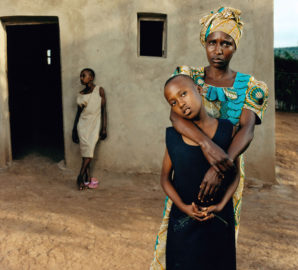
Countless women and girls have been raped to death, held as sexual slaves, gang raped, and subjected to sexual mutilation in conflicts during the last century—in the Rwandan genocide, the Nanking massacre, the war in the former Yugoslavia, Sierra Leone’s civil war, and Burma’s long-running armed conflict, to name a few.

Bimbatta Niamey, a poised and soft-spoken woman from West Africa’s Burkina Faso, was suddenly stripped of all her stability and left to rebuild her life alone in December 2012, when her husband died of liver complications. The family of her husband, who was a chauffeur, immediately withdrew her entire savings while she cared for him.

Her father helped her escape. He knew if she stayed in Ivory Coast, she’d be married against her will as a teenager, her genitals ritualistically cut, raped by her husband, and forced to bear his children. Her life as she knew it would end. She left for New York, where her father thought she would be safe. Now the U.S. immigration system wants to send her back. She is 16 years old.

On May 28, 2014, most Indian newspapers ran front-page stories about two teenage girls, cousins, who had been hanged in the Indian state of Uttar Pradesh after being allegedly gang-raped. Some papers also printed the disturbing image of the girls’ bodies hanging from a mango tree in their village. The public display of the young girls, wearing blood-stained clothes and riddled with thorns, caught India’s attention.

Just like any other population caught up in a war zone, people with disabilities suffer displacement, injury, and trauma. About 6.5 million of the 43.51 million people who have been displaced due to conflict live with a disability. Yet in conflict, when the social fabric is vulnerable and resources are limited, people with disabilities face increased violence while their protection needs often go ignored.

Irom Sharmila, 42, has long advocated for the repeal of India’s Armed Forces (Special Powers) Act, or AFSPA, which gives the Indian army legal immunity for various brutal actions. She has been arrested again and again since starting a hunger strike in November 2000. “I have spent 14 years of my life chewing my tongue just for violence on all sides to end,” she has said.
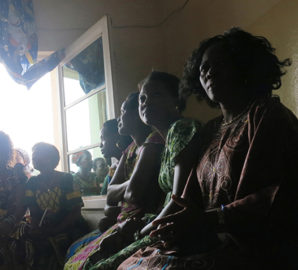
A young woman seems to have attached herself to me one day at Zaatari, a refugee camp holding at least 120,000 Syrians in the middle of the Jordanian desert. Her name is Abeer and she is the less obviously beautiful, older sister to a 16-year-old girl who has been married off to a much-older Libyan food distributor. He gave the girl a watch, perfume, and water when they met.

A study by Physicians for Human Rights published today in the peer-reviewed online publication PLOS One has found that the pattern of sexual assault perpetrated during the period following the contested 2007 presidential elections in Kenya is consistent with the patterns of mass rape documented in conflict settings elsewhere.

Indoor air pollution might not be a problem for you and me, but it is a deadly issue for roughly 3 billion people in the world. According to the WHO, household air pollution killed 4.3 million people in 2012. That accounts for nearly 8 percent of global deaths that year.


