
















In early May, a 19-year-old girl named Noura Hussein was sentenced to death by a court in Sudan. The verdict came after Hussein killed her husband, whom she was forced to marry at 15 and who allegedly raped her.

A multi-pronged approach that encourages Kenyan magistrates, prosecutors, doctors, clinicians, and government chemists to work together in pursuit of justice has helped fast track sexualized violence cases and bring justice closer to survivors.

On Thursday, activists drew attention to severe restrictions on the right to choose: Women in Belfast took abortion pills, which had been delivered by robot from the Netherlands, in front of the city’s main court buildings.

How can we translate Asian women’s leadership in their respective countries to the international stage?

Brazilian TV star Barbara Thomaz says she was fired after taking maternity leave and reporting harassment by one of her superiors. Her experience isn't unusual.

Despite the peace agreement between the Colombian government and the Revolutionary Armed Forces of Colombia People’s Army being the first in the world to acknowledge the different realities and disadvantages women and the LGBTQ population face, advocates say deeply entrenched misogyny is stalling progress.

On April 26, 2018, the provincial court of Navarra, Spain, ruled that five men had not raped a Spanish woman, but sexually abused her. Under Spanish law, sexual abuse is a crime that does not use intimidation or violence, and therefore warrants a lesser sentence than does rape.
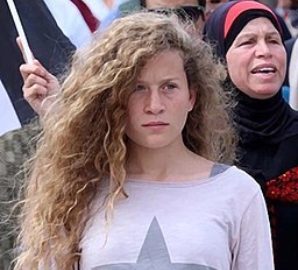
Ahed Tamimi is more than an emblem of Palestinian unity or a symbol of the resistance. She is an inspiring figure for all young feminists to look up to.

ABUJA, Nigeria—Masturah Musa kneads a ball of halawa with her fingers. As it begins to soften, she spreads the sticky caramel across her customer’s leg, then pulls it upward.

Operation Condor, a France and U.S.-endorsed campaign of torture in South America, is long over. But the brutality it wrought still echoes today.

Obituaries of Gen. Efraín Ríos Montt only tell part of the story. Here's the rest.

Mama Tingó, a Black woman revolutionary who fought for working-class farmers, is seldom heard about or celebrated yet was crucial to Dominican history.

Athletes all over the globe have been pushing for fair pay, but they have a long way to go.

Kunumí MC is a teenage rapper calling attention to the struggles Indigenous people face in Brazil.

Pakistan’s first transgender news anchor has been hired by a local Pakistani television station, according to a story published Sunday by national English-language newspaper Dawn.

Indian women are reclaiming their sense of safety in public spaces and taking on the patriarchy...one nap at a time.

17-year-old Najem, who resides in a suburban area in southwestern Syria that surrounds the city of Damascus, has been documenting the Syrian Civil War through his Twitter account since December 7, 2017. The teen posts photos, videos, and messages that capture what it’s like to be one of the many children and teenagers forced to fight to survive in the middle of the war.

Many international donors want to invest in Afghan women’s economic potential. But the country needs to transform its entire gender infrastructure to really change women’s lives, writes Ayesha Ahmad.

I have found myself critically examining elements of my own privilege as an American from a metropolitan area that I had previously taken for granted.

In a new report, a troubling pattern in which journalists paid little mind to ethics and consent when interviewing survivors of sexualized violence emerges.
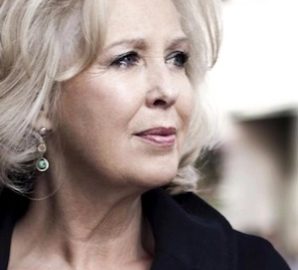
After a highly regarded anthology of Irish poetry gave short shrift to women’s contributions, a group of poets took a stand for inclusion.

They are the hidden cost of Rodrigo Duterte’s drug war in the Philippines: single, teenage mothers whose partners have been killed by police or vigilantes. And without a job or government support, it’s near impossible for them to support their children.

For many refugee children, especially girls, paying for and staying in school is a challenge. This program in a Ugandan refugee camp is working to change that.

When the women of Rwandit village learned how much initiation ceremonies for girls and boys were really costing them—in terms of money and lost education – they radically reformed their traditions, giving women and girls more power in the process.

“Women in Somaliland, especially younger women and girls, are now beginning to have hope for a better future,” 25-year-old Ahmed said of the bill, which is the country’s first piece of legislation to address sexualized violence.