The administration's funding priorities threaten programs that provide affordable contraceptive care to millions.

At a recent closed-door meeting, Bethany Kozma stood before a roomful of international leaders assembled to discuss gender equality and women’s rights and announced that the “U.S. is a pro-life nation.”

On Monday, Mississippi's governor signed a new bill into law that prohibits abortion after 15 weeks, making Mississippi the strictest state in the country for women who want to terminate unwanted pregnancies. Just before noon today, a district judge granted a temporary restraining order requested by the state's lone clinic.
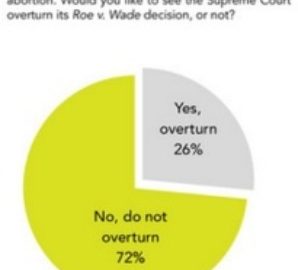
A new approach has revealed that most pollsters may be asking the wrong questions on abortion.

A new study shows that laws restricting abortion access are creating long-lasting economic consequences for women.
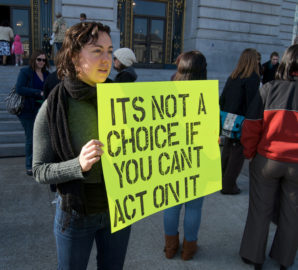
In a vote early this evening, Senate Republicans failed to pass “The Pain-Capable Unborn Child Protection Act,” a bill that aimed to make abortion 20 weeks post-fertilization illegal in most cases.

In three cases of undocumented minors needing abortions, the government has argued that merely allowing the women to physically leave a detention facility would amount to facilitating their abortions, even though no one is asking the government to transport the women to clinics or to pay for their abortions.
Anti-abortion advocates are using a "free speech" argument to try to skirt a reproductive health law.

Tweaking just a few words in a sentence can change its meaning entirely. The Trump administration recently did just that—and the tiny edit may have drastic repercussions for women.

With a 237 to 189 vote, a bill that would ban abortions after 20 weeks in the U.S. was approved by the House of Representatives on Tuesday.

Hidden in the House Republican budget bill, to be considered this week, are funding cuts for reproductive health services and new curbs on health care providers.

Democratic leadership has said abortion won't be a "litmus test" for candidates. But they can't make progress on economic and racial justice without fighting for abortion rights.

Lawmakers in Missouri set the tone for a dark week in health care reform for women. On Tuesday, the House sent a bill to the state Senate that, if passed, will infringe on the rights of women seeking abortions, and hamper the work of abortion providers.

Last year Sierra Leone seemed on the verge of legalizing abortion for the first time in 150 years. Last-minute intervention by religious leaders derailed the bill, and now the US global gag rule poses an additional obstacle.