
















Five months after the Supreme Court’s Dobbs decision overturned Roe v. Wade, providers face increased threats and harassment, emotional devastation, and the anguish of having to turn people away from accessing needed care. But they are determined to continue their work.

Plaintiffs in three states are seeking to overturn abortion bans on religious grounds.

Advocates in countries that have achieved legalization of abortion in recent years are making it clear that they stand with Americans in efforts to restore reproductive rights and access.

What happens now? Advocates and organizations have been preparing for the overturning of Roe v. Wade.

A documentary and a dramatic film give a chilling portrait of the crushing impact of abortion bans — and of the courageous women who provided abortion care in pre-Roe Illinois.

The proliferation of attacks on LGBTQ rights, abortion access, voting rights, and immigration have prompted activists to intensify coalition-building work.

There’s no question abortion rights are in a crisis in the U.S. This year alone, 42 states have introduced at least 536 abortion restrictions, with dozens becoming law. And that’s on top of last year’s devastating record of antiabortion laws passed, including the news-making Texas abortion ban that allows anyone — literally anyone — to sue someone who helps a patient receive an abortion, from the provider to an abortion fund to an Uber driver.

Amy Coney Barrett and other members of the Supreme Court have shown outrageous disregard for the real impact of pregnancy.

What are crisis pregnancy centers, masquerading as medical clinics, doing with women’s confidential medical information?

With Roe v. Wade imperiled, activists are stepping up with innovative acts of resistance.
A new analysis of print, digital media, and entertainment has found that coverage is heavy on sensationalism and moral judgment, and light on factual information.

The former state legislator, well known for her filibuster of a 2013 anti-abortion bill, speaks out on how and why we must keep fighting back against the erosion of reproductive rights.

In defiance of public opinion, state legislatures in 2021 have already passed the highest number of curbs on abortion since the 1973 Supreme Court Roe v. Wade decision.

Current advocacy is based on an understanding of the intersections of reproductive justice and economic justice.

Argentina’s new abortion law, a result of decades of feminist organizing, is spurring hope for expanded rights elsewhere in the region.

Using lessons learned from a decade-long onslaught against reproductive rights, activists are embracing strategies including coalition building, mobilizing pro-choice religious communities, and eliminating abortion stigma.

Now that Justice Amy Coney Barrett has taken her seat, the ultraconservative court appears poised to curtail the Affordable Care Act and reproductive rights. The damage can be addressed with action at the local level.

Protests erupted this week in response to a new abortion ban, but the government has been attacking women’s and LGBTQ rights for years.

Pro-choice Christians have been sidelined by the vitriol of the Religious Right. But there are increasing calls for the pro-choice majority to make itself heard.
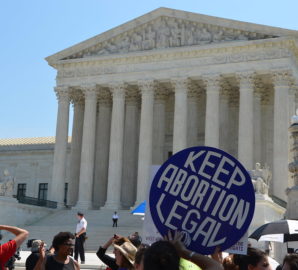
The 5-4 decision affirms recent precedent by overturning provider restrictions in Louisiana.

The many unnecessary barriers to abortion access in the U.S. have grown exponentially during the pandemic, forcing providers and patients to adapt.
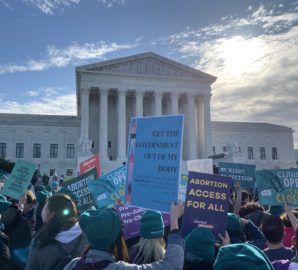
Advocates are expressing concern that less than four years after the court ruled that TRAP laws are unconstitutional, it has agreed to revisit the question.

In the powerful new film "Never Rarely Sometimes Always," a teenager has to cross state lines to seek abortion care.

In the ever-intensifying war on women’s reproductive rights in the U.S., Republican Ohio lawmakers have managed to take things to a new, frightening low. A bill introduced this month would criminalize all abortion and includes a provision requiring doctors to try to “re-implant” ectopic pregnancies, despite the fact that no such procedure exists.

As states move toward ever-more-restrictive abortion regulations, Missouri has really gone over the edge. At a hearing on Tuesday, the state’s health director told lawmakers that he had been tracking the periods of women who’d been to the state’s only Planned Parenthood clinic, in St. Louis.