
















Women Under Siege spoke with Lisa Wade, PhD, an associate professor of sociology at Occidental College and author of American Hookup: The New Culture of Sex on Campus, to better understand the relationship—and long history—between white supremacy, masculinity, and the American image.

Our culture still does not accept “American” as a full identity, especially to those who look ethnically ambiguous or nonwhite. Your Americanism is less likely to be questioned if you resemble the white English immigrants who settled in New England in the 17th century. But otherwise, immigrants and their children who have lived in this country for years are still viewed as foreign.

Alicia Garza, the principal and co-founder of the Black Futures Lab, is determined to flip the where candidates talk about Black communities, but don't talk to them—beginning with "the largest survey of Black people conducted in the United States since Reconstruction."
Many assumed the famously red-headed Ariel would remain as such in the live action version, and Halle Bailey clearly does not fit that image. Shortly after Bailey was cast, #NotMyAriel started trending on Twitter.

DuVernay’s artful depiction of Linda Fairstein — prosecutor and head of the sex crimes unit of the Manhattan District Attorney’s office at the time of the Central Park Five case — exposes the process through which white women’s pain can be used as a pawn for white patriarchy.

Who gets to tell stories of black trauma and how and when should they tell them?

As Congress deliberates ratifying the Uyghur Human Rights Policy Act of 2019, Women Under Siege spoke with Mihrigul Tursun, a Uighur refugee, about her experience at what she describes as an "ethnic cleansing camp" for Uighurs in China's Xinjiang region.

The new research, by Building Movement Project, finds systemic barriers to leadership roles at nonprofits and calls for organizations to address bias.

Mother’s Day is coming up, and oftentimes for Black folks it means families celebrate their mothers as superwoman. However, while we honor and celebrate mothers for all their beautiful nurturing and labor, we must not get caught up in the idea that mothers should do it all and alone. After all, even a superhero needs a squad.

A groundbreaking poll finds that women of color voters have deep concerns about the state of the U.S. — and are determined to use their power for change.

In 2019, of the 895 spots Stuyvesant High School gave to the incoming eighth-grade class, only seven were extended to black students. The year before, only 10 black students were given spots, and the class of 2021 included only 13.

On February 20, Smollett was charged with his first felony, for filling out a false police report, and on March 8, he was indicted on 16 counts of making false statements to the police.
In recent years, a number of new studies have shed light on the scope and reality of the continuing HIV crisis among Black women in the United States. The high rates of infection have left experts and advocates scrambling to ensure Black women are receiving the medical care they need.

It’s not uncommon for Kenyan public schools to have a “no-hair” policy, meaning both girls and boys have to shave off their tresses, policies that are the legacy of colonialism and, as such, still perpetuate racism.

South Africa’s entertainment industry has historically told monolithic narratives of black lives. While these narratives do reflect the reality of many black South Africans, they are not the only experiences of black South Africans and, moreover, not the only experiences black South Africans should be told are available to them.

That an American celebrity considered it lucrative to not only market a skin lightening brand abroad, but also travel all the way to Nigeria to promote it, says a lot about the socio-economic influence skin lightening products have in West Africa.
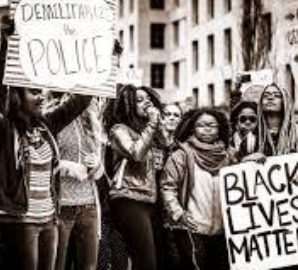
The Black Lives Matter movement in Brazil has largely focused on the basics: human rights and affirmative action. This is because talking explicitly about racism here is like trying to teach math to a three-year-old — pointless.

Priscila Gama, a 34-year-old Brazilian architect and entrepreneur from wanted to do something to help women in the face of pervasive violence. In 2016, she and a team launched the Malalai app, which enables women to let pre-authorized friends follow their routes when moving around the city by any means, whether by foot, car, or public transportation.

Higginbotham has covered topics including death, sex, and divorce. Recently, she told the FBomb about her newest book, Not My Idea, which tackles racism and white privilege, and is available now.

A shocking 94 percent of Native American and Alaskan Native women in Seattle have been raped or coerced into sex, according to a survey conducted in 2010 that was finally released to the public on Thursday.

Religion is the thread that runs through the heart of India, but these questions have hardly been explored in public. Indian women’s ideas about religion have particularly been ignored by these institutions. So I decided to ask them about it.

The hashtag #PayBlackWomen trended this week as authors, nonprofit organizations, elected officials, and social media influencers joined forces to highlight the income inequality and high unemployment rates affecting African-American women.

A groundbreaking new report shows that the American public is deeply ignorant about Native Americans, and calls on media to improve its coverage.

As a black person with light-skin privilege, it took me a while to understand that society treats dark-skinned black people with a similar indifference and insensitivity to that which the ugly duckling experienced.

Brazilian author PJ Pereira tells the Fbomb about how his best-selling trilogy of books about the Orishas, gods that are part of the indigenous Yorubá tradition, are helping the belief system be re-examined in Brazilian culture.