














At the end of September, the nation’s attention turned to Supreme Court nominee Brett Kavanaugh and the now-infamous hearing regarding Dr. Christine Blasey Ford’s allegations of sexual assault against him. While that Supreme Court-related news was obviously worthy of attention, it caused many to overlook the fact that just days later, the Supreme Court began its October sitting on the first Monday of the month.

While social media is helping to encourage young people to vote in record numbers, the actual process of voting is exceptionally digitally inept.

Tuesday’s midterm election brought mixed results for abortion rights. Democrats took control of the House, but anti-choice ballot measures passed in two states, leaving millions of women vulnerable to criminalization if Roe v. Wade is ultimately overturned.

Advocates warn that the expansion of religious refusals could open the door to more discrimination in other areas.

Why women remain outside the doors of political power is more nuanced than simply attributing it to sexism.

A proposed reauthorization of the Violence Against Women Act could close loopholes that have left Native women, who are most at risk of violence, unprotected under the law.

The stories of the silenced matter, even when the outcome of sharing them are not necessarily concrete.

With the appointment of Brett Kavanaugh to the Supreme Court, anti-abortion activists see a new opportunity to overturn or gut Roe v. Wade.

Like Trump, the current front-runner in the Brazilian presidential election, Jair Bolsonaro, is white, far-right wing candidate who symbolizes a great threat to women and democracy in the country.

A bill mandating that every publicly traded company based in California include women on its boards of directors was signed into law by Gov. Jerry Brown. Some experts are skeptical.
Dr. Blasey Ford herself has largely been seen as credible, which in turn appears to be a sign of cultural progress. Yet the public narrative that has been maintained about perpetrators has not progressed in tandem with this evolved view of survivors.

For the first time in history, white men constitute a minority of people running as Democrats for seats in the House of Representatives, according to an analysis published Tuesday by Politico.

Coverage of family separations at the U.S.-Mexico border has stirred outrage. But is what's happening new?
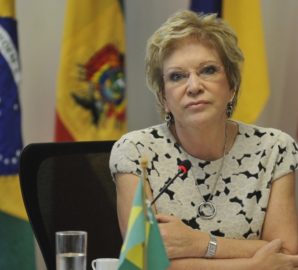
Suplicy, who is now 73, served in Brazilian politics for years. But even before her political career, Suplicy brought discussions of important issues straight to Brazilian homes through a television show called TV Mulher, during which Suplicy gave sex advice to female viewers in a political era of dictatorship.

Governments’ political orientation does not determine whether they pursue more or less restrictive migration policies. New research from Katharina Natter and Hein de Haas debunks accepted wisdom on the politics of migration.

Something called the “Worst for Women” campaign launched Tuesday. It points fingers at 15 sitting members of Congress for their dubious track record on women’s rights.

Inspired by the late Marielle Franco, more women, especially black women, are feeling encouraged to participate in politics.

Former cricketer Imran Khan claimed victory Thursday in Pakistan’s parliamentary elections, raising concerns about how his leadership could impact women’s lives.

Brexit, it seems, has the potential to impact women’s lives—negatively. A report out this month warns that women’s rights may no longer be safeguarded once the UK leaves the European Union.

A Minnesota Republican is coming under fire for misogynistic remarks he made on his former radio program.

Marielle Franco’s murder was not an ordinary crime but one with a triple meaning: It was an act of femicide, black genocide, and an act of silencing the downtrodden.

The House Appropriations Committee has passed an amendment that better enables taxpayer-funded adoption agencies to discriminate against queer and transgender families.

Often considered the “swing vote” on the Supreme Court, Justice Kennedy spent his 30-year career making arguably the most bipartisan decisions in the courtroom. Democrats and progressives had come to rely on him as a key figure in the fight to protect existing abortion rights at the federal level.

Orrin Hatch’s Senate speech is the latest example of how conservatives appeal to our emotions to mask their longstanding political inaction.
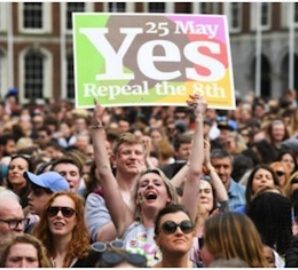
A leader in the campaign to repeal Ireland's abortion ban reflects on how the victory was won — and the implications for other countries.