















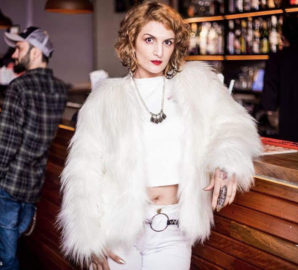
When in August Brazilian writer and feminist activist Clara Averbuck refused the advances of an Uber driver, he physically threw her out of his car, leaving her bruised and with a black eye. He then sexually assaulted her as she lay on the ground.

No one is heralding Trump as a feminist hero. Yet on October 6, the president signed into law an act advocates say will make feminist history.
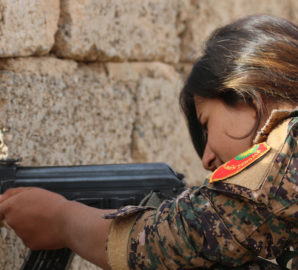
Ekhlas was 14 years old when Islamic State militants attacked the northern Iraqi city of Sinjar in August 2014. Her family tried to flee to nearby Mount Sinjar, but they never made it.

Joe Arpaio, according to Trump, was the one cheated and attacked by the criminal justice system — not his victims.

Just out of graduate school in Mexico City, Lissette Marquez longed to travel the world on an American cruise ship. She was thrilled to obtain a guest-worker visa that allowed her to join a ship crew in California. But instead of the ideal job she had envisioned, Marquez said she found herself toiling long hours, earning less than a $4 hourly wage, and feeling isolated.

YouTubers should treat the message of condemning assault as something important enough to stand independently from a childish vlog video.

In 2014, the so-called Islamic State abducted thousands of women and children when they invaded large parts of Iraq and tortured, enslaved, and killed many people affiliated with the Yazidi religious group. In response, in November 2015, the Jiyan Foundation for Human Rights, an Iraq-based organization that helps victims of human rights violations, opened a trauma clinic for women in the Kurdish city of Chamchamal.

On computer screens thousands of miles away from one another, some of the world’s leading feminist figures joined in solidarity with women in the Democratic Republic of the Congo at the country’s first-ever women’s summit on September 14.

As world leaders descend on New York City this week for the United Nations General Assembly, one group has released a report that exposes a frightening lack of government knowledge of how the rights of women are progressing in various countries.

Rahaf feared going home. Her clothes had been torn, making visible the painful red welts that would turn into eggplant-colored bruises. On her arms and legs, her family and fiance would be able to see the round burn marks where they put out cigarettes on her skin.

Women around the world continue to struggle not only with draconian laws that deny them ownership of their own bodies, but also the threat of hard-won rights being rolled back. Here, we take a look at some of the places around the world that are playing the long game for abortion reform.

When the Democratic Republic of Congo was dubbed the “rape capital of the world” in 2010 by Margot Wallström, the former UN special representative on sexual violence in conflict, understandably the government of DRC was not happy. Besides that, putting one country above all others when it comes to violence against women is a debatable move: So many places have horrifying records of rape and impunity for such cases. But Wallström had good reason for aiming her words at what is unambiguously a truly terrible place for women.

Colonel Magistrate Freddy Mukendi is an imposing man who speaks from behind darkly shaded eyeglasses. He takes up the full space of a lounge chair, giving off a breezy, if formal, comfort in his own skin. Considering his high-level position in the DRC, this may not be entirely unexpected.