
















In a culture that can see girls as a burden, many women opt to abort their female fetuses — even though it's illegal.

Child rape is increasing in Nepal, but many girls are dissuaded from reporting it.

International Women’s Day marches mark how feminist movements have exploded across Mexico, as elsewhere in Latin America — a region with some of the highest rates of sexualized violence in the world.

In Lebanon, where childbirth care is highly medicalized and dominated by obstetricians in private hospitals, women are often persuaded to have cesarean sections, the revenue for which procedure is key for hospitals struggling to survive amid economic collapse.

In a landmark case for justice in Guatemala, five former paramilitary soldiers were convicted by a special tribunal of crimes against humanity for sexualized violence committed against five indigenous Maya Achí women during the country’s 36-year internal armed conflict.

About 400 women on average are prosecuted every year in the Andean country, blocking eligible women from accessing safe, timely, and free abortions. Underage girls are not exempt from such criminal prosecution and face sweeping sanctions, from restricted movement to mandatory community service, if convicted.

Sanitation work in India still involves illegal manual labor, with as many as 1.3 million Indians from certain caste groups employed as 'manual scavengers,' who load waste onto baskets or metal troughs to carry off for disposal. Not only is the work detrimental to their long-term health, but it’s also a cause for inhumane discrimination, which not only affects how they’re treated out in society but also their pursuit of alternative livelihoods.

Camps for internally displaced persons in conflict-rift states in Nigeria have been known to provide fertile ground for trafficking.

Philippine President Rodrigo Duterte's "heavy-handed and punitive" — and exceedingly militarized — pandemic strategy largely accounts for why the Philippines continues to suffer nearly two years on.

Only one gynecologist serves the 8,000 to 13,000 people of reproductive age who need those services in the municipality of Shuto Orizari in North Macedonia’s capital city, the only municipality with a Roma majority in the country. And as of last month, he’s no longer on duty.

With an ongoing civil war that’s worsening a dire humanitarian crisis, women in Yemen are challenging societal rules in order to provide for their families.

For nearly four decades, Baba Wayil, a small Muslim village situated on the foothills of the snowclad Zabarwan Range in Indian-administered Kashmir, has cultivated fame for its blanket ban on dowries and lavish weddings.

New proposed legislation from Uttar Pradesh, the most populous state in India, is being criticized by population and public health experts as not only unnecessary but discriminatory—particularly, against the state’s Muslim minority.

Doctors in Nigeria have gone on strike at least four times since the start of the pandemic over unpaid wages; its last ended on October 4, after 63 days. We have no way of measuring the consequences for women and children, who were unable to access medical care in that time.
More than 80 women had their names and pictures posted without their consent on the app’s “deals of the day.” Rather than hosting actual transactions, the sole purpose of the app was to humiliate its subjects.

"TIBBI," a telehealth solution meant to digitize the operations of lady health workers (LHWs) in Pakistan for better efficiency, has been ill-received by their patients: workers reported being yelled at and thrown out of homes for being vulgar and recording information on their devices.

Given entrenched cultural norms, the U.S. and the international community should demand that the new Taliban regime uphold the basic rights of Afghan women as defined by the Afghan constitution.

Across western Nepal, tradition remains stronger than law as villagers find new ways to partake in “chhaupadi,” the age-old tradition of exiling women during menstruation because periods have been long considered impure.

Journalists and activists in Bosnia and Herzegovina are routinely harassed, threatened, and intimidated for their work with refugees and migrants entering the country via the Western Balkan route.

Myanmar's garment worker union members are not only fighting for an end to military dictatorship; they are also fighting for the elimination of systemic harassment and violence that has plagued their lives long before the coup.

Women who participated in anti-CAA protests nearly two years ago continue to be targeted by law enforcement, bearing the full brunt of the security apparatus or facing aggressive intimidation.

In Kashmir, a longstanding history of mistrust with the Indian central government stands in the way of more people getting vaccinated — including pregnant women, who are among the most vulnerable to COVID-19.
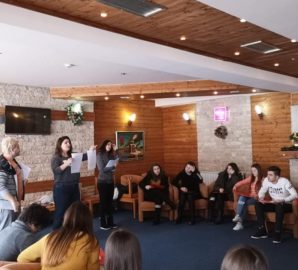
A new pilot program will be introduced in the upcoming school year to teach sex education to high school students in North Macedonia — and right-wing backlash has already arisen to challenge its implementation.

Uganda's new Sexual Offenses Bill, which passed in parliament in early May, is meant to strengthen existing protections against sexualized violence, but feminists and human rights advocates have criticized the new legislation as a veiled attack against LGBTQ+ Ugandans and those in the sex industry.

Overburdened and underpaid, India’s health workers, known as accredited social health activists (ASHAs) — all of whom are women — continue to work without sufficient PPE kits, facing harassment and stigma.