

















The Honorable Mary Robinson is the founder and president of the Mary Robinson Foundation – Climate Justice and serves as the UN Secretary-General’s Special Envoy on Climate Change. She was the first female president of Ireland from 1990-1997 and the United Nations High Commissioner for Human Rights from 1997-2002, and is a global leader on issues of women’s empowerment and human rights. In July 2013, I sat down with her to discuss climate justice and the role of women in the fight for peace.


There’s a darkish room, maybe 12 feet by 13 feet, tucked into the back area of the ground floor of a school called Lycée Wima. Seated along walls of peeling paint are more than a dozen women sewing patterned bags, shoes, dresses, and dolls on elegant Singer sewing machines from the time between the last world wars. The work is exacting.


Colonel Magistrate Freddy Mukendi is an imposing man who speaks from behind darkly shaded eyeglasses. He takes up the full space of a lounge chair, giving off a breezy, if formal, comfort in his own skin. Considering his high-level position in the DRC, this may not be entirely unexpected.


Maseru, Lesotho—“That’s how African men are,” the woman said. She and two others laughed aloud at the infidelity of their husbands. Their laughter resonated in the hotel lobby, attracting disapproving stares from the men in business suits who occupied most of the other coffee tables.

There are various forms of violence that women and girls experience, but intimate partner violence is, by far, the most common, with one in three women affected globally. And while a common approach to designing prevention programs for intimate partner violence includes targeting men and women in relationships, new evidence shows that the approach may be misguided.

Today, as part of the UN Human Rights Council’s “Universal Periodic Review” process, Burma will be questioned by every country in the world on the nooks and crannies of human rights abuses happening inside its borders

In January 2008, during the violence following Kenya’s disputed elections, someone banged on my door. The man was a friend of my neighbor and, since my neighbor wasn’t home, I thought I might be able to help. But when I opened the door, he forced his way into my house and raped me.

In a swirl of humanity punctuated by police geared with batons, riot gear, and even machine guns, a sense of solace can be hard to find. But for many of the refugees I met at the Hungarian border with Serbia and Croatia, they sought to locate that saving grace in their families, who were both a source of anxiety on this unending journey, and also their succor.

It is clear there are accountability problems within the UN system when it comes to sexual assault. Between campaigns fighting for accountability in cases of rape in the Central African Republic by French peacekeepers and the latest scandal involving a UN contractor in the DRC, the issue of impunity for UN employees is now being discussed within the UN system—and outside of it, too.

“Do you know where this road goes from here? We are hungry, and my baby hasn’t eaten much,” an exhausted young Afghan woman asks me. Roma, her 2-year-old son, Abraham, and three men from her family were walking on the side of the road in the Hungarian village of Roszke, looking completely lost, when we stumbled upon them.

Almost every hour, the men run to the Serbia-Hungarian border crossing, shouting together, “Open the gate! Open the gate!” But the Roszke Horgos border remains guarded by Hungarian police after the government of Hungarian President Viktor Orbán ordered it shut on Tuesday.

Many of the 3,000 refugees who spent last night on the Serbian side of its border with Hungary are women and children. Hungary shut the border on Tuesday, saying refugees had to apply for asylum before entering the country. Hungarian authorities said that criminal proceedings would be launched against any migrants found crossing the fence illegally and that they could face up to 10 years in prison.


I’d been working on a short radio story for the July 30 UN World Day Against Trafficking in Persons when I realized that the fight against human trafficking in my country, Italy, has become a disaster.

For women, the world might feel like it’s slowly becoming worse. Earlier this month, the UN announced that four peacekeepers in the Central African Republic have been accused of raping two women and an underage girl, as well as a 12-year-old girl. Last month, four women were raped and killed in Mexico City. And then there’s Syria, where reports keep emerging of how Islamic State militants justify raping women and children.

“Who Killed Rúben Espinosa?” read headlines throughout Mexico after the brutal murder of five people in Mexico City. On July 31, the victims were found in an apartment the Narvarte neighborhood of Mexico City.
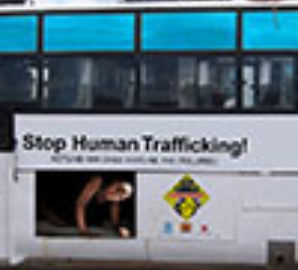
When I met Sophie Otiende, she was running late. I had reached out to her in December 2014 while I was in Nairobi doing research for a film about sex trafficking. Sophie and her boyfriend, Jakob Christensen, are volunteers at the anti-trafficking nonprofit HAART Kenya and had agreed to meet me for dinner. But as time wore on, I was beginning to think I’d been stood up.