
















Kereta Api Indonesia (KAI), Indonesia’s state-owned railway company, announced on June 21 that it will now blacklist sexual harassers from using its services

Anti-Muslim violence and hate speech have become normalized under the ruling Hindu-nationalist Bharatiya Janata Party (BJP), but activists say that the attacks against India’s Muslims have ratcheted up over the last year — particularly, against Muslim women.

The legal challenge against Turkey’s largest women’s rights group is suspected of having political motivations, appealing to Turkish President Recep Tayyip Erdoğan’s conservative voter base while distracting from the country’s economic challenges.
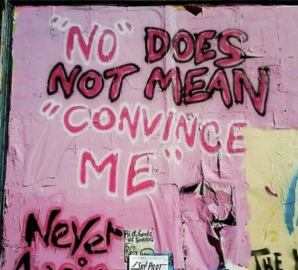
While I am grateful that the legal system believed my account of what happened, I am still deeply hurt that the only punishment my perpetrator received was essentially a slap on the wrist rather than a jail sentence or other long-lasting consequence.

On April 11, the trial in a defamation lawsuit between actress Amber Heard and actor Johnny Depp began in Virginia.

On March 25, the Islamic Republic of Iran began its four-year term as a new member of the United Nations’ Commission on the Status of Women (CSW) — “the principal global intergovernmental body dedicated to promoting gender equality and women’s empowerment” — after being elected by secret ballot last year.

The events following the February 24 Russian invasion of Ukraine brought despair for thousands of elderly and disabled civilians who were unable to flee. Russia has been claiming strikes on cities all around the country, and the fighting has left countless civilians injured, helpless, and desperate in a war zone.

Indonesia’s fight against sexual violence welcomed a long-waited new chapter this week when its Parliament passed a landmark bill aimed at providing legal framework for victims to seek justice.

In a culture that can see girls as a burden, many women opt to abort their female fetuses — even though it's illegal.

In an incredibly unsettling new trend, some TikTokers are using women’s deaths as the punchlines of jokes.

Child rape is increasing in Nepal, but many girls are dissuaded from reporting it.

International Women’s Day marches mark how feminist movements have exploded across Mexico, as elsewhere in Latin America — a region with some of the highest rates of sexualized violence in the world.

In Lebanon, where childbirth care is highly medicalized and dominated by obstetricians in private hospitals, women are often persuaded to have cesarean sections, the revenue for which procedure is key for hospitals struggling to survive amid economic collapse.

In a landmark case for justice in Guatemala, five former paramilitary soldiers were convicted by a special tribunal of crimes against humanity for sexualized violence committed against five indigenous Maya Achí women during the country’s 36-year internal armed conflict.

About 400 women on average are prosecuted every year in the Andean country, blocking eligible women from accessing safe, timely, and free abortions. Underage girls are not exempt from such criminal prosecution and face sweeping sanctions, from restricted movement to mandatory community service, if convicted.

Camps for internally displaced persons in conflict-rift states in Nigeria have been known to provide fertile ground for trafficking.

Only one gynecologist serves the 8,000 to 13,000 people of reproductive age who need those services in the municipality of Shuto Orizari in North Macedonia’s capital city, the only municipality with a Roma majority in the country. And as of last month, he’s no longer on duty.

With an ongoing civil war that’s worsening a dire humanitarian crisis, women in Yemen are challenging societal rules in order to provide for their families.

For nearly four decades, Baba Wayil, a small Muslim village situated on the foothills of the snowclad Zabarwan Range in Indian-administered Kashmir, has cultivated fame for its blanket ban on dowries and lavish weddings.
Thursday marks the International Day for the Elimination of Violence Against Women, which kicks off the 16 Days of Activism against gender-based violence in a year in which women have taken to the streets to protest rising violence and lack of state protection.

Culture and attitude must shift to a place where cis and trans Black women and girls always feel safe, where we are given credit for our immeasurable contributions and we are valued for who we are.

That experience opened my eyes to how vulnerable young women are in so many situations.
More than 80 women had their names and pictures posted without their consent on the app’s “deals of the day.” Rather than hosting actual transactions, the sole purpose of the app was to humiliate its subjects.
Nearly half of students in grades 7–12 report facing sexual harassment.

Given entrenched cultural norms, the U.S. and the international community should demand that the new Taliban regime uphold the basic rights of Afghan women as defined by the Afghan constitution.
- All Categories
- Arts and culture
- Body image and body standards
- Disability
- Economy
- Education
- Environment
- Feminism
- Free Speech
- Gender-based violence
- Girls
- Gloria Steinem
- Health
- Immigration
- International
- Jane Fonda
- LGBTQIA
- Media
- Misogyny
- Online harassment
- Politics
- Race/Ethnicity
- Religion
- Robin Morgan
- Science and tech
- Sports
- Violence against women
- WMC Loreen Arbus Journalism Program