















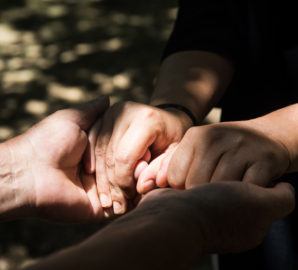
A father holds hands with his daughter, a survivor of sexualized violence during Kosovo’s 1998-1999 war for independence. Twenty-two years later, she is among thousands of survivors of systemic rape still awaiting justice.

In a country with one of the highest HIV prevalence rates in the world, a sex worker-led health care model succeeds in serving its own community.
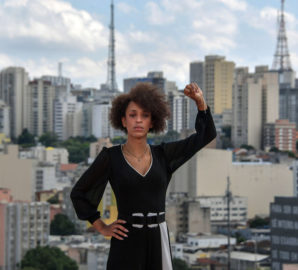
The growth in political representation of Black and trans women in Brazil's city governments has not gone unnoticed by right-wing parties, making them visible targets for racist and death threats and abuse.

In spite of the high mortality rate, large numbers of refugees are still continuing to cross. And for pregnant women, the road to Europe is all the more perilous.

Specialists in sexual and reproductive health say that gynecological violence is a form of violence with many varied expressions, from unnecessary procedures, the pathologization of physiological processes, medical misinformation and maltreatment, aggressive practices that provoke harm and injuries, and even inappropriate and violating comments like those that both women heard — all of which are experienced during gynecological care beyond pregnancy, childbirth, and puerperium.

Use our climate map to investigate the impact of climate change across the world on those it affects most: women, people of color, and indigenous and LGBTQ people.

While protests have seen unprecedented participation by young women, they have also been mired by sexual and gender-based violence against young women by the police. It is time for the international community to heed the call of Hong Kong-based activists and hold the government to account for this human rights crisis.

The conflict-torn Himalayan valley has seen a surge in mental health cases since the abrogation of the autonomous status of the region, with women among the most distressed.

As the world observes the International Day for the Elimination of Violence against Women on November 25, a new report shows the extraordinary anti-violence efforts made by women's rights organizations globally.

A cocktail of structural barriers with law enforcement and throughout the judicial process — such as drawn-out, humiliating investigations and trials — ensures that justice for victims remains evasive.

A new study predicts that there will be 6.8 million fewer female births compared to male births in India between 2017 to 2030, due to the country’s strong preference for sons and falling fertility rates.
An interview with Anna Simone, a sociologist and a professor at the University of Roma Tre, about how women and men are scrutinized differently by the Italian media and public.

Media coverage of sexual violence in India, both domestically and globally, has ignored the vast majority of rapes. Obscured from public view by the media, those stories that don’t make national and global headlines face near-insurmountable hurdles to justice.

The crises that compel refugees to attempt the dangerous journey to Europe haven't ended. Many, including pregnant women, continue to risk drowning, meeting violent pushbacks at sea and land borders, living in unsafe conditions in the camps, and facing racist violence and discrimination.

A new movement has sparked public discourse among Iranian women as they take to social media with their own #MeTooIran moments.

How many killings will it take for the government there to declare a state of emergency?

Philippine President Rodrigo Duterte's pardon of US Marine Lance Corporal Joseph Scott Pemberton in the killing of Jennifer Laude, a transPinay, in a hotel room in Olongapo reflects the country's historic subservience to US military interests.

Despite the government's pre-emptive measures to curb violence against women under lockdown, gender-based crimes skyrocketed during the state-mandated quarantine.

A group of researchers have turned to traditional coffee ceremonies to help stem intimate partner violence (IPV) in Ethiopia and educate about HIV in the country’s more rural areas.

The Al Hassan case has the potential to shine light on the unique harm perpetrators commit against individuals based on their gender, which enforces patriarchal social norms and increases the potency of their crimes. It could also chart a path forward for international criminal law to define gender.
Some of the workers at Zimbabwe’s Hwange Colliery Company haven't been paid wages for years. Fearing reprisal if they tried to fight for them, their wives, mothers, and sisters have adopted their grievances, protesting for the wages and laying sporadic sieges at the mine’s gates.

Gender inequality and stringent cultural beliefs left women most vulnerable to the HIV epidemic. With the coronavirus, Malawi mustn't repeat the same mistakes.

The pandemic has further revealed how workers in the global garment industry — especially women, who make up nearly three-quarters of garment workers — are sacrificed as economic collateral, and how fast fashion prioritizes profits over people.

While Colombian media covers stories of sexualized violence in almost exploitative detail, it fails to highlight the victims’ ethnicity and race, thereby following a long tradition of obscuring who in the country is disproportionately victimized, as well as hiding the underlying structural causes that leave them most vulnerable.

While Greece has slowly begun to reopen, overcrowded refugee camps on the Greek island of Lesbos are still under lockdown. And without government intervention, experts and activists say that residents there are just sitting ducks waiting for an outbreak of the coronavirus to sweep through the camps like wildfire.
- All Categories
- Arts and culture
- Body image and body standards
- Disability
- Economy
- Education
- Environment
- Feminism
- Free Speech
- Gender-based violence
- Girls
- Gloria Steinem
- Health
- Immigration
- International
- Jane Fonda
- LGBTQIA
- Media
- Misogyny
- Online harassment
- Politics
- Race/Ethnicity
- Religion
- Robin Morgan
- Science and tech
- Sports
- Violence against women
- WMC Loreen Arbus Journalism Program