















Malawi Needs a Culture Shift to Protect Women From COVID-19 and AIDS
By the time the first case of infection with the novel coronavirus appeared in Malawi, the country had, at last count, roughly one million adults living with HIV. Even as the country has made significant efforts to contain the epidemic in recent years, Malawi still has one of the highest HIV prevalences in the world. Attention has now shifted to the new threat of COVID-19, and without a concerted effort to address the gendered dimensions of an outbreak, women will again be left more vulnerable.
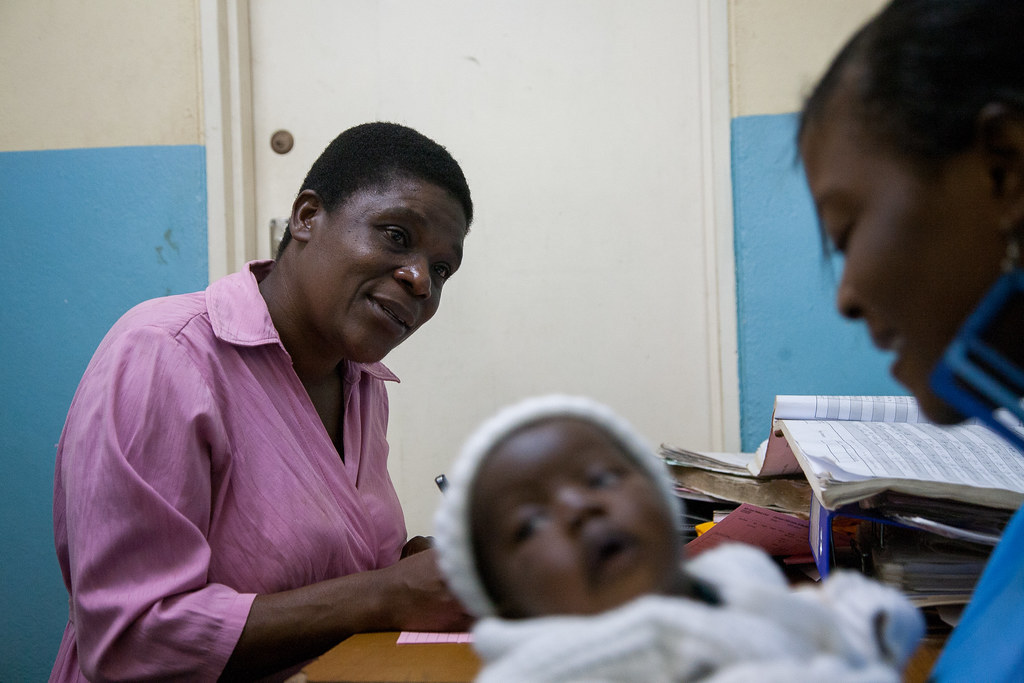
At the HIV epidemic’s peaks in the country — between 1993 and 1994 and 2003 and 2004 — women were infected at such a high rate that it was considered a “women’s epidemic.”
Health experts say that gender inequality and culture partly explain why women’s HIV infection rates are higher. The Malawi government’s 2015-2020 National Strategic Plan for HIV/AIDS indicates that women remain vulnerable to HIV infection due to socio-cultural practices, including widow inheritance, initiation ceremonies such as circumcisions or jando — a ceremony in which children as young as seven years old are taken from their parents, circumcised, and then taught about marriage as a cultural rite of passage into adulthood — and sexual pressures, such as agreeing to unprotected sex to please their partner.
Women in society are largely seen as inferior to men; as such, married women are subordinated by the desires of their husbands. “The overall male dominance around issues of sexuality has also been noted to propel the spread of HIV in Malawi,” reads the strategy document in part.
“Women are told that they must be submissive to men, and this results in an expectation that women should make their husbands happy at all costs, even at the expense of their own health,” said Dr. Moses Kumwenda, a social scientist at the University of Malawi’s College of Medicine in Blantyre, Malawi’s capital of finance and commerce. “Women are not even able to negotiate for sex.”
The plan names some specific cultural practices that increase the risk of HIV infection, such as: marital rape; widow- and widower- inheritance (locally known as chokolo); “death cleansing” (known as kupita kufa); forced sex for young girls coming of age; consensual adultery for childless couples; and wife and husband exchange, in which a man sleeps with the wife of another man (often a relative) if that man cannot bear children. Chokolo is a practice in which widows are forced to remarry either a brother or a cousin of their late husbands in order to keep the tradition of the land, whereas kupita kufa is a short-term engagement in which the widow has sexual intercourse with the relative or brother of the departed husband in order to “cleanse” the spirit of the dead. These practices have left women at greater risk of exposure to infection.
Due to economic hardships, widows are often unable to refuse death cleansing on cultural grounds, as doing so would be interpreted as against the culture and she could be sent away from the husband’s home, leaving their husbands’ families free to grab their properties.
What’s more, when men died of HIV, communities believed that their widows were to blame. In most cases, when death occurs, it is a commonly held rural superstition that someone must have bewitched the dead person—and spouses are often the first to be accused of having a hand in their deaths. As the COVID-19 death toll slowly rises, and men continue to account for the majority of active cases and deaths, many fear that the same superstition will once again stigmatize — and even endanger — the women left behind.
Dr. John Phuka, chair of the COVID-19 task force in Malawi, told Women Under Siege that it was too early to project whether the current pandemic will have an effect on the country’s ability to deal with HIV/AIDS since COVID-19 is a very young disease, “but the impact on women is there,” including their access to reproductive and maternal health services. It’s too soon to tell the socio-cultural consequences, he said, but like other doctors and social scientists, he anticipates them.
Kumwenda also noted how Malawian women would not be spared from the global rise in intimate partner violence since the start of the pandemic.
“With the coronavirus, the government should put in place measures that will help protect women, especially within their homes now that most families’ movements will be restricted,” said Kumwenda. “Those men found to be abusing women should be prosecuted and culture should not be used as an excuse.”
Kumwenda further urged that local chiefs, who are considered to be the custodians of culture, be well informed about the pandemic, such as how it is spread, how it can be prevented, and its impact on women. An estimated 84 percent of the population in Malawi lives in rural areas where traditional leaders are important.
“[Local] chiefs are the best governing structures,” said Kumwenda. “They are the ones who can mobilize communities better and inform the people about the pandemic.”
As part of its COVID-19 strategy, the government is working with chiefs at a district council level, where plans are discussed and agreed on how to protect the most vulnerable, like women and children. The government is also using local media to disseminate COVID-19 messages in both local and English languages.
Traditional village headman Jumna, a local chief and farmer in Lilongwe, said the chiefs are aware of the COVID-19 crisis and the issues it has raised for women.
Former Minister of Health Jappie Mhango said in early May that local village chiefs would be on the forefront to help protect women against sexual abuse and gender-based violence during the implementation of COVID-19 restriction measures.
Despite the government’s improvements mitigating HIV infection, especially among women, the current pandemic presents its own unique, gendered challenges, and it remains to be seen whether the government — with its poor health system and strong cultural beliefs — will rise up to the challenge.
More articles by Category: Gender-based violence, Health, International, Violence against women
More articles by Tag: COVID-19, HIV/AIDS, Malawi, Africa


