
















On December 14, 2016, 23-year-old feminist activist Débora Soriano de Melo was bludgeoned to death with a baseball bat in a bar in São Paulo, Brazil. There was evidence that the young activist suffered sexual abuse that same night. Detectives suspected Willy Gorayeb Liger, a manager of the bar, in the assault and called for his arrest on rape charges.

After her husband died, Margaret, 55, saw no alternative but to sell her body in order to feed her four children. She would walk down to Lake Victoria every day to buy fish to sell in the market. But first she had to have sex with a fisherman. For at least the past two decades, fishermen at Lake Victoria have demanded sex before selling their catch to female fish traders.

“No hate! No fear! Refugees are welcome here!” Shouts are rising into the night sky in Brooklyn as I write this. I just left the Brooklyn federal courthouse, where hundreds of people are chanting that and more, some slogans more angry and profane than others.
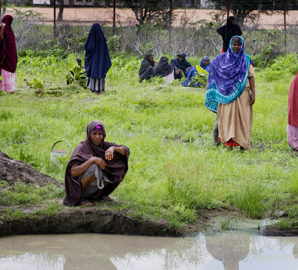
Once known as a refugee-friendly nation, Kenya is becoming more resistant to taking in people who have been forced to flee their homes. That means added challenges for the nonprofit Heshima and the refugee girls it supports, says executive director Alisa Roadcup.

In September 2016, when I arrived at a gloomy, two-star Econo Lodge hotel in Fort Lee, New Jersey, Daey*—which means “mother” in Kurdish—was sleeping.

Efforts to push for the first woman head of the U.N. failed last year, but the new secretary-general, António Guterres, has pledged gender parity during his five-year term. How can he make it happen?

Throughout the conflict in DRC, children have been abducted and made to serve as soldiers. While most are male, it is estimated over a third are female, used mainly as domestic and sexual servants, but sometimes as fighters. Now an NGO has released a report showing that many of the girls weren’t enlisted by force.

On April 20, Marcia Mejía Chirimia, 28, an indigenous Colombian peace and women’s rights activist, received a text message from someone she believes is a member of a paramilitary group.

When Luna Watfa refused to reveal any information to her interrogators, they took her son, 17, and threatened to torture him. “They put my son’s hands behind his back, his T-shirt over his head and they took him,” she says.

Wars fought because of ethnic hatred often seem to be more brutal than others. This is just a personal observation, having studied many. Just look at Rwanda, whose 1994 war saw between 250,000 and half a million women raped, often with objects and often publicly, in order to spread maximum humiliation and terror.
The recent Lancet Series on Maternal Health confirms a well-established reality: The majority of preventable maternal deaths continue to occur in areas affected by humanitarian crisis, largely as a result of poor maternal care. But this reminder is also accompanied by a chronic offense. Contraception is not given the spotlight it deserves.


Both the 16 Days of Activism to End Gender-Based Violence campaign and the International Day of Persons with Disabilities fall in this week—so now is a time for a call to action on behalf of disabled women and girls who experience violence and abuse.


Mary Elias, of Laje village in Malawi’s southern Zomba district, speaks in metaphors. “We are carrying both water cans,” she says of the situation for single mothers in drought-ridden Malawi—meaning that women with children but without partners are solely responsible for feeding, clothing, and educating their progeny. Already a Sisyphean task in a country the United Nations Development Program regularly ranks in the top 20 poorest on earth, this has become nearly impossible in the past few years.

A group of women in the Indian region of Sundarbans are using photography to draw attention to the ravages of climate change in their villages.

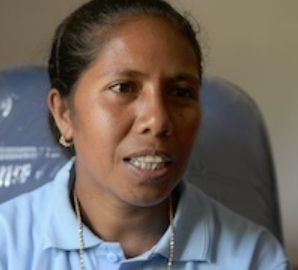
In the tiny Southeast Asian nation of Timor-Leste, a unique campaign has resulted in a record number of women on the ballot in the upcoming election for local leaders.
Yagna Ibrahim is a woman who has a presence that is difficult to ignore. She strides into the room with grace and confidence, pulls out a chair, and sits down next to her friend and fellow women’s rights activist, Rabia Musa.
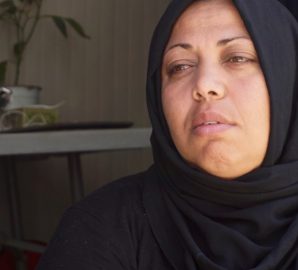
The air is stuffy by default. Soap, especially laundry soap, is usually a rare commodity among refugees. Add to the muddle of unwashed smells a buzzing from black flies, nearly 100 degree heat, and dark, polyester clothes that cover from head to toe, and life inside a makeshift container on the Greek island of Samos is an unpleasant one, thick with defeat.

Within the first few days after Sandra Moreno’s daughter, Ana Paula, disappeared in 2009, Moreno reached out to a TV crew a few blocks from her home in the lower-middle-class neighborhood of Carapicuíba, in the Brazilian state of São Paulo.
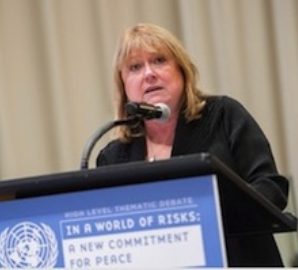
As the United Nations General Assembly gathers this week, the Security Council will consider candidates to replace the current secretary-general. Will entrenched sexism get in the way of choosing a woman for the job?