















WMC Women Under Siege
A Delhi street where sex workers are forgotten
With painted faces and shiny clothes, almost every day of their lives these women are forced to sell themselves for sex. Their work and lives are at the bottom of everyone’s concern, but they are still tied to Garstin Bastion Road—commonly known as GB Road—Delhi’s biggest red light area, which lies at the center of a busy commercial corner of the capital.
WMC Women Under Siege
‘The system is designed to make you give up’: An American tackles domestic violence in China
Kim Lee met Li Yang on a trip to China in 1999, when he was lecturing about “Crazy English,” a way of learning the language that involved overcoming inhibitions through shouting slogans such as “Conquer English to Make China Stronger!”

WMC Women Under Siege
Selling women short in the name of fighting for their rights
There is a movement in India that is seeking to secure 33 percent of seats for women in elected bodies. And while the "intellectuals" are racking up op-eds and the celebrities are lavishing their endorsements for the Women's Reservation Bill, I have some serious reservations of my own.
WMC Women Under Siege
Measuring self-worth in units of male approval: Marriage in India
While women’s rights in India have begun to make news this year, we are barely off the starting line yet. The news includes domestic and international outrage over the gang rapes of strangers, but these make up a very small percentage of the sexual attacks in the country. In India, more than 90 percent of rapes are committed by people known to the victim, according to a 2012 report by India’s National Crime Records Bureau.

WMC Women Under Siege
New report details ongoing sexualized violence in Burma
On November 27, 2012, a 26-year-old woman was gang-raped by seven Burmese soldiers. When the woman’s husband returned home, the soldiers threatened to kill him. “Even if you tell other people, there is no one who will take action,” they said. “We have the authority to rape women.”

WMC Women Under Siege
Why has it become normal to dehumanize women in India?
Two years ago, on New Year’s Eve, a girl was molested on the streets of Delhi in front of a crowd. The video went viral—as did the spectacle of a mob of men falling upon the woman and the police thrashing the rabid mob with lathis (batons) like a pack of dogs.

WMC Women Under Siege
Silent slaves: Stories of human trafficking in India
In a women’s ward in a New Delhi hospital lies a frail 15-year-old girl. Her face and head are bandaged, leaving visible only a bruised blue-black eye and swollen lips. Burn marks and scabs extend down her neck to her whole body, and a strange stench surrounds her.

WMC Women Under Siege
Global study of survivors of gender-based violence confirms our worst fears
In the aftermath of the widely publicized sexual assaults in India, local and international experts have focused on the environment in which impunity, victim-blaming, and under-reporting have allowed these crimes to persist. The attention has forced Indians to examine how police, medical examiners, and members of the public treat sexual assault survivors.

WMC Women Under Siege
October 11, 2013 | Fariba Nawa |
International
Afghanistan’s widows of the disappeared
Sabah Mohammed sat at the dining table where she worked in Fremont, Calif., her gaze distant and lost. She wondered if her husband was out there somewhere with another wife and family. Or maybe he was dead. Or maybe he was in a prison camp in Siberia.

WMC Women Under Siege
Burma refuses to relinquish rape as weapon of war
On September 24, British Foreign Secretary William Hague’s initiative to end sexualized violence in conflict zones took the 2013 UN General Assembly by storm. The event was hosted by Secretary Hague and Zainab Hawa Bangura, special representative of the Secretary-General on sexual violence in conflict, and included speakers from 27 member countries.

WMC Women Under Siege
Rape accounts still surface from India’s partition 65 years on
War stories are often framed by convenient lines, two clear-cut sides, campaigns and directives. Partition in India reads very differently. In the aftermath of the 1947 declaration of Indian independence, the roughly drawn new state boundaries triggered what may have been the biggest migration in human history.

WMC Women Under Siege
The long struggle against systematic rape in conflict-ridden Kashmir
Just a few weeks ago, some 50 Kashmiri women came together to demand that police reinvestigate a well-known case of mass rape. The women—teachers, students, journalists, human rights workers, lawyers, and other professionals—filed a public interest litigation case before India’s Jammu and Kashmir high court. The alleged set of crimes, known as the Kunan Poshpora case, happened more than 20 years ago, on February 23, 1991, when armed forces allegedly raped at least 32 teenaged, adult, and elderly women.
WMC Women Under Siege
Lack of clean water tied to rape in the Solomon Islands
On any given day, women around the world will find themselves in danger of rape while performing the most basic acts of survival. Acts borne of necessity, such as fetching clean water for cooking or washing, or gathering firewood, often leave women vulnerable to rape and gender-based violence as they are forced to venture to remote areas. In the Solomon Islands, the problem is severe.

WMC Women Under Siege
Now in their 80s and 90s, aging WWII sex slaves haven’t forgotten
It’s a euphemism we still haven’t shaken. “Comfort women” refers to the women and girls—usually foreign, from countries like Korea, the Philippines, and China—forced by the Japanese military to do sex work mainly during World War II.

WMC Women Under Siege
An open letter to the chief minister of Delhi, Sheila Dixit
Dear Mrs. Dixit: I have read your comments on the Delhi gang-rape. I applaud your honesty in admitting failure, in admitting the dangerous condition of Delhi for women and your determination that there must be change. In a more cynical mood, I think that it is easy for you to make these admissions considering that you are not in charge of security. However, you are in charge of the city and the mindset thriving in it makes this your responsibility.

WMC Women Under Siege
A garden in Afghanistan: Women, roses, and guns
Sometimes an image comes across my desk that really grabs me. I was lucky enough to have this happen recently when I received a holiday card from a Belgian photographer named Wendy Marijnissen in my email. I clicked and found a strange twilight enveloping a garden of soft trees and red roses. In the middle of the picture a guard stands awkwardly with a gun. Plastic tents billow in the background. What exactly was I looking at? I asked Marijnissen to tell me more:
WMC Women Under Siege
Will NATO leave Afghan women at risk?
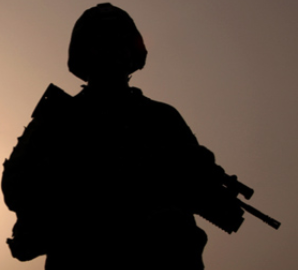
After a decade in Afghanistan, NATO member states are preparing to remove their troops. The organization and the International Security Assistance Forces (ISAF) it leads have shifted from combat to preparing local forces for transition. Yet for the country to thrive post-war, ISAF will have to place special emphasis on gender issues.
WMC Women Under Siege
The myth of how the hijab protects women against sexual assault
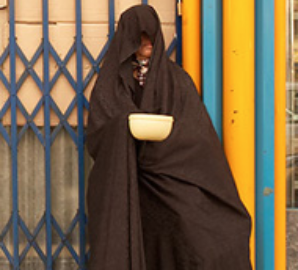
I was only 6 years old when my family was forced to flee the civil war in Afghanistan for Pakistan in the late 1980s. My sister, Neelo, who is five years older than me, was enrolled in a Saudi-funded Muslim Brotherhood-inspired public school for Afghan refugees. She, like many Muslim women, wore a simple headscarf.

WMC Women Under Siege
The ongoing tragedy of India’s widows
Widows in India have a pronoun problem. The estimated 40 million women widows in the country go from being called “she” to “it” when they lose their husbands. They become “de-sexed” creatures.

WMC Women Under Siege
The fine line between 'obedience' and rape in North Korea
When Shin Dong-hyuk was 10 years old, he watched his mother be raped by her boss. In an attempt to fetch her for dinner, Shin approached the office where he had been told she would be. The door was locked. Through a window he saw her kneeling as she washed the floor, then saw her boss approach and grope her. Shin’s mother and the man took off their clothes, and the boy watched the rest unfold.

WMC Women Under Siege
License to rape: How Burma’s military employs systematic sexualized violence
Last week, a young woman from the Karen ethnic minority in Burma reported being “beaten, drugged, and sexually assaulted by two men wearing army fatigues.” In November 2011, reports emerged that four women were being kept as sex slaves by the Burmese military near the Kachin-China border; forced to cook and clean during the day and gang-raped at night by the soldiers in the Light Infantry Battalion 321. These reports, unfortunately, are not rare.