
















WMC Women Under Siege
Inching forward against military sexual assault
U.S. legislators voted Wednesday to help stanch the overwhelming problem of sexualized violence in the armed forces, Reuters reports. The idea is to make it easier for victims of sexualized violence to come forward while decreasing the threat of retaliation from superiors in the chain of command.

WMC Women Under Siege
Mali conflict is latest to employ forced marriage as tool of war
Saran Keïta Diakité painted a dismal reality for women in Mali in a speech she gave to the UN Security Council in April. “They carry out a form of ‘marriage’ so that, at night, you can be treated as a sexual slave,” Diakité said. “During the day, you are there to serve tea to the men and attend to their every need. This is why I always say that what’s happened in Mali is unprecedented."

WMC Women Under Siege
Tracking a rumor: Is there a sugar factory in Syria being used as a rape house?
We were seated on a scratchy nylon mat with “UNHCR” written all over it. Children with the same beautiful, olive-complexioned face stared big-eyed at me from every corner of the furniture-less room, and their mother cried as she talked about the many massacres her family had fled in Homs five months previously.

WMC Women Under Siege
The long struggle against systematic rape in conflict-ridden Kashmir
Just a few weeks ago, some 50 Kashmiri women came together to demand that police reinvestigate a well-known case of mass rape. The women—teachers, students, journalists, human rights workers, lawyers, and other professionals—filed a public interest litigation case before India’s Jammu and Kashmir high court. The alleged set of crimes, known as the Kunan Poshpora case, happened more than 20 years ago, on February 23, 1991, when armed forces allegedly raped at least 32 teenaged, adult, and elderly women.

WMC Women Under Siege
The legacy of silence: Why we ignore the rape of women from Guatemala to Syria
Just before 2 a.m. and nearly half a world away, I watched a guilty verdict from Guatemala scroll by tweet by tweet on my phone. Former President Efrain Rios Montt was convicted on May 10 of genocide and crimes against humanity and given 80 years in prison. As the news came through, I felt a satisfied chill—17 years after the murder of 200,000 Guatemalans and the rape of 100,000 women, mostly Mayans, justice has actually come in our lifetime.
WMC Women Under Siege
Q&A: A fresh look at rape during the U.S. Civil War
Crystal N. Feimster is no stranger to uncomfortable narratives. A feminist scholar in the department of African-American studies at Yale University, Feimster has spent much of her academic career addressing and unpacking the often-controversial stories woven through racial and sexualized violence. She has found 450 court martial cases from the Civil War related to rape and other sexualized violence, but says that, as we still find today, the crime was “overwhelmingly underreported.”

WMC Women Under Siege
From Morocco to Denmark: Rape survivors around the world are forced to marry attackers
In March 2012, a 16-year-old girl named Amina Filali killed herself by drinking rat poison. She had been raped and forced—by Moroccan law—to marry the man who had raped her.
WMC Women Under Siege
Lack of clean water tied to rape in the Solomon Islands
On any given day, women around the world will find themselves in danger of rape while performing the most basic acts of survival. Acts borne of necessity, such as fetching clean water for cooking or washing, or gathering firewood, often leave women vulnerable to rape and gender-based violence as they are forced to venture to remote areas. In the Solomon Islands, the problem is severe.

WMC Women Under Siege
A needed controversy over sexualized violence in Democratic Republic of Congo
In August 2010, reports began trickling out of Democratic Republic of Congo about another tragic episode of mass sexualized violence perpetrated by rebel troops over four days in the eastern town of Luvungi. But in a recent issue of Foreign Policy, a debate sprang up about the way outsiders have portrayed the attack. The controversy highlights the need for a more candid discussion about Congo.

WMC Women Under Siege
Report: Sexualized violence may disproportionately affect children in war
“They didn’t hit her, but they ruined her.” That’s how a young woman named Maimouna described the gang rape of her 16-year-old neighbor in Mali, according to a new report from Save the Children. The NGO has transcribed interviews with witnesses such as Maimouna and with dozens of firsthand survivors to illustrate their latest findings.

WMC Women Under Siege
April 03, 2013 | Lauren Wolfe |
Disability,
International,
Violence against women,
WMC Loreen Arbus Journalism Program
Syria has a massive rape crisis
All across the war-torn country, regime soldiers are said to be sexually violating women and men from the opposition, destroying families and, in some cases, claiming lives.

WMC Women Under Siege
Now in their 80s and 90s, aging WWII sex slaves haven’t forgotten
It’s a euphemism we still haven’t shaken. “Comfort women” refers to the women and girls—usually foreign, from countries like Korea, the Philippines, and China—forced by the Japanese military to do sex work mainly during World War II.

WMC Women Under Siege
Women’s bodies: Cause of ‘epidemics and disasters’?
Her name is Amina. She is a teenage girl. A man in her country, Tunisia, thinks stones should be thrown at her until she dies because she posted a photo of herself on a website. Because she is a woman. Because she had the audacity to make a comment about her own body, and to photograph her body, and to use it to share her ideas with others.

WMC Women Under Siege
How media can help stop rape
With the verdict in on the Steubenville rape, we are now confronted with yet another case involving two 13-year-old girls in Torrington, Conn., who say they were sexually assaulted by three young men. Presumably, the media will say these boys had a “bright future” ahead of them just as it said of the Steubenville boys. And just as in Steubenville, I expect the mainstream media to play the same game it always does—ignoring the victim and focusing entirely on how this will impact the lives of the rapists.
WMC Women Under Siege
Un-silencing the crime of sexualized violence against journalists
In June 2011, I published a report at the Committee to Protect Journalists called “The Silencing Crime” about sexualized violence and journalists. I called it that because rape and other forms of sexualized assault are used constantly around the world to frighten women journalists into silence, and unfortunately, the method is effective, my research found.

WMC Women Under Siege
Reports surface of rape and torture in Iraq
It has been 10 years since the U.S. invasion of Iraq, and stories of torture and sexualized violence are still coming to light. As Al-Jazeera reported Tuesday, Amnesty International’s recent publication, “Iraq: A decade of abuse,” is a horrifying, pain-filled heap of rape, sexualized torture, and other forms of sexualized violence. And the rights group is still gathering evidence.

WMC Women Under Siege
Poynter: CNN’s Steubenville coverage called too sympathetic to teens found guilty
Journalists took to Twitter Sunday to criticize the the media’s coverage of the two teenage boys who were found guilty in the Steubenville, Ohio, rape case. Lauren Wolfe, Xeni Jardin and others called out CNN’s Poppy Harlow and Paul Callan for sympathizing with the men and highlighting that the woman who was raped was “allegedly drunk.”
WMC Women Under Siege
March 13, 2013 International,
Violence against women
International campaign asks 57th Commission on the Status of Women to uphold women's rights
The International Campaign to Stop Rape & Gender Violence in Conflict, on whose advisory committee WMC's Women Under Siege serves, sent the following letter to the delegates of the 57th United Nations Commission on the Status of Women today. The letter calls on member states to conclude negotiations with a strong statement that will prioritize action to end violence against women.
WMC Women Under Siege
Why I work with rape survivors in Africa
“Has the world forgotten about us?” These words from Fatima, a Darfuri rape survivor, still haunt me. It was the summer of 2006 and I was collecting interviews as part of my research-based activism with 25 Darfuri genocide survivors at a refugee camp in Chad.
WMC Women Under Siege
Gloria Steinem challenges BBC presenter on violence against women
On Tuesday, Gloria Steinem, who originated WMC’s Women Under Siege, spoke to BBC “Hardtalk” presenter Stephen Sackur about the women’s movement. But I wanted to do more than point you to the video (which you can watch here) and highlight something I found particularly interesting about their chat.
WMC Women Under Siege
New Holocaust findings highlight larger gap in conflict and rape research
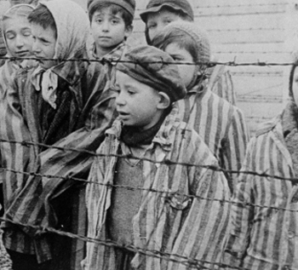
One of the most emailed New York Times stories over the weekend was a piece about the Holocaust. In it, Eric Lichtblau explains new findings from experts at the United States Holocaust Memorial Museum: that the number of Nazi ghettos, camps, and other sites of systematic human misery is six times what the study authors had predicted.

WMC Women Under Siege
Salacious, voyeuristic, insensitive: How the media harms one survivor of rape
Context. It’s a simple word that requires its own set of words to make clear: Context, according to Merriam-Webster, contains “the parts of a discourse that surround a word or passage and can throw light on its meaning.” Everything has it. But that doesn’t mean it’s in great supply, whether in how we speak about the world or in how we are presented with the news.

WMC Women Under Siege
Kenyan rape survivors sue government for inaction
Imagine if rape survivors held politicians accountable every time their government failed to protect them. In Kenya, eight survivors of sexualized violence are suing their country for its “non-action” in response to attacks following Kenya’s 2007 general elections. As we’ve written about previously, the post-election violence took place during a dispute over who had won, which developed into tribal clashes.

WMC Women Under Siege
The media and violence against women: A conversation with Maria Hinojosa
On January 25, I moderated a panel on the media and sexualized violence as part of our symposium, “Global sexualized violence: From epidemiology to action,” with Columbia University. The panel, with journalists Helen Benedict, Maria Hinojosa, and Jenny Nordberg, was lively, to say the least, with hot debate between the audience and speakers as to what the media is doing badly and needs to do better when it comes to covering rape.

WMC Women Under Siege
February 13, 2013 International,
Violence against women
Gender justice group urges South Africa's Zuma to create commission to stop sexualized violence
After the gruesome rape and murder of 17-year-old Anene Booysen, South Africans are wondering how to put an end to their country’s high levels of sexualized violence. In an open letter, the Sonke Gender Justice Network, a human rights group based in the country, calls on South Africa’s president to act.