
















OMAS GEGEN RECHTS, or “Grandmothers Against the Extreme Right,” challenges the revival of far-right extremism with personal histories inextricably tied to theirs and their parents' experiences with similar movements in the past against fascism, misogyny, and racism.

The Al Hassan case has the potential to shine light on the unique harm perpetrators commit against individuals based on their gender, which enforces patriarchal social norms and increases the potency of their crimes. It could also chart a path forward for international criminal law to define gender.
Some of the workers at Zimbabwe’s Hwange Colliery Company haven't been paid wages for years. Fearing reprisal if they tried to fight for them, their wives, mothers, and sisters have adopted their grievances, protesting for the wages and laying sporadic sieges at the mine’s gates.

Gender inequality and stringent cultural beliefs left women most vulnerable to the HIV epidemic. With the coronavirus, Malawi mustn't repeat the same mistakes.

The pandemic has further revealed how workers in the global garment industry — especially women, who make up nearly three-quarters of garment workers — are sacrificed as economic collateral, and how fast fashion prioritizes profits over people.

While Colombian media covers stories of sexualized violence in almost exploitative detail, it fails to highlight the victims’ ethnicity and race, thereby following a long tradition of obscuring who in the country is disproportionately victimized, as well as hiding the underlying structural causes that leave them most vulnerable.

While Greece has slowly begun to reopen, overcrowded refugee camps on the Greek island of Lesbos are still under lockdown. And without government intervention, experts and activists say that residents there are just sitting ducks waiting for an outbreak of the coronavirus to sweep through the camps like wildfire.

Years after Marawi was liberated from jihadists loyal to the Islamic State, thousands of residents have not been allowed to return to their own land. Now, they face the government’s backhoes contracted to flatten the remnants of their ancestral property to commercialize the city and make it a tourist destination.

As climate change and the pandemic inflate food sales, families in Kenya's slums, already sunken into poverty, are resorting to marrying off their young daughters.

Cases under India’s Protection of Children from Sexual Offenses Act are meant to be fast-tracked, but the reality of the judicial system's backlog often means that those cases can drag on for years. One of Delhi's most infamous and horrific rape cases is among them. Amid the long slog of court appearances, postponements — and now, the pandemic — a child victim grows up.

Women survivors of sexual torture under Augusto Pinochet's 17-year dictatorship in Chile never felt that the horrors suffered during that time have ever been adequately confronted, allowing his legacy to remain intact. Then his relative was appointed to a political role protecting women's rights.

When an Instagram private group of twenty schoolboys from Delhi's elite schools fantasizing and degrading their female classmates went viral, it was supposed to offer a cultural reckoning for India's teens about misogyny and gendered violence. Then, it took a dark turn.

Women Under Siege speaks with Masrat Zahra, a Kashmiri photojournalist and recent awardee of IWMF's Anja Niedringhaus Courage in Photojournalism Award, over the phone about her terrorism charge and the work she sees for herself ahead.
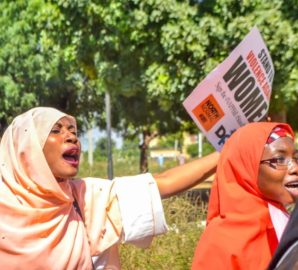
Rallies across Nigeria's northern states push for protections for victims of sexual and gender-based violence, led by young women who are challenging the roles they occupy in a deeply conservative society.
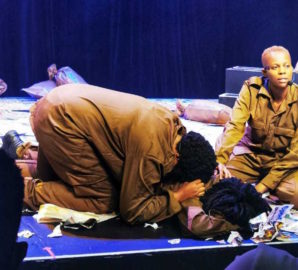
A spoken-word performance takes aim at the pervasiveness of gender-based violence in South Africa, inspiring community activism from the grassroots and demanding that the government confront its failure to protect women.
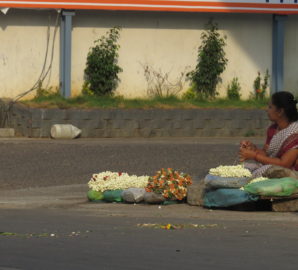
Since India went under a strict countrywide lockdown, the mostly women who make their living selling flowers, fruits, and fish every day on thoroughfares and platforms don’t know how they’ll feed their families.
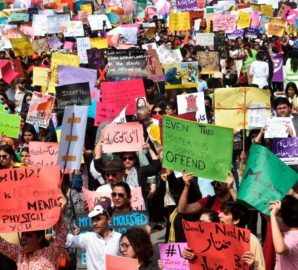
Now in its third year, the Aurat March is raising the call of Pakistan's women to abolish systems built on hegemony, patriarchy, and neo-colonialism.

Continuous attacks by machete-wielding gangs against artisanal miners in Zimbabwe disproportionately affect women miners, highlighting longstanding impediments for women to access the sector and threatening the government's target for an annual mining revenue of $12 billion by 2023.

Last August, India's Hindu nationalist government scrapped Articles 370 and 35A of the Indian constitution, stripping the state of Jammu & Kashmir of its special constitutional status. What followed is only the latest chapter in a documented history of sexualized violence by security forces as a means to quell dissent in Muslim-majority Kashmir.
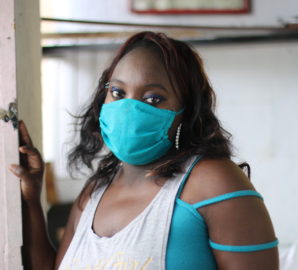
"We're one of the most vulnerable populations, and it's the government that makes us vulnerable. During this pandemic especially, we need maximum protection."

In early 2018, the story of a baby who was raped by a relative sent shockwaves around the world. Two years later, the world has moved on, but she is no closer to receiving justice.

The loss of resources, support systems, and general safety puts survivors at risk of further abuse.

Almost six months since it was first performed, “Un Violador en Tu Camino” (“A Rapist in Your Path”) has become a universal feminist anthem that has crossed borders, languages, and cultures.
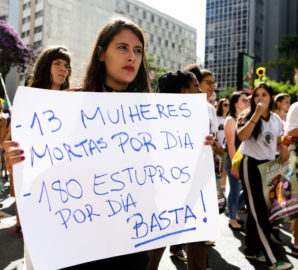
While murder rates are falling in Brazil, femicide rates continue to steadily climb, and with President Jair Bolsonaro at the helm, there are no promising signs of the violence abating.

In Mexico's northeastern state of Nuevo León, young feminists are creating their own safe spaces to share, bond and mobilize, and demand an end to the country's pervasive gender-based violence.