















Latina Illustrators Break Down Power

Rosa Colón Guerra was drawn into the indie comic book scene years ago, after seeing that it was mostly male-dominated and superhero-driven. Since then, she knew she wanted to be a part of the feminist comic book movement.
Miranda (Mir) Rosales knew from early on in her childhood that she wanted to use illustration as her medium for connecting with people.
Colón Guerra from Puerto Rico, and Miranda Rosales from Mexico City, both use comics and cartoons as commentary about climate change and militarization, and expose the forces behind these and other problems. Their bite-size cartoon curations on often dense themes give readers an opportunity to absorb critical analysis without feeling overwhelmed.
Visuals like these are key to reaching people who are rapidly scanning social media and the web. Content with visuals gets about 40 percent more engagement than those without, according to Forbes.
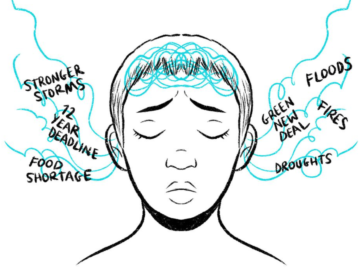
In publications like The Nib and The Washington Post’s The Lily, Colón Guerra explains why Puerto Ricans rose up en masse in 2019 and expresses the anxiety she feels about climate change. In the Los Angeles Times and other platforms, Rosales has delivered critiques about Mexico’s government not doing enough to combat violence.
“What I like about doing non-fiction comics is that I find myself getting educated while making the comic, and then seeing how that information reaches the rest of the people,” Colón Guerra, who owns Soda Pop Comics, said. “I try to make it as clear as possible because it might be that the comic is a little bit too text heavy, so I try to give you something appealing to look at that helps you understand the text a bit more. I just have a lot of fun with it. And people respond to the fun.”
Rosales, who is also an animator, echoed the same sentiment about the way she creates her illustrations. “What I really like doing is making it [the illustrations] funny. I'm inspired by other people that I know who are also Mexican women artists, and I feel like that's a very common thing in Mexican and South American aesthetics.”
“I feel like people will always choose either a white woman or a white dude to talk about things that I live every day”
This joy in creating helps them deal with the unpleasant aspects of making art that speaks truth to power. Besides racism and negative responses, they’ve dealt with other issues that Latinas experience across fields of work. For example, Colón Guerra, known for documenting the fallout from devastating hurricanes in Puerto Rico, fears being pigeon-holed and tokenized.
“You want to be the person who gets called to explain your culture. But you don't want to be the only person that gets called,” Colón Guerra explained. “I think that that might be a challenge where people, especially in the U.S., think that Latinos are a monolith. Specifically for Puerto Rico, they might not understand that we're even part of Latin America. I think that's the challenge: that people might not understand why I'm writing the comic that I'm writing.”
Sometimes, the issue is getting a call at all. “I feel like people will always choose either a white woman or a white dude to talk about things that I live every day, that they would rather have someone who is not brown or [not a] a woman to say it. I feel like that's a common thing that I run into,” Rosales said.
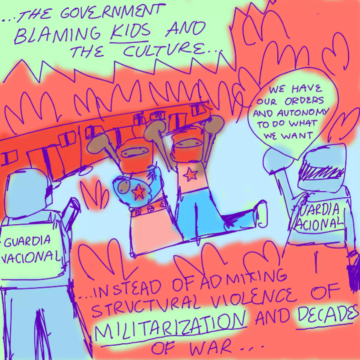
Her recent comic in the Los Angeles Times about singer Peso Pluma’s indigenous haircut is an issue she said creatives outside of her community wouldn’t be able to authentically communicate. In the illustrations, she criticizes the Mexican government scapegoating youth trends and popular culture for violence, but looking away from its own militarization.
At a time when there is such a high volume of information and so much distortion of news, Rosales and Colon Guerra understand the urgency to cut to the heart of issues. The artists insist on voicing their opinions and encourage others to do so.
“The only advice that you can give is to go for it because right now you could have the resources to start making art because all you need is a pencil and paper and if you want to reach more people, you can open social media accounts that reach a lot of people–problematic, as they may be,” Colón Guerra said.
Rosales encourages Latinas to push through any negative self-talk. “Believing in your own ideas is something that I would say is good to do if you want to do your own thing.”
More articles by Category: Arts and culture
More articles by Tag: comics, commentary, illustration, visuals, Latinas, Latinx, Latine


