















Are Diversity, Equity and Inclusion Still Buzzwords for Your Jefes?
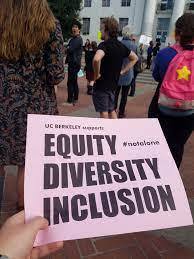
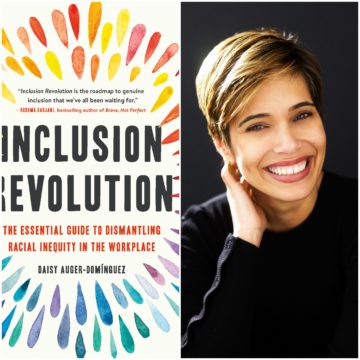
In reaction to the 2020 uprising in the U.S. against white supremacist violence, many public and private organizations rushed to recruit experts in Diversity, Equity and Inclusion (DEI). Over years, some of these initiatives have come under fire as empty public relations efforts that fail to transform workplaces. We talked to DEI expert Daisy Auger-Domínguez about her book Inclusion Revolution and where organizations are still failing.
Some people see DEI as simply public relations for corporations. How does your book address this?
I wrote Inclusion Revolution because I wanted to make sure that we were helping managers build new levels of ownership in this work. When we talk about building inclusive and equitable workplaces, what that means is that we are building workplaces that have the capacity to be fair and equitable. And that they build that into the DNA of organizations.
Employees' expectations have changed about the workplace, and it's no longer an acceptable practice to simply say that diversity, equity and inclusion are important. They [employees] want to know what you're doing about it. And they [organizations] also have to chip away at systemic inequities and the disparities, that exist across the organization, by frankly, forcing an equitable prioritization of resources and decision making.
What are the major roadblocks to DEI work?
The roadblocks are exclusive cultures that are marked by bias, prejudice, bullying, discrimination and harassment. We're talking about organizations that were, for the most part, designed to be unwelcoming and unsafe to people who don't fit the dominant culture. The other roadblocks and barriers to this work are leaders who are not trained to do this work, who lack the capacity to lead in a culturally competent way. Then you have human resource programs that are misaligned, that are simply trying to do what the business is telling them to do without taking into account what the business needs them to do and what the market is demanding. So instead of addressing the root causes of why you have workplaces that are predominantly white and male, they continue to blame the lack of representational diversity on a supply issue. We all know that it's not a supply issue. It's an acceptance issue, it's a matter of access and opportunity.
“Employees' expectations have changed about the workplace, and it's no longer an acceptable practice to simply say that diversity, equity and inclusion are important”
How are corporations failing when it comes to inclusion of Latinas?
They're failing, quite simply because they're not hiring, promoting and advancing enough of us. They don't speak about inclusion of Latinos other than during Hispanic Heritage Month. It's the flavor of the month and you fail to spend the time and the energy to really understand what it takes to create a workplace that is inclusive of the full diaspora of the Latino experience.
…there's research showing that about 76% of us feel forced to downplay who we are to survive in an organizational context. We all know that you simply cannot perform at your best when you're constantly modifying or playing down who you are, including your appearance, your accent, your body language, your communication style. So we need to debunk these biases that keep Latinos and Latinas from being seen as leaders and given access and opportunity to not only get the entry level jobs, but get that C-suite job.
When does DE&I work?
There are a lot of training programs designed for Latinos, and as much as I believe that they're helpful in building confidence, what we need to be building is the skills, knowledge and confidence in managers to make workplaces better. An example of DE&I being positive for Latinos is when you're not only talking about this during Hispanic Heritage Month. We have some amazing Latino leaders that are driving key areas of our business. And this is where DE&I works, not because we put them in a job —they earned their spots— but because they're also allowed to be who they are in that role, and that enables them to deliver to their fullest capacity, which enables them to contribute to the company's success.
Are remote and hybrid work affecting the thinking around DEI?
Diversity, equity and inclusion are here to stay. It is the biggest business imperative of our time to ensure that you are both recruiting and retaining talent across an intersectional lens. That is race, gender, age, ethnicity, etc.
This is the toughest labor market that anyone has ever experienced. Talent can go anywhere and they want to go places where they feel that they're going to be able to grow. We all experience work because we all have to put food on the table, put food in our children's bellies and put a roof over our heads. Nowadays, the opportunities and the access of what and where it can be done is a lot more barring. Organizations that do not seek to remove barriers and clear the advancement path for all Latinos in their workplaces are going to be left behind.
What is your goal with this book ultimately?
Much of what shaped my desire to write this book was my own experience in the workplace as a Latina from junior levels to executive levels. Throughout my career, I've often felt vulnerable and overlooked.
With Inclusion Revolution, I wanted to put and codify in one place the things that I've seen work, that haven't worked, and the framework around reflection, action and persistence that I believe are going to be the source of our success. As intractable as eradicating racism in the workplace may feel, it can be done with the right incentives and the right clarity and the right commitment and willingness to do this work. I wrote the book for managers because I want to strengthen our collective capacity to build workplaces where fairness, equity and inclusion are the norm to recognize the obstacles that will get in the way and to keep going.
One word to define yourself?
Determined.
Edited for length and clarity
More articles by Category: Race/Ethnicity
More articles by Tag: Latinas, Latinx, Latines, Diversity, Inclusion, Equity, workplace, Daisy Dominguez


