















Andrea Echeverri — A Flower Power Rocker Whose Roots Broke Ground
More than a music genre, rock and roll is poetry, revolution, sexuality and activism, and when you add rockeras to the picture, it becomes an entirely different cocktail of intensity as Netflix´s new documentary series Break it All: The History of Rock in Latin America will hopefully capture.
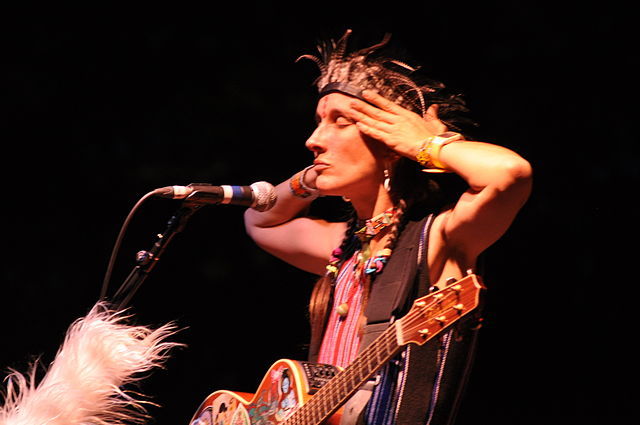
The documentary includes Andrea Echeverri, the tattooed, pierced, and iconic frontwoman of Aterciopelados—the Grammy-winning Colombian rock band that rose to stardom in the late 1990’s with their unapologetic lyrics about political corruption, machismo, and environmental decay. For all of her high priestess femininity, and for over three decades now, Echeverri´s tropical garage punk sound can still stir up a mosh pit of male energy from San Juan, Puerto Rico to Santiago, Chile.
If the U.S. antiwar movement and its drug-infused counter culture gave us Janis Joplin and Grace Slick, military dictatorships and bloody narcotrafficking violence gave way to rock en español and the rockeras who used their lyrics and guitars to voice their discontent.
With her David Bowie-Grace Jones-like androgyny, Echeverri did not submit to societal parameters. Despite coming from the professional, polished class of Bogota society and having earned advanced art degrees, on stage she rejected lady-like posturing and just stood there hunched over, legs apart, frowning, make-up less, emoting as she desired into the mic. Off stage, I had the opportunity to watch her take charge of aggressive press questioning with intelligence and picaresque sarcasm if it turned sexist or frivolous.
Standing close to five foot eight with a flat chest, body art, and a wide variety of colorful pixie, punk, and hippie hairdos over the years, her natural ability to tower over the guys in her band and many Latin American males gave her that playground advantage in a boyish music world. She towered over them not only physically, but also mentally in her bird's-eye view of the world.
While mega groups like Argentina´s Soda Stereo kept to the formula of mainstream cool in their writing, avoiding politics, Aterciopelados’ rise to fame occurred because of Echeverri and group cofounder Hector Buitrago´s playful way of hitting upon heavy topics like the drug war, sexism and political corruption.
A song like “No Futuro” is a punk manifesto of societal pessimism; “Colombia Conexión” includes head-banging pride for their land´s natural resources (petroleum) with lyrics such as Gringos, go home! to remind everyone of the real enemy in the room; “Cosita Seria” deals with street harassment and a girl’s revenge on cat-calling men; and songs like “Bolero Falaz" and “Baracunata” are tracks that brought them worldwide fame for their take on blatant sexism and tortured romanticism in Latino culture. “Baracunta” is an electric guitar and accordion adaptation of a folkloric song about a so called “easy woman” who gets on the back of every guy´s motorbike and that no man in his right mind would ever show in public. It´s made up of invented coastal slang that pokes fun at the evil name-calling directed at free-thinking women like Echeverri.
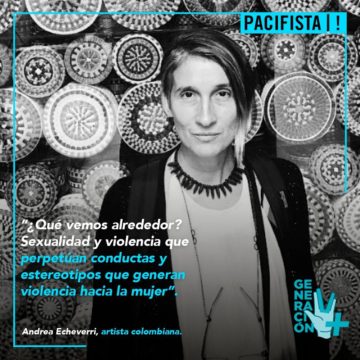
The legacy of female artists has always been tainted with society’s tendency to sexualize women. Take Patti Smith for example, and how a popular platform like Spotify names all her lovers in her biography. But if you read Lou Reed´s bio there is no mention of his lovers (male or female), allowing the work of male artists to stand on its own. The implicit message is that in order to understand a female artist’s career, we have to talk about her male partners, whether or not they had anything to do with the art.
Echeverri has been deliberately private about her paramours. In 2005, inspired by her personal experiences as both lover and mother, she released her first eponymously titled solo album that went to the heart of all the organically psychedelic sensations she was undergoing. It was sensual, fecund, moody, and deliriously joyful, and in true Echeverri fashion, it never shied away from telling it like it is.
Along with Echeverri, Mexico´s Julieta Venegas and Brazil´s Rita Lee stand out among the genre´s trailblazing talent and newcomers like the non conformist Colombian-born musician Lido Pimienta follow in their footsteps. The series should pay proper tribute to these and other women. The trailer —sigh— is full of nearly all male voices, a mirror of the history of male artists sucking up the oxygen and leaving little air for female expression.
Echeverri, who released the single “Más allá de la ventana" this month which she recorded during the pandemic, never waited for her "moment." She long ago claimed her sacred space in rock history, all the while giving the finger to the belleza factory production of Latin America.
More articles by Category: Arts and culture
More articles by Tag: rock, Music, documentaries, Netflix, Andrea Echeverri, Colombia, South America, Latin America, Latinas, feminism, Grammys


