
















On February 28, The César Awards, which are essentially the French Oscars, awarded the Best Director honor to Roman Polanski — a man who fled the United States after pleading guilty to the statutory rape of a 13-year-old girl in 1977.

These characters’ journeys expose our culture’s ridiculous link between relationship status and total happiness

2019 was a banner year for women in the entertainment industry. But female filmmakers are still unable to break the “celluloid ceiling.”

No women were nominated in the category of Best Director at the Golden Globes even though there were more women-directed top-grossing movies in 2019 than in any year before.

Waves is rare in its willingness to present a blurred marriage of volatility and sympathy without preaching or suggesting anything to the viewer. The movie itself crashes down on the audience like a wave, putting viewers in a state of constant unrest.

A new report from GLAAD (the Gay and Lesbian Alliance Against Defamation) shows that there has been an incredible improvement in the representation of the LGBTQ community across TV platforms this year.

In early September, the news broke that Adele Lim, a screenwriter for the 2018 movie Crazy Rich Asians, was no longer involved with writing the next two sequels in the franchise. Why? Lim reportedly learned that while her white, male co-writer was offered between $800,000 to $1 million for this work, she was offered significantly less — around $110,000.

Roll Red Roll, a new documentary directed by activist Nancy Schwartzman, explores the enduring cultural implications of the Steubenville High School rape case by focusing on the role social media played in it.

Her adaptation of the film — the eighth — will not only highlight the feminist understones already present in the novel, but also examine the text with a modern eye, drawing on society’s increased sensitivity to gender fluidity.
Many assumed the famously red-headed Ariel would remain as such in the live action version, and Halle Bailey clearly does not fit that image. Shortly after Bailey was cast, #NotMyAriel started trending on Twitter.

This film takes place in 2006, at the height of over-surveillance of Arab and Muslim communities in a post 9/11 United States and gives viewers a much-needed view into the inner life of a Muslim American teen girl.

Referred to as the “mother” or “grandmother” of French New Wave cinema, Varda was a pioneering director who influenced a new generation of filmmakers by making movies with feminist themes.

Us not only imparts an eerie warning about the repercussions of idly living a life of privilege as people suffer beneath you, but takes the warning a step further by showing what can happen when the “outsiders” the privileged are so afraid of letting in, the people who have been pushed below and ignored, finally force their way in — and do so with a vengeance.

Can a superhero movie like Captain Marvel teach us anything about the “misinformation age” in which we currently live?

Ultimately, the impact of representation in movies benefits so many more women than just those in the film industry. When more women are represented, little girls who watch that representation can imagine themselves taking on those roles one day.

Nominations are a legitimate indication of who is worthy of not only cultural acknowledgment but a financial investment. This is why it’s crucial to pay attention not only to who is being recognized at the Academy Awards but also to who isn’t.

Thanks to the progress the #MeToo and Times Up movements have made in shining a light on the injustices women in the film industry face, I naively assumed that women would be better represented among this year’s award nominees. I assumed wrong.

South Africa’s entertainment industry has historically told monolithic narratives of black lives. While these narratives do reflect the reality of many black South Africans, they are not the only experiences of black South Africans and, moreover, not the only experiences black South Africans should be told are available to them.
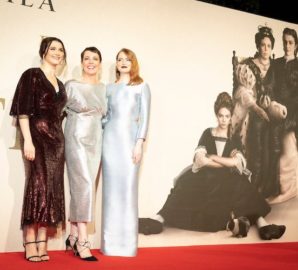
The Favourite leans into the intentionality of the female characters’ sexuality and of their savagery, giving each character her own agency over both of these forces and, in doing so, casting their actions as morally ambiguous.ar
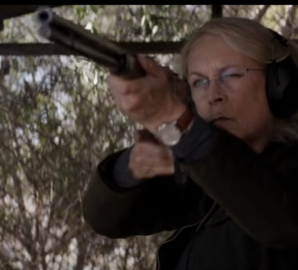
Bucking the trend of male heroism, many slasher films have opted for “the Final Girl”: protagonists who are victims of murderous circumstances — who weren’t looking to fight for their lives but rather had the fight thrust upon them — but who survive nonetheless.

This year is the 20th anniversary of the widely beloved romantic comedy Practical Magic, a film that argues sorority is the most powerful magic available to women specifically because of its ability to uniquely support and instill confidence in each other.

Popular but vicious characters like Regina George in Mean Girls, the spoiled but well-meaning protagonist Cher Horowitz in Clueless, and ambitious, cunning Blair Waldorf (Queen B of the Upper East Side) in Gossip Girl are all as beautiful, wealthy, self-centered, and ambitious as they come. There’s also another trait they all share, however, a trait that seems to be a key element of the “popular girl” trope: signs of have an eating disorder.

The Scarlett Johansson incident was hardly the first time a cisgender actor was criticized for taking a role many believe should have gone to a trans actor. In fact, a pattern of cisgender actors being cast as, and then inevitably critically acclaimed and rewarded for playing, transgender characters has emerged over the past few years.
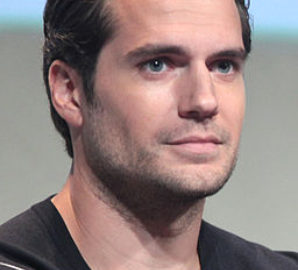
Neither the #MeToo movement, nor the basic acknowledgment of a woman’s agency, decrees the death of romance. The refusal to let go of traditional courtship, however, illustrates not just Cavill’s, but many straight men’s, inability to accept the possibility, let alone reality, of a shift in the balance of power between men and women and their equation of that shift in balance with the “death” of dating.

An average of more than 2500 people were murdered per year between 2008 and 2011 in Juarez, and female residents of the city have particularly been the targets of femicide, or killing women because of their gender. Yet experts estimate that only one out of every four cases of murdered women in Juarez are even investigated by authorities, and criminal charges were only filed in 2 percent of those cases.