















Why we all need to be challenged by 'Waves'
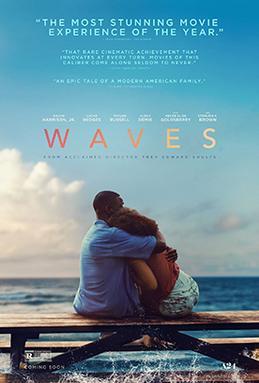
Waves, the new film written and directed by Trey Edward Shults, follows an upper-middle-class African American family nestled in suburban Florida. Tyler (Kevin Harrison Jr.) is a hyper-focused yet emotionally fragile high school wrestler, and Emily (Taylor Russell) is his quieter, contemplative little sister. The Williams family also includes Tyler and Emily’s stepmother, Catherine (Renée Elise Goldsberry) and their father, Ronald (Sterling K. Brown). Each member is communicative and shows their love for one another. They all attend Tyler’s wrestling matches, go to church as a foursome, and occupy whole booths while out to breakfast as they arm wrestle next to the syrup. They’re the picture of ascension and resilience, acutely aware of the biases that shade their world, yet eager to circumvent and overcome them.
This is the authentic, admirable visage of family Waves gives the audience before frantically decimating it.
Waves is rare in its willingness to present a blurred marriage of volatility and sympathy without preaching or suggesting anything to the viewer. The movie itself crashes down on the audience like a wave, putting viewers in a state of constant unrest. The first half of the bifurcated movie immerses the audience in raw, claustrophobic unease, while the latter half drops the viewers into a state of cautious yet miraculous euphoria. The film can be difficult to watch at times, and it doesn’t offer much in terms of answers to the questions it raises, but its refusal to offer overt resolutions makes it one of the most punishing and necessary films of the year.
Waves is as much about parenting as it is about surviving youth. Tyler and Emily navigate their desire to manifest joy and triumph while entombing the anxieties and sadness storming within them. Tyler tries to suppress the physical pain of a shoulder injury as well as the emotional pain of developments in his relationship with his girlfriend. Emily tries to carve her own path as an individual without letting her relationship to Tyler be the ultimate force in her life. These would both be difficult enough, but both most also deal with their dad’s laser focus on Tyler’s athletic career, and subsequent absence from Emily’s life. As the movie progresses, these parent-child relationships become all the more strained. Above all else, Ronald and Catherine’s ultimate inability to protect or heal their children serves to show how quickly our bodies and relationships can deteriorate.
The film is grounded by Sterling K. Brown’s performance. He’s a hulking figure on screen, who at times struggles with his own hopes for and expectations of both his marriage and his relationship with his children. Brown portrays a father aching to express his vulnerability, but thwarted by self-imposed authority and age. This makes the father’s brief moments of tenderness are all the more disarming.
While Brown tethers the film to the ground, it soars when it follows Emily and Tyler. Both siblings are well drawn in the details: Tyler’s girlfriend, played by Alexa Demie, is in his phone under the name “Goddess” while Emily unassumingly flounders while trying to apply lip gloss at prom. Each character exists squarely in their own storyline, threaded together only through a shared living space. As they encounter tragedy and comfort, joy and catastrophe, viewers see the unspoken bonds of siblinghood. They bear witness to the way in which, as siblings, their realities are both in direct relation and response to one another, yet simultaneously independent.
Oscar-winning composers Trent Reznor and Atticus Ross, along with director Trey Edward Shults, allow music to guide this film; it’s the lone aspect of the movie that actually tells us how to feel and that takes a moral or ethical stance where the characters will not. Tyler has a Life of Pablo poster on his wall and screams the lyrics to Kendrick Lamar’s “Backseat Freestyle” in front of a bonfire. Frank Ocean is everywhere throughout the film. Emily looks wistfully out car windows listening to Animal Collective, while her loving yet corny boyfriend, played by Lucas Hedges, talks about Vampire Weekend and bumps newer, equally corny, Kanye gospel. A character finally snaps as Kanye’s “I Am a God” begins, and another reaches their emotional floor as Kid Cudi’s “Ghost” echoes in the background. The whole movie is finalized with a neat bow courtesy of Radiohead. For a film that is so willing to exist in ambiguity between despair and buoyancy, it’s incredibly impressive how well the pointed and meticulous musical cues work without seeming contrived or antithetical to the movie’s opaqueness.
Waves is a beautiful movie that will rip your heart out. It will then take the time to rebuild you each time it breaks you, but its relentless nature never allows you to feel fully whole. Its restraint is remarkable, and it asks a lot of its audience when it does let itself off the leash. When I left the theater, having finished weeping in my parked car, I drove home feeling totally incapacitated. But the further I get away from it, the more I can feel where the movie embraced me, where it bruised me, and why it’s important that we experience challenging movies such as this.
More articles by Category: Arts and culture
More articles by Tag: African American, Black, Film, Identity


