















The Biden Administration’s Moves to Protect Abortion are Good, Just Not Good Enough
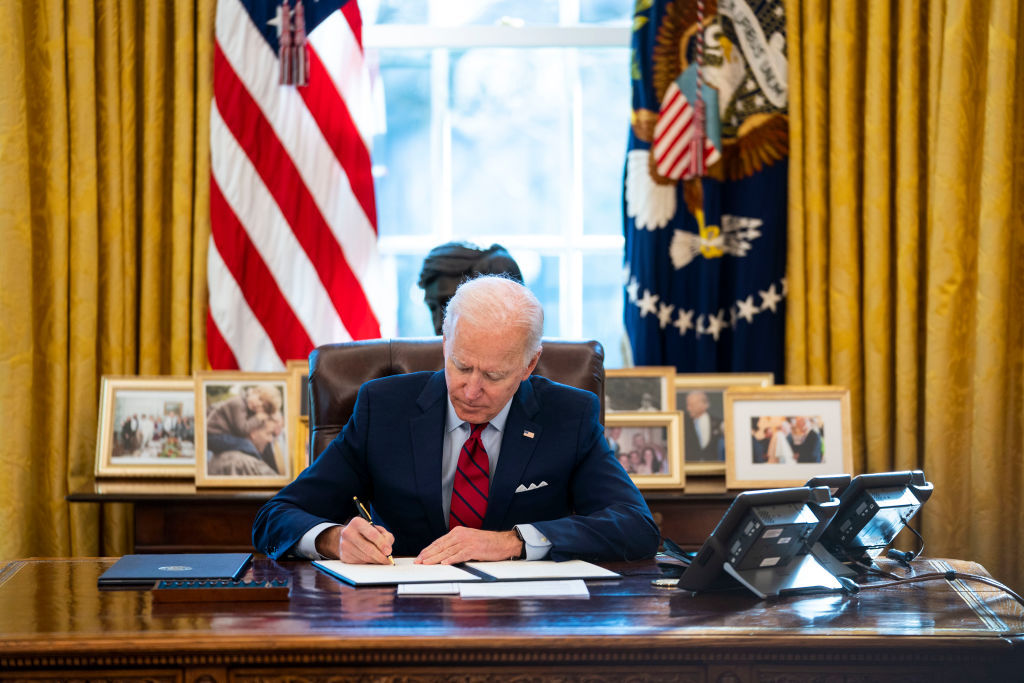
On January 28, the Biden administration issued a much-anticipated Presidential Memorandum “protecting women’s health at home and abroad” that reversed four anti-abortion policies adopted under the Trump administration. While this move undoes some of the harm done to reproductive rights over the last four years, it falls far short of being the “bold and proactive” policy package demanded by reproductive rights activists.
This failure will be felt as more conservative state legislatures pursue anti-abortion measures and the Supreme Court — made significantly more conservative by President Trump — is likely to hear cases in the near future that could provide an opportunity to overturn Roe v. Wade. It also highlights a sense of urgency — we may have only two years of a Democratically-controlled White House and Congress to secure lasting progress on abortion rights.
During the 2020 election, then-candidate Biden issued a detailed Agenda for Womenthat recognized a “woman’s constitutional right under Roe v. Wade” and pledged to take action against attempts to violate this right.
President Biden’s January 28 memorandum included important measures, yet none followed up on his campaign promise to more firmly entrench a woman’s right to a legal abortion under Roe v. Wade. The memorandum rescinds the Mexico City policy or “global gag rule,” which bars US funding for foreign organizations that perform or offer information about abortions; orders a review of a rule that cut off Title X funding for domestic programs involved with abortions; resumes funding to the United Nations Population Fund (UNFPA), which was suspended under the Trump administration; and withdraws the US from the Geneva Consensus Declaration, the anti-abortion global compact that was the brainchild of former Secretary of State Pompeo.
President Biden’s memorandum was issued nine days into his term and follows over three dozen executive actions, including executive orders on racial equity, immigration, the environment, and the coronavirus pandemic. While those issues undoubtedly demanded swift action, President Biden should also have acted to secure reproductive rights immediately to indicate that they, too, are at the top of the policy priority pecking order.
Moreover, the moves were couched in terms of “protecting women’s health” and issued along with other healthcare actions, such as reopening the Affordable Care Act marketplace.
Biden could have indicated his concern for abortion rights by repealing Executive Order 13535, which reinforces abortion restrictions in Obamacare. He could have repealed or revised amendments that restrict abortion access, lifted restrictions placed on medication abortions, expressed support for the Global Health, Empowerment and Rights Act, and repudiated the Commission on Unalienable Rights and the Fetal Tissue Advisory Board.
Yes, there is a limit to what can be done via executive action. But Biden’s defensive moves indicates his intention to play it safe when it comes to reproductive rights.
Finally, the language of the memorandum itself never takes a stand on abortion, framing its commitments in terms of ensuring that women have access to “complete medical information, including with respect to their reproductive health” without a reference to abortion or Roe v. Wade. While the order proclaims support for “sexual and reproductive health and rights” — without mention of abortion — it says the harms from Trump’s extension of the global gag rule was the injury to US ability to work with partners, rather than its violation of a woman’s right to access an abortion. The quiet withdrawal of “co-sponsorship” of the Geneva Consensus, an effort spearheaded by the US, does not send nearly as strong a message as a forthright disavowal of the anti-abortion position it contains. Words matter, and tepid language does not make clear that the Biden administration fully supports each woman’s equal and fair access to legal and safe abortions.
In contrast, President Trump showed urgency and focus in his attack on abortion rights, fulfilling his election promise to his evangelical base. He re-imposed the global gag rule on the Monday following his inauguration, a move interpreted by abortion opponents as a signal that he was “taking immediate action on day one.” He subsequently expanded itto cover all U.S. foreign assistance in May 2017 and sub-grantees of foreign organizations in May 2019. He added to his anti-abortion legacy by appointing conservative judges opposed to abortion rights, including three Supreme Court judges that establish a 6-3 conservative majority. His anti-abortion focus wove its way into every element of federal government policymaking.
While President Biden’s memorandum provides a welcome change to the dangerous situation established by the Trump administration, it only partly restores the status quo of four years ago. The timing, presentation, and language of the actions indicate that abortion rights advocates will have to continue to fight to make abortion rights a bigger priority for the Biden administration.
President Trump made eliminating legal and safe abortions a cornerstone of his domestic and international policy. President Biden must avoid simply unwinding the Trump administration’s moves and instead take a strong stand to promote and protect a woman’s right to a legal abortion. Given that the right to abortion is always under threat, there is no time to waste.
Michelle Onello is an international human rights lawyer and Special Counsel at the Global Justice Center, an international human rights organization focused on gender equality. Onello is a graduate of Harvard Law School and The Johns Hopkins University.
More articles by Category: Health, International, Politics
More articles by Tag: Abortion, Reproductive rights


