

















We know that victims of wartime rape are not just victims, or even survivors. They are mothers, fathers, children, grandparents, teachers, advocates, cooks, helpers, and dreamers. A new video series about Congo offers a fuller story of the country and its people than what we usually see.


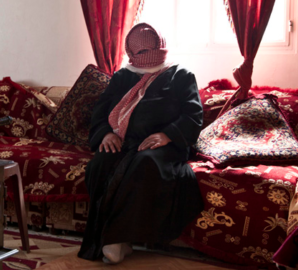
I met photojournalist Matilde Gattoni very recently on Facebook, which is to say we haven’t actually met in person. Even so, she’s already made an impression on me. Her work has a way of highlighting humanity—literally in chiaroscuro but also figuratively.

It’s easy to get bogged down in statistics of women who experience sexualized violence in the Democratic Republic of Congo. The numbers are staggering: A study published in the American Journal of Public Health in May 2011 showed that 12 percent of women in Congo had been raped at least once in their lifetime.



We know that thousands of women were raped during the Holocaust. We also know that rape was never part of any charges against anyone responsible for the era’s atrocities. In a thrilling new turn of events, files long locked away at UN headquarters in New York have revealed details of investigations into the use of rape by Nazis. Could this lead to justice for women brutalized in other wars?

After the 2010 earthquake in Haiti, stories of the disaster dominated international news media. Journalists rushed to report on the wreckage. Photographers scrambled for shots of the rubble. Aid agencies struggled to overcome obstacles to sending humanitarian aid.
I worked for many years as a reporter in upstate New York, where I covered local news like school board meetings and did features on things like watercolor exhibits at one-room libraries in one-traffic-light villages.
Even war is safer than this. Imagine it: Your family attacked. Your house teeming with soldiers. Your options running out. A protected area for victims of war sounds like a wise place to flee.

Let’s blame men. Many of us do—many women and even men blame men for the mass rape of women in war. It’s easy to point our fingers and name the perpetrator. But what if we were to step back and ask how men can actually be part of the solution? It requires a couple of basic assumptions.
