















Syria’s Quiet Crisis of Drug-Related Violence Against Women
Idlib, Syria—This wasn’t the first time that Fatima,* 29, was beaten by her husband, but it was the first time that she was hospitalized for it. Eventually, his abuse landed her in an intensive care unit. She suffered a miscarriage from the trauma.
The mother of two, who resides in the northwestern Syrian city of Idlib, said that her husband grew addicted to captagon pills in early 2023 and has been extorting her for money or jewelry ever since to fund his addiction. He insists that they give him happiness and strength, she said.
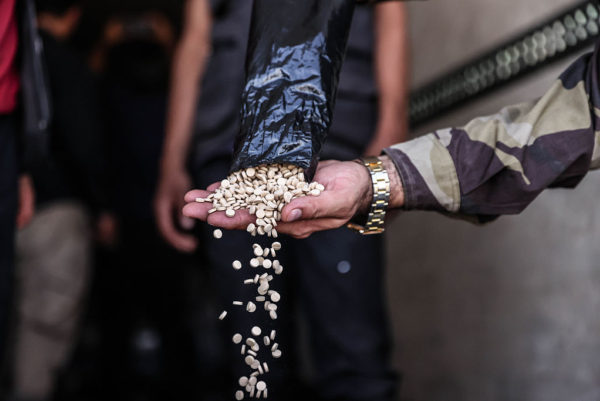
Fenethylline (Captagon) is a highly addictive pharmaceutical drug, originally produced in Germany in the 1960s — legally — as a treatment for hyperactivity, depression and narcolepsy. But it was eventually outlawed due to its side effects of heart risk and hallucinations.
Its addictive and hallucinogenic features are why counterfeit captagon drugs have persisted as a popular party drug, particularly in the Middle East.
According to a report by the Arab Center for Research and Policy Studies, Syria has become the largest producer and exporter of manufactured drugs. Despite efforts by neighboring countries to combat this threat, drugs continue to flow in large quantities, with 1,251 drug shipments seized in the Middle East between 2016 and 2022.
From 2011 to 2024, Syria was embroiled in a civil war between the Syrian government and opposition factions, resulting in the deaths of over half a million Syrians. 6.8 million Syrians have been displaced abroad.
Amid the chaos of war and the division of Syria into areas of influence, with the presence of four government or de facto authorities — the Syrian regime, the Syrian Democratic Forces (SDF), Hayat Tahrir al-Sham, and areas controlled by the opposition-affiliated interim government — the manufactured drug trade expanded and became more entrenched in Syria’s economy. The captagon trade alone grew into a billion-dollar industry that largely funded the regime and its loyalists.
In December 2024, opposition factions seized the capital city of Damascus, and former President Bashar al-Assad fled to Russia, ending a brutal regime that lasted for over 50 years. After the fall, the country’s Anti-Narcotics department said it seized some 13 warehouses and drug manufacturing plants, including 320 million captagon tablets.
One addiction treatment center run by the Syrian Green Crescent Society in northern Syria admits patients on a voluntary basis—with their informed consent—and offers medical and psychological support. And while stigma prevents many from accessing such rehabilitation facilities, many of those who have passed through this clinic’s doors were involved in violent crimes against their family members, said Qaiser al-Sayed, the society’s director.
After Fatima was discharged from the hospital, she filed a complaint against her husband in court but said the judge had insisted on reconciliation. “He was arrested and released only a few days later after paying a bribe,” she said.
Fatima now lives in her parents’ home — without her children — as she struggles to obtain a legal divorce.
She is considered lucky to have even survived: Others, like Aisha al-Sayeh, 23, from Aleppo, were not spared. Al-Sayeh was killed by her husband at the beginning of last year in a well-publicized case. Her husband was addicted to H-Bose (another street name for crystal methamphetamine in Syria, according to the Syrian Observatory for Human Rights), al-Sayeh’s sister Nida told WMC Women Under Siege. “He would constantly beat and abuse her.”
The United Nations reported that violence against women in Syria remains a persistent reality due to the complex effects of the prolonged crisis, displacement, and economic deterioration.
“Syria has recently witnessed a significant increase in cases of violence against women and girls, including domestic and spousal abuse, which in some cases has resulted in death,” said Nour Bakir, a psychologist in Idlib.
Bakir said that there are already many social justifications for domestic violence in Syrian society, including discipline. Adding the unpredictable behavior of a head of household suffering from drug addiction, Syrian women often find themselves forced to “endure the mood swings” of their husbands.
While the transitional government under Ahmed al-Sharaa has done well to dismantle the country’s narcotics infrastructure, the issue of demand remains—not just abroad but within. Drug abuse is now widespread in Syria, including among youth, who were once target consumers under the Assad regime.
According to a 2024 MedGlobal report, addiction cases have increased, especially among young people around the ages of 14 and 15, who overwhelmingly cited “escape from reality” as their motivation for drug use.
Students were deprived of their education due to war and displacement. And now, compounded by crises of unemployment and poverty in post-war Syria—along with the affordability and accessibility of these substances—the fight against drug abuse and violence in the country risks spilling over to succeeding generations. For Syrian families, the drug crisis threatens to unravel them from the inside.
Statistics on drug-related violence against women remain threadbare, and while the government continues to seize large stockpiles of pills, it must also integrate more comprehensive reporting data on the holistic consequences of this crisis to truly address it.
* Name has been changed for the victim’s protection.
More articles by Category: Gender-based violence, Health, International, Politics, Violence against women
More articles by Tag: Drug Abuse, Middle East and North Africa, Syria, Domestic violence, Intimate Partner Violence, Family


