
















In early 2018, the story of a baby who was raped by a relative sent shockwaves around the world. Two years later, the world has moved on, but she is no closer to receiving justice.

The loss of resources, support systems, and general safety puts survivors at risk of further abuse.

Almost six months since it was first performed, “Un Violador en Tu Camino” (“A Rapist in Your Path”) has become a universal feminist anthem that has crossed borders, languages, and cultures.
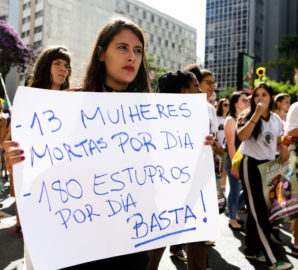
While murder rates are falling in Brazil, femicide rates continue to steadily climb, and with President Jair Bolsonaro at the helm, there are no promising signs of the violence abating.

In Mexico's northeastern state of Nuevo León, young feminists are creating their own safe spaces to share, bond and mobilize, and demand an end to the country's pervasive gender-based violence.

After a tumultuous two weeks in which abortion services were supposed to be operational yet remained inaccessible through Northern Ireland’s health service, the Department of Health said medical professionals were now permitted to "terminate pregnancies lawfully."

Months after Turkish forces launched an offensive in the Rojava region, which some have likened to genocide, a rise in miscarriages sheds light on the unseen impacts of the occupation.

While Venezuela reels from its ongoing political and humanitarian crises, attacks against members of the press, and particularly women journalists, have become especially acute.

In a year when Latin America was swept with protests against gender-based violence from Mexico to Chile, the Encuentro de Mujeres que Luchan, organized by the Zapatista community, welcomed some 4,000 women to the Chiapaneco highlands to unite in transnational feminist solidarity and confront the global crisis of violence against women.

Zimbabwe's maternal mortality crisis is pushing the debate on abortion, but the current economic crisis and stigma stand in the way of legalization.
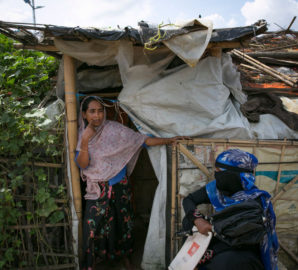
Burmese women are critical to understanding a country whose people have endured systematic violence and repression for far too long. They can’t be forgotten.

As the #MeToo movement steadily grows throughout Mexico, with thousands of actions, collectives, and ongoing projects in operation throughout the country, women are finding their power to fight back and build a society in which their lives are not in constant danger.

Women Under Siege spoke with Dr. Maxine Margolis about the three religious fundamentalist communities she observes in her book Women in Fundamentalism: Modesty, Marriage and Motherhood and the role of gender in their ideologies.

Women Under Siege discussed the disproportionate impact of the occupation on women with Kashmir scholars Ather Zia, founder of Kashmir Lit and co-founder of the Critical Kashmir Studies Collective, and Nitasha Kaul, a poet, novelist, artist, and associate professor of politics and international relations at the University of Westminster.

Zimbabwe's economic crisis has forced women working in informal setups to the fringes, where they're often rendered vulnerable to physical and sexualized violence.

Women Under Siege spoke with Lisa Wade, PhD, an associate professor of sociology at Occidental College and author of American Hookup: The New Culture of Sex on Campus, to better understand the relationship—and long history—between white supremacy, masculinity, and the American image.
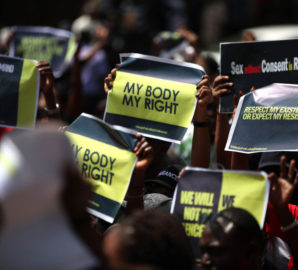
Recent months have brought to light the arbitrary arrests of women in Abuja nightclubs on erroneous charges of prostitution. During arrest as well as in police custody, women have reported rape and sexual and physical assault by officers.

Spain's Partido Socialista Obrero Español (PSOE) party may have won in the country's general elections in April, and in European elections in May, but the threat of anti-abortion, anti-immigration, and anti-feminist party Vox looms large across the country, especially for Spain's women, who have so much more to lose than to gain.

Decades after Guatemala's 36-year internal armed conflict, 36 Maya Achi women are seeking justice against the soldiers who raped them and the officials who gave them the orders.

It's tempting for Western audiences to believe that cell phones beget rape in Congo, but the real root causes of mass sexualized violence in the country require more nuance than that.

As Congress deliberates ratifying the Uyghur Human Rights Policy Act of 2019, Women Under Siege spoke with Mihrigul Tursun, a Uighur refugee, about her experience at what she describes as an "ethnic cleansing camp" for Uighurs in China's Xinjiang region.

Brazil has maintained its place as first among countries with the highest murder rate of trans and gender-diverse peoples. In a country that remains deeply conservative and religious, and under a president who has openly targeted the LGBTQ community to "rescue our values," Brazil's trans community especially is fighting to exist, freely, openly, and safely.

If women have historically been silenced and ignored about experiences of conflict-related sexual violence, the inverse is now true: survivors are being pressured to share their stories, emphasizing heinous details of sexual abuse and little else.

Organized criminal gangs displaced hundreds of families from their homes in the mountains of Guerrero state, Mexico. It's the women—mothers, grandmothers, aunties, and sisters alike—who are keeping their communities together.

The Trump administration’s latest use of domestic politics to hold international rights hostage will cost women's lives.