















'Because We Are Girls' Confronts the Long Shadow of Childhood Sexual Abuse
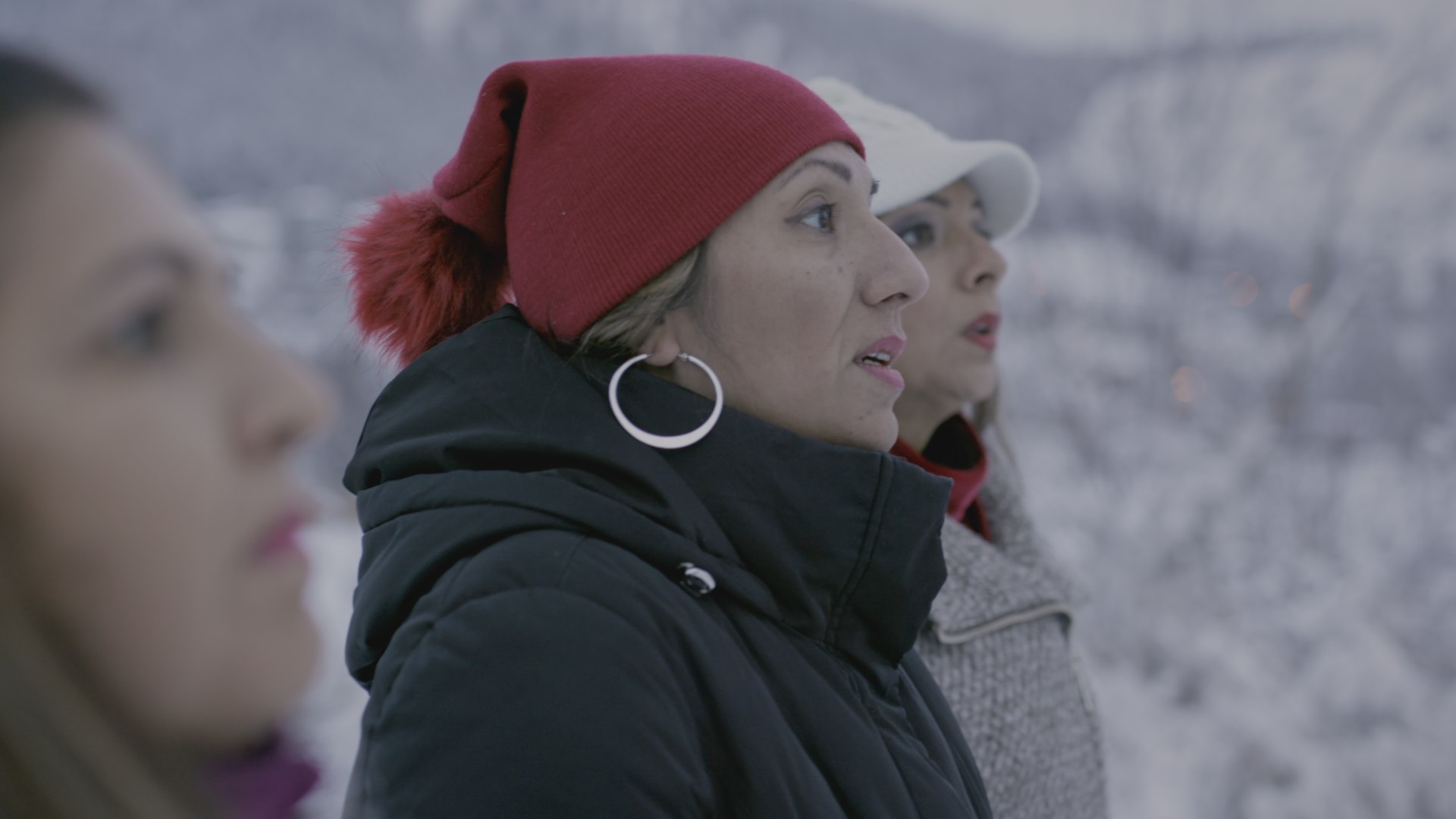
When viewers first meet Jeeti, Kira and Salakshana Pooni — the three Punjabi sisters at the center of Baljit Sangra’s powerful documentary “Because We Are Girls” — the trio is on the verge of a powerful realization.
“Only one percent of women make it to where we’ve made it,” Jeeti Pooni, the middle sister, tells her siblings as they sit inside the witness waiting room within a British Columbia courthouse. “Now is that moment where we go into verdict, and whatever happens, happens.”
The court case was the result of a journey of healing that began in 2006, when the trio told their parents that they had been raped, molested, and psychologically manipulated by an older male cousin from the ages of 11 to 17. Now in their 50s, the siblings didn’t even realize that they had each been individually targeted and raped by their cousin — who goes unnamed throughout the film — until they were in their 20s, when they finally began talking about the trauma of their childhoods.
But in addition to breaking the culture of silence within their family, the Pooni sisters’ decision to pursue legal action against their rapist was also relatively rare in Canada at the time. As Jeeti Pooni correctly notes in the documentary, most victims of rape never see their assailant convicted of a felony, even though the impact of the crime is often felt by victims for a lifetime.
“I was raped at 11 years old,” Jeeti bluntly says in the film as she recalls how her life and the lives of her sisters were totally changed the day their cousin and his family came to live with them in 1980.
Sensitively directed by Sangra, “Because We Are Girls” (2019) is currently streaming as part of the San Francisco-based CAAMFest, the 39th film festival produced by the Center for Asian American Media (CAAM) to center Asian American and Pacific Islander stories. The festival showcase takes place in a moment when very public, racially-fueled violence against Asian Americans — and predominantly against Asian women and femmes — eclipses their identities in media representation.

“Because We Are Girls” makes its contribution to that panoply of stories in that it illuminates another dark suffering: how sexualized violence, which is often committed by someone known to the victim, often occurs in the home — a complicated site for many immigrants straddling multiple identities.
Sangra’s film takes viewers from that day in court back to the Pooni sisters’ childhoods in the small Pacific Northwestern city of Williams Lake, British Columbia. As each sibling struggles with the weight of what happened to them, Sangra deftly illustrates how insular cultures, rigid gender roles, and the expectations placed on girls from too young an age all play a role in when and whether victims ever speak out about their experiences.
Part of why Jeeti stayed silent about her rape, she says, was the cultural burdent that daughters bear to their Punjabi families, like hers. She and her siblings were fully aware that women and girls who survived sexual assault were often looked upon as loose and irresponsible in many Indian families, leading them to wonder if they would be shunned since they were no longer virgins.
“I thought about telling my dad, but I didn’t want to get punished for what [my rapist] did,” one sister says on camera. Another notes that while they never discussed the abuse they experienced at their cousin’s hands as children, “I probably would have said ‘don’t tell,’” if they had.
The sisters’ childhood is initially described as typical of many immigrant families who grew up in small towns in the 1970s and ’80s. “We kept to ourselves but we were always up for celebrating an occasion,” says Jeeti, adding that the Poonis were “a typical Punjabi family” in many ways in that they loved large, flashy celebrations and parties that were filled with both traditional and Bollywood dances. At various points in the film, each sister notes how they loved watching new Bollywood films each week at the small movie theater in their small town Williams Lake — which, like many Canadian cities at the time, had a modest but rapidly growing Indian immigrant population. The sisters often recalled that those outings were among the happiest moments of their childhoods.
But it wasn’t until they were adults that Jeeti, Kira, and Salakshana realized how constrained the messages in the movies they so loved were when it came to purity and what was expected of women — particularly, when it came to being a good wife or a potential bride. The sisters had learned from a very young age, both through the media they consumed and the adults around them, that their reputations would be seen as reflections of their families. Bad girls, they were told, were “shipped off to India” — usually to be raised by grandparents and other relatives, away from the corrupting influences of the West.
Still, the music and dancing of Bollywood reflected freedom for the sisters, and Sangra shows them as adults with their own children recreating their favorite scenes.
Those moments recalling afternoons at the theater also represent their last moments of innocence; as Jeeti somberly explains to the camera, everything changed the day their cousin and his parents arrived in Williams Lake.
After the Pooni family first arrived in Canada in 1973, their mother often spoke of bringing her sister’s family to British Columbia one day. She was finally able to do so seven years later, when Jeeti was about 11. Court documents from the trial reveal that he was 20 when he arrived in 1980.
The girls were told to look upon their older male cousin as an older, respected brother.
“The day that man came into our house, we were told, ‘This is your brother,’” Jeeti recalls. “He had full authority over us because he is a male.”
Jeeti recalls being unclear about exactly what was happening and whether she would be believed if she told anyone at all. As the cousin targeted each sister in turn, the girls worried their parents would blame them or see them as unsuitable for marriage, afraid that their family would be shunned by the larger, tight-knit Punjabi Canadian community in which they socialized.
“The biggest advantage he had was he knew we’d keep our mouths shut,” one sister says. The film recalls in detail how the sisters would wake up as young adolescents to find their cousin touching them while they were sleeping, and how the abuse eventually escalated to rape. Every time they thought about telling their parents about what happened, the fear of what would happen next effectively shut down the potential conversation.
Instead, as each girl grew up, they tried to find escape in other ways — including sports and other extracurriculars as teens, and early marriages after fast courtships as young adults.
“The best day of my life was getting married and leaving my family, my hometown and a dark secret behind,” says Jeeti in a voiceover. But, as is the case with many survivors of sexualized violence, the legacy of harm done to the sisters followed them into adulthood, and each takes turns on camera ruminating about how they approached marriage, intimacy, and parenting their own children because of the violence of their childhoods.
In 2006, when the sisters saw a photo of their rapist — now a middle-aged man — with a young girl, they finally disclosed the abuse to their parents and aunt and uncle, afraid that he might be abusing someone else. Their reactions weren’t what they had hoped.
“My parents were always against going to the police,” one of the sisters discloses.
“We were afraid of what people would think,” their mother admits to the camera.
In 2009, the sisters decided to go to the police with the story of what had happened to them. Their cousin was charged with indecent assault, one count of sexual assault, and one count of sexual intercourse without consent.
The heart of “Because We Are Girls” is the courage of the Pooni sisters and their motivations to speak out despite the compounding pressures to remain silent. Viewers will likely carry with them the scene in the courthouse’s nondescript victims’ waiting room, when Jeeti takes her daughters aside.
“I want you to know that there is nothing in your life that you have to be afraid of,” she says to the children, urging them to always confide in her if anyone ever hurts them. “Please trust me. I will believe you.”
More articles by Category: Arts and culture, Gender-based violence, Girls, International, Violence against women
More articles by Tag: Film, Sexualized violence, Sexual assault


