















Will the César Chávez Revelations Prompt Accountability in the Labor Movement?
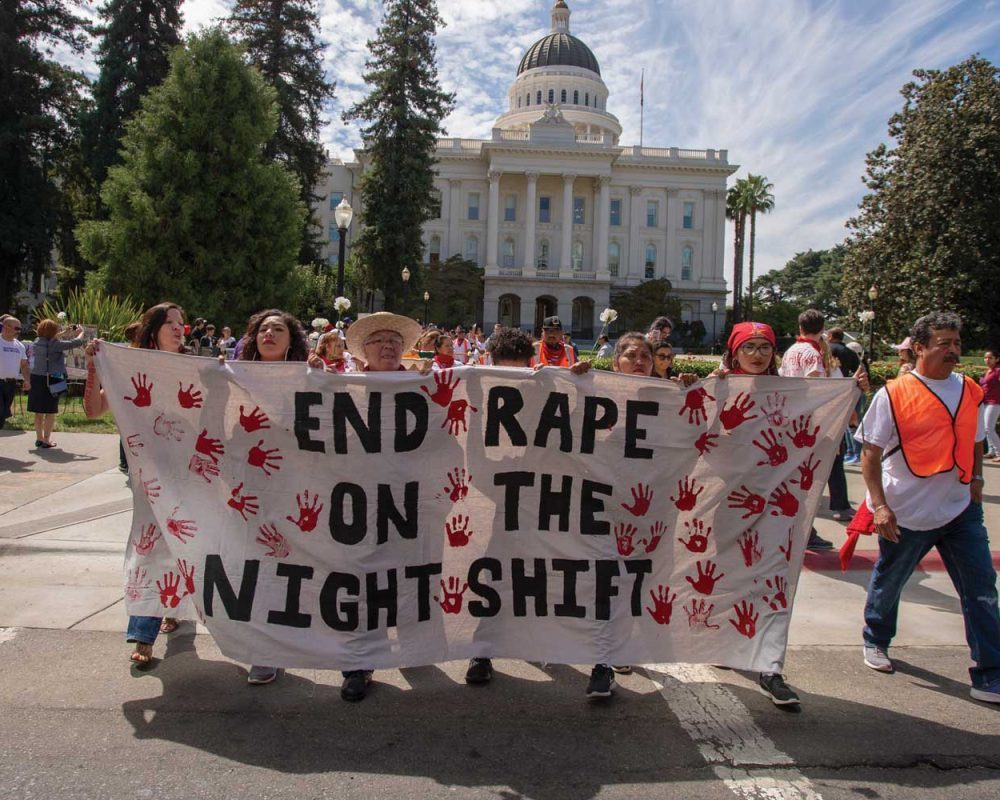
When reports emerged that César Chávez had sexually abused girls and women across decades of his leadership of the United Farm Workers, many Americans were shocked. Chávez had built the UFW from nothing, transforming some of the most exploited and invisible workers in America into a national movement that won collective bargaining rights, forced changes in pesticide regulation, and made the grape boycott a household act of solidarity. For a generation of Americans, and especially for Latino communities, he was not just a labor leader but a saint, a symbol of what it looks like when the powerless refuse to stay powerless.
The women who came forward to name what Chávez did to them risked public shame, accusations of betrayal, and the dismantling of a carefully tended legacy. They knew that in speaking out about abuse by a celebrated man, they risked being disbelieved, dismissed as politically motivated, or blamed for waiting too long to say anything. Their courage deserves to be honored.
Their stories of abuse and sexual violence are heartbreaking. They are not surprising.
Those of us who have spent years inside the labor movement recognize the pattern. When loyalty to a leader and a cause displaces accountability to the people the movement exists to serve, labor unions can become enablers of abuse, and sometimes of criminal predators.
A union man warned me early in my career as a labor lawyer: When they can’t question your competence, they’ll question your loyalty. He meant it as a caution. It turned out to be a blueprint.
The UFW asked its members, especially women, to sacrifice everything for the cause. Low wages, communal living, constant surveillance, and an ethic of total commitment were justified by the righteousness of the struggle. But those extreme demands created the precise conditions that predators require: loyalty that overrides judgment, and an institutional culture in which telling the truth carries serious cost. When speaking up risks everything you have worked for, those who are abused are forced to choose silence.
This is not a flaw unique to the UFW. It is a feature of an institution built from its foundations by men and for men. As Professor Marion Crain explained in a Cornell Law Review article: “Incubated in bars and taverns, and permeated with language such as ‘brothers’ and ‘brotherhood,’ male labor did not construct unionism as either accessible or comfortable for women.” Even though women have made strides, with women now representing 13 of the 55 unions that make up the AFL-CIO’s Executive Council, that male-centered history has not evaporated. It calcified into institutional culture, and culture is where sexual harassment lives.
Social science is consistent on this point. Sexual harassment is most likely to occur in workplaces where a hypermasculine organizational culture prevails, where authority is concentrated and accountability diffuse, and where speaking up carries real risk.
The labor movement fits this description with uncomfortable precision. Its culture frames any accusation of a leader as an act of betrayal, as handing ammunition to the right-wing forces that have always wanted to destroy workers’ institutions. I have seen that framing deployed deliberately and cynically by predators and their enablers. It has protected abusers in the labor movement for as long as unions have existed. The movement exists to protect workers from exploitation, but it has been among the most resistant institutions in American life when it comes to protecting women from exploitation by their own leaders.
Union women deserve better. When an institution wrongs the people who trusted it, who identified with it, who made its values their own, researchers call the resulting harm institutional betrayal. The damage runs far deeper than personal injury. For women who devoted their careers to the labor movement, who believed in it, who sacrificed for it, the harm inflicted by looking away is the destruction of something they helped build.
The #MeToo movement reached the labor movement, but only at its edges. Several high-ranking union officials were publicly exposed as sexual harassers. The president of one of the country’s largest unions resigned after allegations became public. Others were quietly allowed a graceful exit. The institutional responses were almost universally the same: expressions of concern, assurances that the union takes these matters seriously, words of support for survivors. What was almost entirely absent was any suggestion that the problem was structural, that the culture of the institution itself had created conditions in which these men were protected and their targets were not.
Now, in the wake of the Chávez revelations, the statements have come again. The UFW, now led by a woman, issued a statement that centered the survivors and promised urgent steps to learn more about what happened. Other unions issued statements expressing shock and support for the survivors. But statements are not accountability. Accountability requires that the movement as a whole answer the questions it has consistently refused to answer: What made this possible? Who knew? Who enabled the conduct? What structural conditions have allowed behavior like this to persist across decades? Answering those questions honestly would require the labor movement to turn its most powerful tools on itself. Fortunately, the labor movement does not need to invent a new approach; there are models that show exactly what this looks like.
Two models, built by workers themselves, demonstrate that structural accountability is not only possible but effective. Janitors in California’s commercial cleaning industry are overwhelmingly women, many of them immigrants, many of them undocumented. They work alone at night in empty office buildings. For years, sexual harassment and assault by supervisors were widespread, unreported, and effectively tolerated by the industry. SEIU-United Service Workers West, the union representing these workers, has built a trauma-informed framework of worker leadership education that relies on promotoras — janitors, often those who are survivors of sexual violence — who visit workplaces to provide information and resources to their coworkers, sustaining accountability at the grassroots level.
That approach, which drew inspiration from public health organizing in southern California, became enshrined in law in 2019 through the Janitor Survivor Empowerment Act, which janitors fought for. The law requires employers to fund in-person training sessions every two years led exclusively by union-qualified janitors. The union also established the Ya Basta! Center, founded by janitorial survivors and union leaders including Veronica Lagunas and Anabella Aguirre, to combat sexual violence in the cleaning industry. It provides state-certified trauma-informed training, spaces for worker leadership, and resources to eradicate abuse.
The worker-based advocacy organization Coalition of Immokalee Workers offers a second model. The CIW organizes tomato pickers in Florida, a workforce that is predominantly immigrant, predominantly Latino, doing some of the hardest agricultural work in the country. CIW’s efforts around sexual harassment are central to a broader, groundbreaking initiative called the Fair Food Program, launched in 2011 to improve conditions for farmworkers across the industry. The FFP operates through legally binding agreements among growers, farmworkers, and major food retailers, who pledge to purchase produce only from growers adhering to a Code of Conduct that includes substantial protections against sexual harassment. Education is built into the model: CIW runs live, peer-to-peer trainings using theater, artwork, and real situations to teach workers their rights, and has conducted more than 775 in-person sessions reaching over 60,000 workers across seven states.
Enforcement is handled by the Fair Food Standards Council, an independent body that conducts regular farm audits and investigates confidential worker complaints. Unlike standard corporate social responsibility audits, FFSC investigations are not controlled by the companies they audit. They are local, with detailed knowledge of crews and supervisors, and they apply a standard of proof calibrated to workers’ actual circumstances rather than legal formalism. Auditors say that cases of sexual abuse have been virtually eliminated on practicing farms.
The labor movement knows how to take on institutions that disempower workers. Unions have spent more than a century negotiating grievance procedures, discipline systems, and due process protections for members. They know how to make accountability binding. The challenge has been applying those same principles internally, turning them on the institution’s own culture, its own leaders, its own staff, with the same rigor demanded of employers.
The Chávez revelations are an opportunity, if the movement is willing to take it. Not just to reckon with one man’s legacy, but to ask the harder questions his conduct makes unavoidable: What organizational conditions allowed this to persist for decades? Who knew, and who enabled it? What does this tell us about how labor institutions handle power, and who they decide to protect?
The women of the Los Angeles janitors’ union and the farmworkers of Immokalee did not need a different kind of institution. They needed their institution to use the tools it already had in the service of the people it claimed to represent. The women who built this movement alongside the men who led it have waited long enough for the answer to the only question that remains: Does the movement have the will?
More articles by Category: Gender-based violence
More articles by Tag: Labor, Labor unions, Sexual harassment, Sexual assault


