















What to Make of Women’s Recent Electoral ‘Firsts’
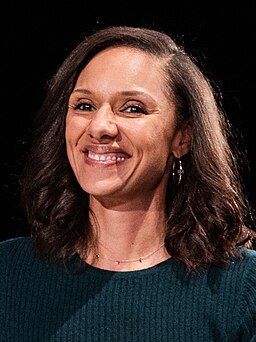
In 2025, the U.S. is still witnessing “firsts” for women of all races and for other minoritized people in electoral politics. Whether it’s Mary Sheffield being elected as Detroit’s first woman mayor or Abigail Spanberger becoming the first woman governor-elect in Virginia, there’s a bittersweetness to the reality that the proverbial glass ceiling remains intact despite some noteworthy cracks.
What is less obvious from the undeniably historic wins of 2025, however, is what it means for how women will fare in upcoming election cycles, especially in the 2026 midterms. It is also unclear what these victories mean for women, girls, and gender-expansive people who supported the women candidates who won. Beyond symbolism and numbers, can these newly elected officials contribute to movements to remove barriers for women seeking office as well as to efforts to meaningfully improve the lives of women, girls, and gender-expansive people? While this cannot and should not be solely the work of women elected officials, there is a sense that those more directly impacted by gender and sexual oppression and/or multiple marginalization might be more inclined to foreground issues such as abortion rights, racial justice, child care, pay equity, immigrant rights, trans rights, domestic and intimate partner violence, and policing.
Women candidates fared quite well in this past election cycle, and women voters played an integral role in the outcomes of several key Democratic victories. Nevertheless, sexism, misogyny, racism, Islamophobia, antisemitism, homophobia, biphobia, transphobia, and xenophobia remain crucial factors in assessing the viability of candidates and voter support. The harsh reality: Women candidates navigate a political landscape in which a sizeable number of people refuse to vote for women for high-ranking positions and will latch on to prevailing stereotypes and tropes to justify their unwillingness to support women politicians. A study conducted by American University’s Women and Politics Institute revealed that one in five voters said they or someone they are close to would not vote for a woman presidential candidate. This same study also indicated that prevailing, gendered double standards mean women candidates have to somehow be both “tough” and “likable” in ways that men candidates do not. The uphill battle for women seeking office, nevertheless, is not a singular story; multiply marginalized women contend with additional barriers, histories, and legacies in their journeys to being elected.
Although it may seem obvious that a Black woman or a Muslim woman may experience a different set of obstacles in her pursuit of political office, analysis of women’s historic wins in this most recent election cycle, even when noting the race, sexuality, or religion of the candidate, rarely sit with how intersecting inequities and systems of oppression impacted their political trajectory. A flattening occurs in post-election analysis, whereby all women elected are signals of a triumph over the patriarchy. The unnamed force of white supremacy rarely gets discussed. So, in reporting on Sheffield becoming the first woman mayor of Detroit, as well as the first Black woman mayor the Motor City, most media analysis failed to cover the interconnected racial and gender dynamics that specifically impact Black women candidates. Misogynoir plays a role in any election in which Black women candidates seek office. Detroit has the highest proportion of Black people of any city in the United States, but it only elected a Black woman mayor over 40 years after it became a majority Black city. Now that she’s won, Sheffield will face higher standards and more intense scrutiny than her white counterparts in office — irrespective of gender.
When we discuss election results as historic, it is important to dissever all the variegation of ceilings women candidates attempt to break. The compounded effects of anti-Black racism, xenophobia, Islamophobia, homophobia, transphobia, antisemitism, ableism, and/or class or educational elitism, alongside misogyny, sexism, and patriarchy, dispel any notion that the proverbial glass ceiling is the same for all women. Multiply marginalized women and gender expansive people’s ceilings are simply more impenetrable. And even when a woman of any background breaks through and wins, the ceiling can be and often is quickly repaired.
Too frequently, pioneering women in politics turn out to be exceptions, not trailblazers. Their paths cannot be replicated because their victory is a result not of systematic progress but of skillful maneuvering around the land mines of multiple prejudices, biases, and isms. Take, for example, Ghazala Hashmi, the first Muslim woman elected to a statewide office in U.S. history, who will become Virginia’s lieutenant governor. She faced rampant Islamophobic attacks from her opponent, John Reid, throughout her campaign. Hashmi was inspired to run for a statewide office in 2017, after President Trump implemented on a ban on travelers from certain Muslim countries. As an immigrant, Muslim, and a woman, Hashmi saw an opportunity to challenge the status quo and to repudiate what she identified as “critical harms” inflicted by the second Trump administration. These harms are felt differently by different communities of women, and newly elected officials such as Hashmi challenge perceptions of what a “winning” woman candidate can be.
The women who won in 2025 represent a wide range of perspectives, values, and policies, even among women in the same political party. Although Democratic women were the story of the 2025 election, their victories don’t tell a singular story about what “kind” of woman candidate can break through the prejudices and other barriers. Governor-elect Abigail Spanberger is often identified as a “pragmatic centrist.” Boston voters re-elected Michelle Wu, a progressive mayor who fought for paid parental leave, a municipal Green Plan, fare-free services on local public transportation, and a less-militarized approach to crime and violence. Mikie Sherill, the New Jersey governor-elect, describes herself as a “good, old-fashioned Democrat.” Her focus is on affordability, working families, and creating a smart budget with clear priorities. It was just a few short years ago when eight women senators voted against enshrining abortion rights into federal law. Currently, Republican women comprise just under 40% of women in the U.S. Senate. While not the majority, they are a powerful minority, and women politicians embrace disparate political aims and visions for the future.
When people ask about the possibility of a woman being elected president, that reality feels distant, though not unattainable in the coming decades. What platform should that woman have? What would she look like? Who would her vice president be? Could this woman be multiply marginalized? Would this candidate fight for policies that improve the material realities of women, girls, and gender-expansive people? These questions move beyond the historic nature of having a woman elected to the highest office; they ask us to interrogate our attachment to the symbolic meaning of woman winning and to turn toward policies, values, and our political imagination to envision what kind of candidate she would be.
As we continue to dissect the 2025 election and what it reveals about American voters and the future for women in electoral politics, it’s important that we remind ourselves to think carefully about aggregating Democrat women as a monolithic political group. The future of U.S. women in electoral politics can simultaneously feel bright and uncertain. Barriers to women and gender-expansive people in office exist. The tremendous strides of women in electoral politics are noteworthy, AND mere representation is not enough if we want to destroy those barriers and work to dismantle systemic gender oppression. Numbers matter, but codifying and enforcing policies and legislation that afford universal health care and child care; protect abortion rights; address the Black maternal mortality and morbidity crisis; actualize pay equity; combat the co-epidemics of gender and sexual violence; protect trans youth and adults; provide robust, paid parental leave; fund comprehensive public education at all levels; center disability justice; or affirm a universal right to housing, food, clean water, and breathable air are truer measures of progress catalyzed by elected officials who anchor in improving the lives of women, girls, and gender-expansive people.
More articles by Category: Politics
More articles by Tag: Elections, Women's leadership, Women of color, Politics


