















Update: Despite Abortion Rights Law in Missouri, Providers Are Still Unable to Offer Care
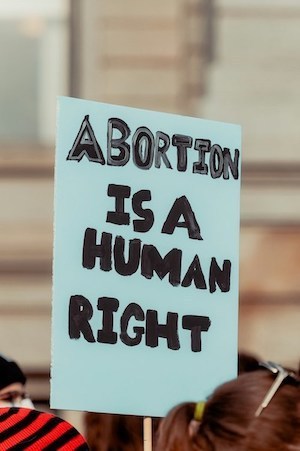
On Election Day last November, Missouri was one of seven states that passed a constitutional amendment protecting abortion rights, becoming the first state where abortion was banned after the Dobbs decision to do so. “We were the first state to ban abortion — within 20 minutes of the Dobbs decision coming down — and the first to overturn the ban,” said Maggie Olivia, director of policy and external affairs at Abortion Action Missouri, a statewide advocacy organization. However, a recent ruling by the state Supreme Court means that abortion is still not available in the state.
And even after voters in Missouri passed Amendment 3 enshrining the right to an abortion up to viability in the state constitution, the state had so many anti-abortion restrictions on the books, including licensing requirements, that clinics couldn’t begin providing the procedure after Election Day. Instead, Planned Parenthood affiliates sued, and after several months of litigation, Judge Jerri J. Zhang issued two preliminary injunctions blocking the restrictions, making it possible for clinics to start providing surgical abortions in mid-February.
But this legal victory was short-lived. On May 27, the state Supreme Court ordered the judge to vacate the preliminary injunctions, effectively reinstating the ban. The Court ordered Zhang to re-examine all the evidence, meaning she could potentially implement another injunction. In the meantime, “Missourians who need access to abortion right now can’t access it in their home state, even though they still have a constitutional right,” said Emily Wales, president and CEO of Planned Parenthood Great Plains. “The impact was immediate and really disruptive because by vacating those injunctions and forcing us to go back to the lower court and have the court re-examine all of the evidence means there’s a break in care. It’s so frustrating for Missourians because they feel like this issue should be resolved. And it means there will be people who go without care.”
Planned Parenthood affiliates in Missouri have been unable to offer medication abortion since the passage of Amendment 3, even during the few months that abortion was available. State law requires that every provider have a “complication plan” approved by the state health department, and so far no provider plan, including Planned Parenthood’s, has been approved. In order to comply, a facility has to meet several requirements, including having an on-call OG-GYN who lives within 25 miles of the clinic available at all times for seven days after a patient takes the medication. Judge Zhang is also considering litigation brought by Planned Parenthood around these restrictions.
Meanwhile, anti-abortion lawmakers have been hard at work ever since Amendment 3 passed, trying to find a way to ban abortion in Missouri once again. Last month, the state Senate passed HJR 73, a resolution which, if approved by voters, would institute a near-total abortion ban, undoing Amendment 3; the state House of Representatives passed it in April and the Missouri governor will decide when to place it on the ballot. “The moral of the story here is that the members of the General Assembly in Missouri didn’t like the outcome of the Amendment 3 battle in November 2024 and they are asking for a do-over,” said Rianne Hawkins, vice president of external affairs for Planned Parenthood Great Rivers Action. “They think that the 1.5 million Missourians that voted for abortion access made a mistake, and it’s their goal to undo everything that Amendment 3 achieved.”
Missouri law requires that joint resolutions to amend the constitution be ratified by voters. The new question is “a deceptive ballot question that is actually an abortion ban, but it uses pro-abortion language and pro-reproductive freedom language to try and trick voters into turning around and banning abortion again right after they just established this right to abortion and the broad spectrum of reproductive freedom,” said Olivia.
Although a clear majority of “Missourians, regardless of political affiliation, agree that abortion access should be available in their home state, politicians are deciding to cave to special interests and are taking away the rights that [they] just voted on,” said Tori Schafer, director of policy and campaigns at ACLU of Missouri, which has been involved with the litigation around implementing Amendment 3. “It’s important that we win this fight in Missouri because we know that [anti-abortion extremists] will take this fight to other states, so we know it’s bigger than just our rights here in Missouri.”
The ballot question also includes enshrining in the state constitution a ban on gender-affirming care for transgender youth. Missouri already has a law banning gender-affirming health care for transgender youth, Medicaid recipients, and people who are incarcerated; the provision concerning care for transgender youth is set to sunset in 2027. “Our elected officials have created this constitutional amendment because politicians know that they would not be able to overturn the newly enshrined abortion protections without weaponizing health care for trans youth, using trans lives as political pawns,” said Katy Erker-Lynch, executive director of PROMO, a statewide LGBTQ+ public policy and advocacy organization, which was part of the coalition of organizations campaigning for Amendment 3. “We know from the Amendment 3 campaign that the process is not only expensive and requires exhaustive resources, but the rhetoric that comes from these campaigns can be incredibly harmful not just for trans youth but for trans adults, for allies, and for queer folks more broadly. In 2024 with the Amendment 3 campaign, though trans health care was not a part of the language proposed in the constitutional amendment in the ballot summary, the opposition spent tons of money on anti-trans ads and used trans care for youth to try to misinform and spread lies about reproductive health care in Missouri and the ballot summary language.”
Missouri became “so conservative since 2010 when the Tea Party came into the state,” said Alison Dreith, director of strategic partnerships at the Midwest Access Coalition, an abortion fund. Since then, “Republicans have chosen to undo any citizen ballot initiative that goes against their values. They have overturned a raise on the minimum wage, and this year they’re also overturning a ballot initiative for paid family leave. They’ve tried to overturn ballot initiatives to support collective bargaining. This is a tactic we knew that the supermajority Republican legislature would try, and now they’re moving in that direction.”
Advocates are now gearing up for yet another time-consuming and costly campaign to try to defeat this upcoming ballot question. “The anti-abortion politician and the anti-democracy politician Venn diagram is a circle” in Missouri,” said Olivia. “Our lawmakers have the power to place questions on the ballot, but they don’t have to do all of the legwork. All they have to do is what we saw this legislative session: pull out an antiquated political move to shut down debate, silence dissent, and shove a bill through.”
More articles by Category: Health, Politics
More articles by Tag: Abortion, Reproductive rights, Democracy


