















Trump’s Second Term Escalates Assault on Transgender Youth
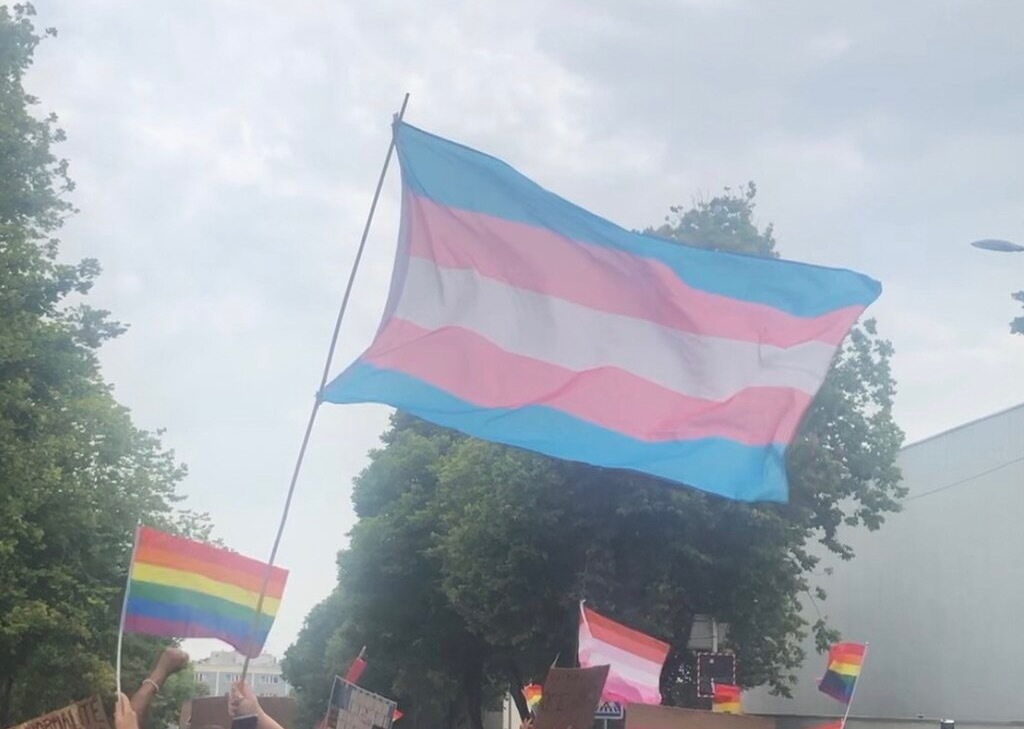
President Trump’s second term in office has ushered in an era of unprecedented rollbacks to LGBTQ civil rights, with a laser focus targeting transgender people, especially transgender youth. The attacks are coming from all three branches of the federal government as well as state legislatures where over 600 anti-LGBTQ bills have been introduced this year.
The Trump administration is poised to prohibit the use of funds from Medicaid and the Children’s Health Insurance Program for gender-affirming health care to patients under the age of 18 and 19 respectively, according to National Public Radio. An additional proposed rule reportedly would more broadly eliminate federal Medicaid and Medicare reimbursements to hospitals that provide gender-affirming care for youth. The proposed rules, which had not yet been released for public comment at press time but were expected this month, could render access to pediatric gender-affirming care nationwide extremely difficult, if not impossible, to obtain.
Already 40% of transgender youth live in a state that restricts or bans gender-affirming health care, including puberty blockers and hormones. This care is crucial for the treatment of gender dysphoria, which can cause depression, anxiety, and suicidality. “The good news is that there are now treatment protocols that help enormously and are highly effective, and when [trans youth with gender dysphoria] get support and care, they are generally indistinguishable in terms of their mental health profiles from [cisgender] kids,” said Shannon Minter, legal director at the National Center for LGBTQ Rights.
Having access to all aspects of gender-affirming care has been “life-saving for my child,” said L., the mother of a transmasculine, nonbinary teen who lives in Alaska. “Helping them socially transition, use the correct pronouns, change their name, and access affirming therapy were all necessary steps, though not sufficient. Once they started taking hormones, the self-harming behaviors and suicidal ideation they struggled with for years faded away within weeks; before that, we really thought we might wake up to find them dead. It’s also allowed them to re-engage with other parts of their identity that were being neglected because they were so consumed by the experience of their gender dysphoria.”
However, when gender-affirming health care “is taken away, gender dysphoria doesn’t go away, and the distress will come back,” said Minter. “There’s probably additional harm from having received the treatment they need and then having that care taken away, which adds a whole other element of very serious harm, so it’s really a dire situation.”
Arkansas was the first state to ban gender-affirming care for transgender youth under the age of 19 in 2021. Since then, 26 other states have restricted this care for youth, adults, or both. Penalties for violating the bans include felony convictions, civil and financial sanctions for health care providers, and loss or suspension of their licenses. Some states include penalties for teachers, therapists, and parents, including losing custody of their child. “Many of these bills include explicit, insidious exceptions to provide the exact same treatments to youth who aren’t trans or make exceptions to permit the performance of nonconsensual surgery on intersex infants,” said Sinéad Murano-Kinney, health policy analyst at Advocates for Trans Equality. “This is a political crusade that has nothing to do with science or protecting children but it has everything to do with the enforcement of an outdated and unscientific stereotype of sex and gender.”
President Trump began his second term by issuing several executive orders targeting transgender people, including “Protecting Children From Chemical and Surgical Mutilation,” which was issued on January 28 and restricts gender-affirming health care for minors. The following week, some hospitals around the country abruptly halted this care, canceling appointments and turning away patients; the order has been the subject of lawsuits and remains blocked by court order.
In addition to the harm caused by the executive order itself, the descriptions and language used, including chemical and surgical mutilation and rapid-onset dysphoria, are inaccurate and misleading and “don’t come from the large body of research and science that surrounds gender-affirming care,” said Elana Redfield, federal policy director at the Williams Institute, a research center focused on sexual orientation, gender identity law, and public policy at the UCLA School of Law. “They come from more ideologically motivated, fringey areas not connected to this extensive history of the study of gender-affirming care. The administration is essentially weaponizing science, weaponizing ideology to undercut the years of meticulous research that has gone into understanding the value of gender-affirming care.” Rapid-onset dysphoria “is not a value-neutral nomenclature, but rather a way to characterize gender-affirming care as a reaction to something else and undermines the credibility of gender dysphoria and gender-affirming care.”
Research shows that just being aware of anti-LGTBQ policies, even without being directly affected, sharply increases rates of depression, anxiety, and in some cases suicidality. “There’s a lot of research to demonstrate that even before these sorts of national-level restrictions started taking place, LGBTQ people living in states that were restrictive around access to health care or services were negatively impacted in terms of their well-being,” said Lindsey Dawson, director of LGBTQ health policy and associate director of HIV policy at KFF, formerly known as the Kaiser Family Foundation. “Restrictions in access to [gender-affirming health care] do not align with what the major medical associations in the United States that are close to this care see as the best practice and recommend, and really diverge from the dominant view in medicine.”
When transgender youth lose access to care in their state, some will seek care out of state. Some families are choosing to move and “uproot their lives to ensure access to this medically necessary care, and that’s such a weight to carry for the family and for the trans youth in question,” said Murano-Kinney. “Those are also best-case scenarios and are not always options.”
When families are facing the prospect of losing gender-affirming care for their child, “it impacts all aspects of a family’s life,” said Joshua Rovenger, legal director at GLBTQ Legal Advocates & Defenders. “There’s the emotional and mental strain of a parent concerned about whether they can get necessary and scientifically backed health care for their child. There’s the emotional strain of the fear of what the administration is doing. And there’s the financial questions around not only paying for care, but figuring out where to travel to get the care.”
It’s not just legislation in red states that is causing transgender youth to lose access to gender-affirming care. On October 13, Fenway Health, a national leader in gender-affirming care based in Boston, announced that it had stopped providing puberty blockers and hormone treatments for trans youth under the age of 19. Fenway Health said in a statement that it was following recent updates in “federal requirements” that it claimed went into effect on October 1, although some legal experts characterized the move as “pre-complying,” since those requirements weren’t yet in effect. And there’s concern about the ripple effect from this decision; after Fenway Health’s announcement, Outer Cape Health Services on Cape Cod in Massachusetts said it was also ending medical gender-affirming care to patients under age 19.
Although it has been less than a year since Trump began his second term, the proliferation of anti-LGBTQ policies and sentiments coming from the White House, especially the ones aimed at transgender people, have had almost immediate impacts. LGBTQ people, especially transgender and nonbinary people, are making major life changes in response, including moving to a different state, being less visible, and changing jobs, according to a new report from Movement Advancement Project (MAP), a think tank. “What we see from the study is that for transgender people, this political agenda is driving transgender and nonbinary people out of public life and they are essentially becoming internal refugees within the United States,” said Kellan Baker, senior advisor for health policy at MAP. “The federal government has a lot of power, and for transgender people in every area of their life—having appropriate identity documents, being able to go to school safely, being able to be on the job safely, getting health care, just moving through the world, walking down the street as a transgender or nonbinary person—the government policies at the state and federal levels really affect the ability of transgender people to participate safely in public life. We’ve seen this political agenda taking shape and advancing in many states over the last four or five years, and now it’s very much been taken up at the national level as essentially a plank of the political party that controls every element of the federal government. There are so many challenges that the federal government is supposed to be addressing in health care, the environment, jobs, the economy, and instead this administration is attacking transgender people.”
Since Trump’s second term began, “I’ve noticed an uptick in people making comments about us, bathrooms have become so hostile that I feel I need to go into the bathroom with my kid, and even my cisgender daughter has found that kids are more openly transphobic to her,” said L., the mother of the transmasculine, nonbinary teen in Alaska. However, “the thing that doesn’t get talked about nearly enough is the gift of having a trans kid. I recently heard someone saying, ‘No parent would ever wish for a trans kid.’ But I am a better, more evolved person, and having a trans kid has only enriched my life as opposed to taking away from it. There has been so much joy, growth, and expansion for me as a parent and within our family. They are like my true north star, leading the way to authenticity, and my job as a parent and ally is to help everyone else catch up.”
More articles by Category: Health, LGBTQIA, Politics
More articles by Tag: Transgender, LGBTQAI, Health, Health care


