















Three Years After Dobbs, Assessing the Damage and the Way Forward
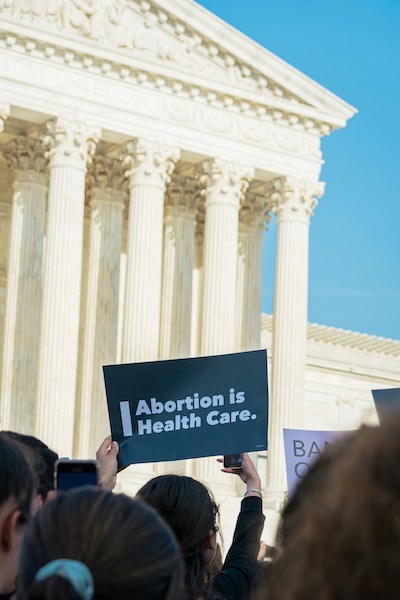
June 24 marks the third anniversary of Dobbs v. Jackson Women’s Health Organization, the Supreme Court decision overturning Roe v. Wade and the constitutional right to abortion. It marked the first time in history that the Supreme Court took away a fundamental right. The Dobbs decision meant the right to abortion would now be held in the hands of each individual state, and there were immediate fears that it would be banned in almost half of them.
Currently, 13 states have total abortion bans, with very few exceptions. Twenty-eight additional states ban abortion somewhere between six weeks and “viability,” according to a new report from the Guttmacher Institute and the State Innovation Exchange. In the first six months of this year alone, 14 states have proposed legislation that would criminalize the sale, purchase, or distribution of medication abortion pills. And ten bills were also introduced that would reclassify the drugs used in medication abortion as controlled substances. Last year, Louisiana became the first state to do so, adding the drugs to its list of Schedule IV “controlled, dangerous substances” and requiring hospitals to keep them locked away instead of readily available for emergency use.
But despite the anti-abortion movement’s myriad attempts to ban abortion outright, in the first half of 2024 the monthly average number of abortions was 98,000, an increase from 2022 and 2023, according to data from the Society of Family Planning’s #WeCount project. The increase is due in part to the availability of telehealth abortions, and clear evidence that the bans don’t erase people’s need for the procedure.
According to recent polling from the Pew Research Center, 63% of Americans, including 59% of Catholics, say abortion should be legal in all or most cases. “What we’ve always known is among the general public, abortion access is pretty popular, but it’s the state legislatures that implement these severe restrictions,” Kimya Forouzan, principal state policy advisor at the Guttmacher Institute and co-author of their recent report.
Some of the worrying trends this year are “the bills that focus on criminalization and also expand it to other actors that are the really key people in ensuring that care happens,” Forouzan said. “The abortion support bans directly target abortion funds and practical support networks who may be helping a young person travel for abortion care. We see all these controlled substance bills around mifepristone and misoprostol and additional restrictions on prescribing or providing medication abortion. It’s building this umbrella of ways people can be criminalized for speaking, receiving an abortion, helping with an abortion, providing for abortion care, and it’s already in this umbrella of acceptance around pregnancy criminalization as a whole.”
In the first year after the Dobbs decision, at least 210 people faced criminal charges for “conduct associated with pregnancy, pregnancy loss, or birth,” according to Pregnancy as a Crime, a 2024 report from Pregnancy Justice, a legal and advocacy organization. This was the largest single-year number since researchers first began tracking these cases. And this year, at least 38 bills in 24 states would grant personhood to embryos and fetuses, and criminalize pregnancy outcomes such as abortion, miscarriage, and stillbirths. “Prior to Dobbs, we’d seen this push to recognize fetal personhood, which normalizes the idea that fertilized eggs, embryos, and fetuses have the same legal rights as you and I, and that people who are pregnant could commit a crime against their fetus,” said Dara Gell, senior staff attorney at Pregnancy Justice. “Since Dobbs, we’ve also seen 14 states try and bring statutes that classify abortion as a homicide, which would make a fetal personhood argument that a fetus is a victim of a crime.”
Meanwhile, the Trump administration has been rolling back protections for abortion providers and patients. In January, the Department of Justice announced that it would no longer enforce the Freedom of Access to Clinic Entrances (FACE) Act, which bars harassment and violence toward abortion providers, and Trump pardoned 23 people who had been prosecuted and convicted under the act. The assassinations on June 14 of Minnesota state Representative Melissa Hortman and her husband and the shooting of state Senator John Hoffman and his wife “shows that limiting the FACE Act, pardoning people and normalizing and accepting violence towards abortion providers and abortion seekers, people who might be volunteering or helping people access abortion care, how harmful that can be and how it can lead to really extreme violence like what we saw,” Forouzan said. The gunman reportedly had a list of some 70 targets which included abortion providers and abortion rights advocates.
Another ripple effect of abortion bans and restrictions is that pregnancy itself has become riskier, with birthing people living in one of the 13 states with bans nearly twice as likely to die in pregnancy or childbirth or soon after as people living in states with reproductive rights protections. One report, Care Post-Roe: Documenting Cases of Poor-Quality Care Since the Dobbs Decision, found that the abortion bans have had a devastating impact on the quality of obstetric and gynecological care in those states, even those with exceptions for saving the life of the pregnant person. (As journalist Jessica Valenti has pointed out, “Exceptions are deliberately vague and narrowly defined so that it’s near-impossible to use them.”) The findings detailed numerous cases of patients with health- and life-threatening complications during their pregnancies, including preterm prelabor rupture of membranes (PPROM) during the second trimester and ectopic pregnancies. Prior to Dobbs, they would have immediately been offered options to terminate their pregnancy, but the report found frequent delays in care as well some being sent home. Doctors in emergency situations have to interpret what they are and aren’t allowed to do and “sometimes there can be a conflict in that interpretation where one doctor feels like it’s obvious they need to intervene and somebody else on the [medical] team may think they need to wait until something else is confirmed before intervening, and that conflict also contributes to delays in care and worse outcomes for patients,” said Dr. Daniel Grossman, director of Advancing New Standards In Reproductive Health at the University of California, San Francisco, and co-author of the study. “How imminent does the patient’s death need to be before a certain situation is considered life-threatening?” In addition, “the bans are having a very broad effect on the care of pregnant people and people who have the capacity for pregnancy far beyond those people who are specifically seeking abortion care. Anyone who might get pregnant might have their care delayed or denied because of these laws. It’s also having a big impact on clinicians, who are really experiencing moral distress.”
This distress is also felt by advocates and providers at reproductive health care clinics that used to provide abortions but are no longer able to for the most part because of their state’s abortion ban. “It is really difficult and continues to be very difficult to turn patients away and tell them we cannot provide them with care that we are skilled and qualified and capable of providing because the law will not allow it,” said Kwajelyn Jackson, executive director of the Feminist Center for Reproductive Liberation, a Black woman–led reproductive health, rights, and justice organization in Atlanta.
With so many worrying headlines about abortion, “we want to make sure that abortion seekers know that abortion is still legal in some places, and abortion access is still available in this country, and there are people out there that will not only help you get there, but will help you pay for the procedure with love and compassion,” said Alison Dreith, director of strategic partnerships at the Midwest Access Coalition, an abortion fund. “So many of our callers are worried that abortion is banned [everywhere]. But we’re still here and we’re still fighting three years on.”
Despite the current dire situation, advocates point out that even before the Dobbs decision, there were severe limitations to abortion access. In Texas, where an abortion ban went into effect in 2021, “we were living in this reality for a year before most people were,” said Kamyon Connor, executive director of the Texas Equal Access Fund, an abortion fund. Since Dobbs, “we see three common outcomes for Texans seeking abortion care. The first is people often travel sometimes thousands of miles in order to access care. More people are opting for self-managed abortion care, and many people are just actually forced to have and carry an unwanted or unsafe pregnancy to term, or waiting to access care when they are deemed sick enough to get an abortion.”
“Access before Dobbs was already difficult, especially in immigrant communities for a multitude of reasons: Access and affordability are two key things, and then you add the layer of somebody’s immigration status,” said Ann Marie Benitez, senior director of government relations at the National Latina Institute for Reproductive Justice. “We went from bad to worse. Roe was a right in theory that [not everyone] could practice. Now the federal protection is gone and you still have the access and affordability issues but at a much more intensified rate. Abortion bans restrict access to abortion care, but also impact contraception, and whether clinics remain open or closed. If we can focus on [advocating for] the communities that are now most harmed, it increases the probability of everybody getting the care that they need when they want it.”
Abortion funding costs and practical support expenses have increased over the past year, according to a new survey from the National Network of Abortion Funds, as have requests for help, and abortion funds are struggling to support everyone. “When Roe was overturned, we got thousands of dollars’ worth of rage donations, but as the need continues, donations are falling,” said Rachael Lorenzo, co-executive director of Indigenous Women Rising, an abortion fund that primarily serves Native and Indigenous people throughout the United States and Canada. Since Dobbs, “people seeking an abortion are being traumatized by the process. We’re seeing more folks in their second trimester needing help because they’ve had to figure out distance and cost and child care and lost wages, and by the time they get all the logistics sorted, they’re pushed into the second trimester and the procedure is very different. So funds are being spread pretty thin, and we really need philanthropy to step up and make long-term investments in abortion funds, which many times are unpaid volunteers, or they don’t have benefits but work full time, or they’re in Texas or Alabama where they’re heavily surveilled by the state, figuring out how to operate and serve people without taking on that legal responsibility.”
Last year, approximately 155,100 people crossed state lines for abortion care, and this has resulted in a growing push by anti-abortion lawmakers to restrict interstate travel for abortions. So far this year, six states have introduced eight bills targeting people who help a minor travel to another state to get an abortion without their parents’ knowledge or consent. And two states, Idaho and Tennessee, have already passed “abortion-trafficking” laws, although both were blocked in court; Idaho won a partial appeal in December. “One in four people that are having to leave their state for an abortion are coming to Illinois,” said Qudsiyyah Shariyf, deputy director of the Chicago Abortion Fund. “We’re having to operate at a scope that we haven’t before.” The organization has grown from two full-time employees in 2020 to 26 in 2025. “We need to have a staffed-up helplinethat can support between 200 and 300 people a week directly providing individualized case management. We need a development team to sustain that and an operations team to get the bills paid. We know we are going to need to be in this for the long haul.”
The long haul for everyone includes “continuing to figure out how we not only pursue some of these policy wins and electoral wins but how do we change the power structures in these places where it has been so difficult,” said Jackson. “We can continue to help people understand how powerful their vote is, not only during a presidential election, but during very mundane, run-of-the-mill state and local elections. We can’t even just wait for the mid-terms. We need to be concerned about what’s happening in our statehouses and our city councils and our county commissions. And we need clinics to stay open.”
More articles by Category: Health, Politics
More articles by Tag: Abortion, Reproductive rights, Reproductive health


