















The Coddling of the American Man
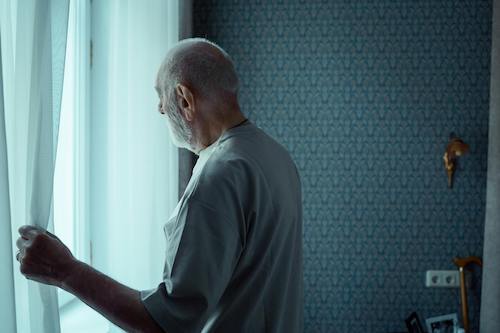
Unconditional love is a beautiful but unrealistic ideal. You cannot possibly exhaust someone’s goodwill with selfishness, neglect, or abuse and expect them to love you limitlessly. When you hurt someone needlessly, they love you less. When you continue to hurt them, you kill any love that remained for you. They may not react with anger. Instead, they may do something worse: leave quietly.
It’s a lesson that American men are discovering en masse while male loneliness enters national discourse as a significant social issue covered by media giants like The New York Times and The Independent. Elle Reeve’s book, Black Pill, takes the crisis a step further, analyzing the radicalization of angry and lonely young men who gravitate to the worst places on the internet while desperately seeking validation, finding solace in misogynistic groupthink.According to 2021 data from the Survey Center for American Life, 27% of men have six or more close friends today, compared to 55% in 1990, and 15% of men today lack a single close friend, quintupling from 1990. The friendship decline has affected everyone nationwide, but is more pronounced in men.
The lack of genuine social connection has profound mental health effects, with nearly two-thirds of young men aged 18–23 agreeing with the statement “No one really knows me well,” according to Equimundo’s 2023 State of American Men report. Fifty percent of this group show depressive symptoms; many have contemplated suicide.
The data are clear: The loneliness epidemic is hitting men hardest.
Male loneliness in the U.S. is multifactorial. Generally speaking, men may feel shame about emotional vulnerability, perceiving it as weakness under traditional restrictive gender norms. In general, men are less inclined than women to show help-seeking behaviors and struggle more with building and maintaining meaningful connections. Men may additionally feel punished in progressive spaces if their concerns are ridiculed or classified as a distraction from the plights of marginalized groups. It’s a reasonable qualm; no one wants to be scolded for sharing their innermost insecurities and reminded to “check their privilege” because someone else has it worse.
But one factor that remains notoriously underdiscussed is men’s own contribution to their loneliness.
Most young adults don’t consider the transience of life and their own mortality, and many cavalierly engage in selfish, hurtful, or even abusive behaviors that destroy relationships. When these behaviors persist throughout adulthood, these men realize too late in life that their actions have consequences.
Alone in the Hospital
As a physician, I’m an unfortunate witness to those real-world consequences of alienating people over decades.
They became immediately apparent to me when I met a memorable patient — a crotchety septuagenarian with depression — on my first clinical rotation as a third-year medical student. We got along well, despite his mock protests: “Go away, Chloe, I can’t handle your antics right now. Wait — you don’t have to go right away!”
He was profoundly alone in the world, I discovered while calling his family as I tried to discharge him from the hospital. “We have no relationship,” his daughter snapped, abruptly ending our conversation.
A classmate had a similar experience with another patient: “His wife literally laughed at me and said he’s our problem now. She won’t take him home.” The patient had subjected her to years of infidelity and verbal abuse.
I met many others like them during that rotation and those that followed. In fact, my grandfather was one such man — superficially charming, but an abusive and unfaithful husband to my grandmother. After her death, his selfishness and greed became more pronounced, and our family quietly removed him from our lives. He died of septic shock during my first year of medical school. I don’t know who mourned him. I certainly didn’t.
I felt for these patients, languishing alone during their twilight years. No one visited or even called to ask about them. But, based on the stories from those who’d once loved them, I could not ignore a common thread: They were all men who, throughout life, had casually destroyed their relationships and alienated most people who knew them.
Without exception, these elderly male patients had no friends. Their wives or partners had long since left them, or they’d never had a meaningful relationship. Their families offered accounts of their chronic unreliability, infidelity, narcissism, neglectful parenting, selfishness, unwillingness to commit, and more. I couldn’t blame anyone for wanting nothing to do with them.
These patients were confronting the cold reality that their lifelong behaviors permanently drove away people. Victims of their own choices, some were consumed with regret that came too late. “I should have been a better husband,” said one man ruefully. “All she wanted was flowers. Quality time in the evenings. I could have done it; it wasn’t that much. But I was mean to her. I’ll never get her back.”
Had I met their younger selves, I’d have found them insufferable. Seeing them now — aged, pathetic shells of men — my feelings were conflicted. Although my heart went out to them, I wasn’t surprised that they were now dying alone and unwanted.
Unlovable
There is no similar societal panic around women’s solitude, though a Morgan Stanley report projects that 45% of women aged 25–44 will be single by 2030. With greater education attainment and options for economic freedom and access to birth control and divorce, women are choosing in increasing numbers worldwide to delay marriage and motherhood.
But lonely young men, particularly those who subscribe to the misogynistic online manosphere, may not be thrilled about women’s independence, choosing to blame women for their loneliness rather than examining their own behaviors in relationships.
This lack of insight has support on large platforms, an aspect of modern life that may make young men even more susceptible to radicalization, allowing formerly fringe misogyny to infiltrate the mainstream. Vice President J.D. Vance, for instance, cast men as an oppressed class at this year’s Conservative Political Action Conference: “Don’t allow this broken culture to send you a message that you’re a bad person because you’re a man,” as though the culture indiscriminately hates men themselves, rather than antisocial, destructive behaviors more commonly seen in men.
Psychologist Jordan Peterson notoriously courts an audience of young men who feel unheard in modern society and asserts that male violence ensues when men do not have partners, implicitly framing loneliness among young men as women’s responsibility. On the self-proclaimed incel Alek Minassian, who willfully drove through Toronto in 2018 attempting to kill people with a van, killing 11, Peterson commented: “He was angry at God because women were rejecting him … the cure for that is enforced monogamy.”
Our society has no shortage of misogynistic attitudes featured, even endorsed, in our political discourse. Donald Trump’s “locker room talk” and J.D. Vance’s insults are neither unique nor shocking, but emblematic of so many men who see women as punchlines, inconveniences, servants, or less-than. Consider how many men reacted in the wake of Trump’s reelection: taunting women — “Your body, my choice” — ostensibly a reference to the loss of reproductive freedom in the U.S. and possibly a veiled rape threat.
Misogyny is not solely the domain of internet reprobates or conservative politicians. I frequently witnessed it at my left-leaning medical school. I recall hearing two male classmates privately deride another classmate’s wife, a beautiful lady inside and out in my eyes, but apparently “too fat” and “not attractive.” I hated how they talked about “smashing” women. I hated how other men in the class boastfully compared “body counts,” as though women were conquests, not people.
These men are doctors. If I were a mother, I’d never trust my daughters with them.
Before encountering the destructiveness of their actions, my elderly male patients lying alone in the hospital viewed people, particularly women, as disposable means to service their needs. In their younger years, susceptible to the illusion of their infallibility, they never invested in meaningful connections, rabidly pursuing quantity over quality of relationships. Often by the patients’ own admission, some women were good for sex, some were good for housekeeping, some were good for stroking their egos — never mind how many disrupted lives and shattered self-images were left in the men’s destructive wake. Their attitudes were evident during their convalescence. They would leer, insult, and sometimes sexually harass female staff, and yet wonder why they were universally despised.
Misogynistic attitudes coupled with poor insight guarantee loneliness. Bottom line: Women do not want to coddle male fragility and tolerate misogynistic attitudes. With the choices afforded them today, they need not settle for less.
Little Cruelties Hurt Most
I do not believe that the majority of men are raging misogynists. But almost daily, I hear the little cruelties that men inflict on women, either from my friends or from my patients. All too frequently I hear about emotional unavailability, unequal division of domestic labor, and more. Male selfishness is reflected in statistics on serious illness: Partner abandonment in heterosexual marriages after cancer diagnosis is 21% if the cancer patient is the woman, but only 3% if the patient is the man.
The trite trope of the new father who cheats on or leaves his pregnant or postpartum wife is ubiquitously acknowledged, dominating the headlines even today. Recently, psychologist Lilly Jay, Wicked actor Ethan Slater’s ex-wife and mother of his infant son, penned a poignant essay on the heartbreak of watching Slater promote the movie with Ariana Grande, the woman for whom he discarded Jay. According to Jay, the young family had moved countries to support his career as the filming of Wicked commenced. Within the year, Slater surprised his wife with the divorce. Jay showed a clear devotion to her marriage that Slater certainly did not reciprocate. And sadly, this story is too common.
My ex-husband’s infidelity caused my own marriage to collapse, and I share Jay’s emotional devastation. There are so many cruel words I cannot forget: “My sexuality was dead with you.” “I want a woman who’s outstanding.” “I got bored with you, and I don’t regret pursuing my happiness.”
Often for these reasons, around 70% of divorces in heterosexual marriages — including mine — are initiated by women, a frequent source of anger in the online manosphere, where women are cast as shallow, hypergamous succubi. These men fail to recognize that the women’s departure and their resultant loneliness comprise an appropriate response to men’s betrayal. It's a flagrant refusal to take accountability for poor behavior, a demand to be coddled over dedication to self-improvement.
My lonely elderly patients were no different. “How you’re reacting to him is probably how everyone in his life feels about him,” my attending physician said gently, noting my annoyance as we discussed one especially narcissistic patient. I’d noticed that he’d consistently evaded my questions about his support system; he had no one.
I cannot say for certain where life will take my ex-husband, Slater, or men like them — men for whom it seems love is a transient, self-gratifying high, not a promise with deeper meaning.
But I can say for certain that the men I’ve met dying alone in the hospital broke the women who once loved them the same way that I, Jay, and countless others were broken.
It doesn’t need to be this way. To love is a promise to consider someone before yourself. It isn’t a grandiose, dramatic gesture, but little acts of genuine kindness offered reliably over time. If only we could impart this to more young men, I imagine we would foster the emotional connections that lonely men seem to want. Doing so would have far-reaching effects: helping men maintain empathetic, mutually supportive relationships, strengthening social and romantic bonds, and enhancing the relationships these men have with the women and children in their lives.
Architect of His Own Demise
Normalizing these behaviors under the umbrella of traditional masculinity, comforting and coddling men with acceptance of their interpersonal destructiveness, benefits no one. If something doesn’t change, these stories will continue to play out the way they always have: broken existences with no respite. It is a very real outcome I wish I could emphasize to so many patients — illness, aging, and death are inevitabilities for us all, and the authenticity and love you release to the world returns to you someday. If you put out none, you risk receiving none.
Today, in a therapy group for men in court-mandated counseling, Greg, a middle-aged patient, says he no longer wants to attend. His pregnant daughter is furious, threatening to cut off all contact if he doesn’t work on his meth use and anger issues.
“You’re afraid of life,” says one peer. “What about your grandchild? Aren’t you scared you’ll never hold him?”
“My daughter’s always been uptight and judgmental. Nothing’s stopping her from visiting me if she wants,” Greg replies with an arrogant smirk.
“My actions got me here. I hurt people who cared about me. I can’t escape what I did. I don’t want to be that person anymore. Do you?”
Greg laughs dismissively. I sit back, resigned, because I know exactly how this story will end.
Someday, Greg will lie in a hospital bed: infirm, frail, afraid. A medical student will desperately try to call his daughter, his friends, then acquaintances.
The phone will ring and ring. And no one will answer.
More articles by Category: Misogyny
More articles by Tag: Men, Health, Mental Health


