















Progress for Women Behind the Scenes in Hollywood Is Stalled, New Studies Show
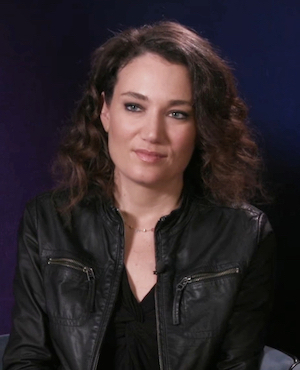
Women-led films like Wicked, The Substance, and Babygirl may be at the fore of this year’s awards season, but new research indicates that representation for women behind the camera continues to lag.
Two reports published this month show that the number of women in behind-the-scenes roles for Hollywood’s top-grossing films is still persistently low — despite the success in recent years of women-directed movies like Barbie, Frozen II, and Nomadland.
Inclusion in the Director’s Chair, the report from Dr. Stacy L. Smith and Dr. Katherine Pieper of the University of Southern California Annenberg Inclusion Initiative, looks at director gender and race/ethnicity across the 1,800 top domestic films from 2007 to 2024. The team behind the study concluded that “2024 brought no major change for women directors of top-grossing movies.” The report itself bears another stark claim: “Progress has stalled for women directors.”
Of the 112 directors who helmed the top 100 theatrically released fictional films last year, only 13.4% were women, according to the study. This marks only a slight increase from 2023, when 12.9% of the same group were women directors. And while the current percentage of women directors is significantly higher than it was in 2007 — women accounted for only 2.7% back then — year-to-year gains have been incremental. Out of the 1,800 films studied, women account for just 6.5% of all blockbuster directors.
Researchers also looked at women directors from underrepresented racial/ethnic groups. Across 1,800 films, only “1.7% of all directing positions from 2007 to 2024 were held by women of color.” And in 2024 specifically, only six directing jobs across the top 100 movies went to women from underrepresented racial/ethnic groups. These numbers indicate a persistent opportunity gap for women of color, who make up 20.3% of the national population.
In addition to gathering data on the number of women and directors of color on prominent films, the team also compared the critical success of directors by gender and underrepresented status. Their research showed that “while films with men directors had higher critics’ scores than films by women directors in 2024, across all 18 years there was no difference.” Women of color — the smallest group of big-time directors — earned the highest average and midpoint scores of any group.
“While the industry mantra may be ‘survive until ’25,’ that simply isn’t viable for women and people of color working as directors,” said Dr. Smith, referring to a phrase used by insiders navigating the fallout of the historic dual strikes by the Writers Guild of America and the Screen Actors Guild, as well as other industry-wide losses.
“Even with the progress made, there are too few opportunities and too few repeat chances for skilled, talented, and qualified directors to work on some of the most globally recognizable entertainment content today,” she continued. “If we are to say that real change has occurred, we must see continued increases across the board on these metrics.”
The most recent edition of The Celluloid Ceiling, the longest-running record of women’s employment in the U.S. film industry, shows a similar statistical slump. Released by Dr. Martha Lauzen of San Diego State University’s Center for the Study of Women in Television and Film,
the 2024 report looks beyond the director’s chair to writers, producers, executive producers, editors, and cinematographers working on domestic films.
Like Dr. Smith and her team, researchers at SDSU also observed patterns of halting improvements — and even a slight decline in representation in certain positions.
The report shows that 8% of top-grossing films employed 10 or more women in these key behind-the-scenes positions in 2024. In contrast, 70% of top-grossing films employed 10 or more men in those roles.
Looking at those employed as directors specifically across the top 250 films, women accounted for 16% of directors working on the 250 top domestic grossing films, the same percentage reported in 2023. Despite no change between this year and last, the number of women directors has increased 7 percentage points from 9% in 1998, when reporting for the Celluloid Ceiling began.
But when the field was narrowed to the 100 top domestic grossing films, women made up only 11% of directors — down 3 percentage points from 14% in 2023. The study also showed that women “accounted for 20% of all editors working on the 250 top films of 2024,” a slight decrease from 21% in 2023. Additionally, “women accounted for 20% of all writers working on top films, up 3 percentage points from 17% in 2023.”
“Women directed and wrote some of this year’s buzziest films, including The Substance and Babygirl. But their directors, Coralie Fargeat and Halina Reijn, remain exceptions, not the rule,” said Dr. Lauzen in a statement. “The stunning successes enjoyed by high-profile women in the last few years — including Greta Gerwig, Jane Campion, and Chloé Zhao — have not translated into opportunities for greater numbers of women. Visibility for a few has not generated employment for many.”
When asked if the Hollywood strikes contributed to 2024’s performance, Dr. Lauzen said that “the percentages of women working in various behind-the-scenes roles have remained relatively consistent over the last five years or so. The numbers will increase by 1 to 3 percentage points one year, only to decrease the following year.”
“That's why it's important to consider the longer term,” she continued. “For many of the roles, the increases have been far below what one would expect over the passage of a quarter century.”
Indeed, when looking at the study’s longitudinal data, the percentage of women directors has almost doubled. For producers, the rise in percentage points is smaller: 24% in 1998 to 27% in 2024. The percentage of women editors, however, has remained at 20% across 26 years.
In the face of decades of little progress, the Celluloid Ceiling offers a potential roadmap for women to have more opportunities in making Hollywood’s biggest movies: When at least one of the directors on a film is a woman, more women are hired to work behind the camera.
On films with only male directors, the SDSU research showed that “women accounted for 12% of writers, 17% of editors,” and only “5% of cinematographers.” Meanwhile, on films with at least one woman director, women comprised “52% of writers, 27% of editors, and 34% of cinematographers.”
In an email to the Women’s Media Center, Dr. Lauzen shared how the average filmgoer can help boost the number of women in behind-the-scenes roles. “Box office numbers for opening weekend are closely watched by those in the industry,” she wrote. “Support films with prominent female characters and women directors by going to see or streaming their films as soon as they are released.”
More articles by Category: Arts and culture, Media
More articles by Tag: Film, Media


