















It’s Period Poverty Awareness Week
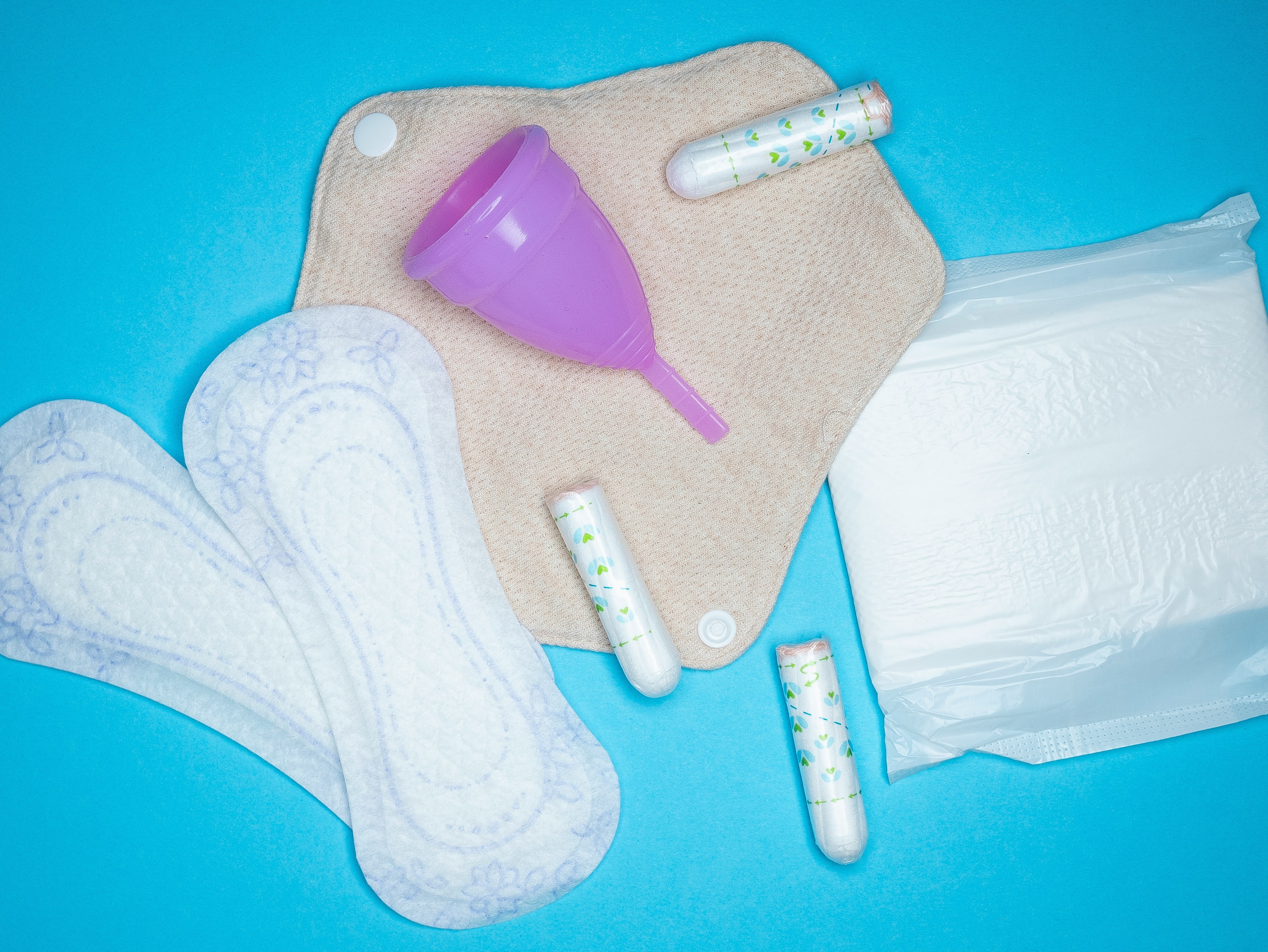
This week is the seventh annual Period Poverty Awareness Week, a time to raise awareness about the lack of access to menstrual products needed by girls, women, and anyone else who menstruates, and to take action to solve the problem.
According the UN Women, period poverty is “the inability to afford and access menstrual products, sanitation and hygiene facilities and education and awareness to manage menstrual health.” Being unable to afford period products means many women and girls experience limitations on everyday activities and miss work or school each month, which leads to struggles in their professional and academic careers. They might use toilet paper, paper towels, socks, or even diapers, which could lead to septic shock and urinary and vaginal infections.
Period Poverty Awareness Week was started in 2019 by Alliance for Period Supplies, a national organization working to ensure access to period products. But the call for more accessibility to menstrual items and ending the social stigma around menstruation has been developing for decades. In 1985, a Tampax commercial used the word “period” for the first time on TV. But it wasn’t until May 2014 that the first World Menstrual Hygiene Day was established, by a Europe-based NGO called WASH. Then 2015 was declared by some media outlets as “The Year of the Period” following some major cultural moments that year: The use of the word “menstruation” in news articles went from 47 in 2010 to 167 in 2015; Kiran Gandhi ran the London Marathon while on her period but without using menstrual products to break the stigma against periods; and numerous hashtags emerged, including #LiveTweetYourPeriod and #PeriodsAreNotAnInsult. Around this time, grassroots organizations and nonprofits were set up to collect and donate menstrual items and advocate against period poverty. In 2014, while still in high school, Nadya Okamoto and Vincent Forand of Portland, Oregon, launched the advocacy organization PERIOD..
Since then, more organizations and nonprofits have been established, including The Period Project, Women in Training, and The Flow Initiative. Internationally, there is Huru International, which has been fighting period poverty since 2008. There is also The Pad Project, which emerged from the 2013 documentary film “Period. End of Sentence.”, and India’s The Myna Mahila Foundation, which promotes sexual and reproductive health and employs women to make and sell menstrual items. All these organizations not only aim to make sure women and girls have menstrual items within their reach, but also draw attention to the impact of period poverty.
According to a 2023 survey by Thinx, Inc. and PERIOD., one-third of adults and one-fourth of teens in the United States find it difficult to afford period products. Teens of color and lower-income students were found to be most affected by access issues, and lower-wage workers were most concerned about requesting accommodations in the workplace. According to Women in Training, an organization that donates period products to students in Alabama, some American schools charge students rather than making the items available for free. Public bathrooms are rarely stocked with menstrual products, despite having toilet paper and soap on hand.
There are also the centuries-old taboos around menstruation, which discourage open discussion about periods and foster unhealthy and unhygienic practices. The majority of teens in the survey said society teaches people to be ashamed of their periods, and over half of adults say the stigma surrounding menstruation makes them uncomfortable with their bodies.
These days, things are looking up in the fight against period poverty. Many strides have been made in less than two decades, according to advocates.
“We’ve made a ton of progress in the last maybe seven, eight years,” says Emily Bell McCormick, founder and president of The Policy Project, a nonprofit that creates solutions-based policies to help communities, with The Period Project among its initiatives. “Just having the word period or menstruation or period products enter the public dialogue is a huge win.”
Emily Swanigan, the global strategic communications manager at PERIOD., agrees.
“There’s been this massive cultural shift,” she says. “We’re making up for centuries of not having dealt with a very massive public health issue. And so it’s one of those things where it’s like we’ve got to be grateful but never satisfied because there’s so much to do.”
Rep. Grace Meng, D-N.Y., has spent the last several years introducing legislation to eliminate period poverty, including the Menstrual Equity for All Act, first introduced in 2021, which would require Medicaid to cover the costs of period products and increase block grant funding to assist low-income families. She says the issue is for everyone to care about, not just girls and women.
“Menstruation is not something we can control,” Meng said. “It’s a natural and monthly occurrence for half the population. That makes menstrual products a basic and essential need. Period poverty impacts not only a person’s physical health, but also one’s self-perception, mental health, educational opportunities, and economic well-being. Access to menstrual products is not a choice or a luxury. It is a health care right and a human right.”
While such bills have failed to gain traction on a federal level, similar bills in statehouses have had more success. One of the main targets of the movement against period poverty is the so-called tampon tax, which is the sales tax on menstrual items. Advocates point out that other medically necessary items such as medicine do not get taxed, and they say removing this tax will help make pads, tampons, and other menstrual items more affordable. Minnesota was the first to do this in 1981, followed by Pennsylvania in 1991. The movement toward ending the tampon tax gained momentum in 2013, and now 21 states have done away with it.
According to the Alliance for Period Supplies, 28 states and Washington, D.C., have passed legislation to help students have access to period products in school. Since 2015, 60 bills aimed at increasing access have been passed, half of them between 2021 and 2023. Four states — Alabama, Arizona, Mississippi, and North Carolina — passed laws providing for free products in correctional facilities, and Illinois, Maryland, and New York have mandated the same for homeless shelters.
“Whether it’s tax-free pads or tax-free tampons, or if it’s putting period products in schools, the majority of states now have something around periods, which is just remarkable,” said Bell McCormick.
Similar improvements are being made in many countries. In 2020, Scotland became the first country to end the tampon tax. Other countries have followed or have lowered prices, such as Australia, Canada, Colombia, India, Lebanon, Malaysia, and Trinidad and Tobago. In some low-income countries, such as Botswana, Kenya, and Niger, free sanitary napkins are now provided in schools, according to UN Women.
The Period Project has teamed up with the The Period Positive Workplace, a coalition that aims to foster period-friendly workplaces by emphasizing the benefits to both workers and employers. According to the organization, “Period Positive Workplaces report increased employee satisfaction, better public perception, and improved employee experiences managing menstruation at work.”
“In the United States, it’s proven effective to [use] a top-down approach,” said Bell McCormick. “Globally, that isn’t always possible. And so we took [an] approach of, what if we build bottom up globally? So let’s try to get period products into business bathrooms with hopefully a trickle-up effect where many of the businesses in your country or city or town offer period products, [and] that will hopefully trickle up, and the government will recognize that and then kind of do their part as well.”
Other challenges remain in the U.S. In March, a lawsuit was filed against the New York City Department of Education for failing to fulfill its obligation to provide free menstrual products in public school bathrooms, as per a 2016 New York State law. Both Bell McCormick and Swanigan see this as evidence that vigilance is needed even in places where policies have improved. Swanigan says funding is a factor, with less than half of U.S. states requiring funding in state budgets.
“New York is an important case study,” she says. “You just can’t pass and the bill will just implement. You need money. And there’s not a lot of women representatives in statehouses to recognize half of someone’s constituents.”
Swanigan added that representatives from PERIOD. have worked with superintendents in California and Oregon to help implement the states’ mandates to provide free period products in public schools.
One other concern Swanigan has is with the growing economic issues in the U.S., including tariffs, which are expected to raise the costs of period products. This could affect not only people who are buying the products for themselves, but also nonprofits purchasing them so they can be donated.
Some states have entertained the idea of reversing their legislation for cost reasons. In January, New Hampshire considered doing this because schools were not helping with the costs of supplying the items.
“We’re on the defense now,” Swanigan says. “Our goal, our messaging is more important than ever. We’re not changing and we’re not going to move backwards.”
Bell McCormick wants to see every state in the country mandate period products in all schools, K–12. She also wants to see the tampon tax eliminated nationwide. But first, more legislators need to be willing to talk about the issue of period poverty.
“They think of it as a private issue,” Bell McCormick says. “So elevating the conversation to one of like public health and workforce is going to be absolutely critical to getting all of the states on board with it. If we’re able to take three steps back and look at it like we really want to do something that impacts a lot of people, makes their lives a little easier, is low cost, and increases productivity as a workforce, this is where it’s at.”
More articles by Category: Health, International
More articles by Tag: menstruation, Health


