















ICE raids: Why aren’t corporate officials accountable for hiring practices?
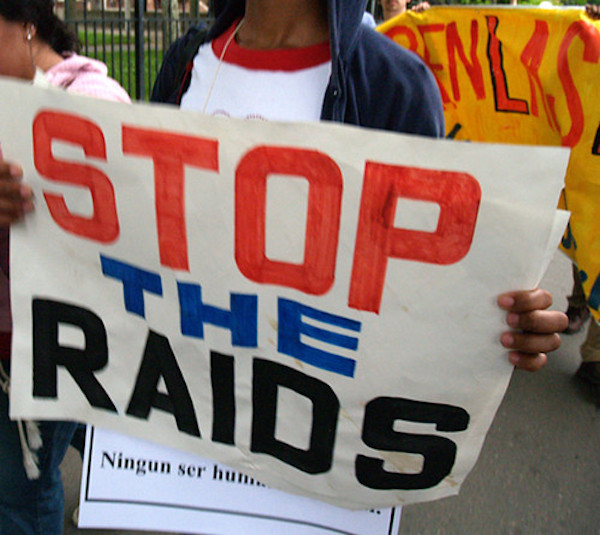
On August 7, over 600 U.S. Department of Homeland Security’s Immigration and Customs Enforcement (ICE) division officers arrested 680 immigrants at seven different meat processing facilities in Mississippi. Around 300 were released for “humanitarian reasons” to return for hearings at later dates. Just one week before the ICE raid, Homeland Security Investigations, the investigative arm of the Department of Homeland Security (DHS), announced a new enforcement initiative to combat forced labor in global commerce. One of DHS’s stated objectives for this initiative is “eliminating forced labor worldwide, using existing enforcement mechanisms and potential criminal prosecutions of U.S.-based firms benefitting from, or having knowledge of, forced labor in their supply chains, as a deterrent and unique enforcement opportunity in the world.” This approach would presumably emphasize stopping exploitative business practices and protecting exploited workers.
And yet, the ICE action targeted the very exploited workers its parent agency says it seeks to protect. In all official statements about the arrests, there has not been one mention of the possibility of arrests of corporate actors for crimes related to worker exploitation. In a press release, ICE indicated that companies could be charged with knowingly hiring workers who are in the country illegally, and that they will be scrutinized for tax, document, and wage fraud. Tax, document, and wage fraud are financial crimes with financial remedies. While financial crimes are important charges in combatting human trafficking, their focus is on the misuse of financial systems, without regard to the human abuse associated with crimes like human trafficking or labor exploitation. With probable cause to investigate seven properties run by five companies in six cities and the capacity to arrest nearly 700 workers by corporations with histories of labor and employment violations, it would be reasonable to assume there was probable cause to investigate exploitation also occurring.
Meat processing facilities, specifically poultry processing facilities, have a long history of exploitative labor conditions and human trafficking, specifically of undocumented workers. Oxfam found that most workers on the poultry processing line, regardless of immigration status, “earn wages that place them near or below the poverty line. Wages average around $11 per hour; annual income for most is between $20,000 and $25,000.” The routine denial of fair and consistent wages contributes to worker stress, distress, and potential for injury. Poultry processing is an industry with well-documented health, safety, and sanitation hazards, including violations and lawsuits filed in Mississippi, which is home to 35 separate poultry processing facilities. According to Bloomberg, the Occupational Safety and Health Administration (OSHA) has inspected poultry processors nationwide 737 times since 2014 for occupational and safety hazards.According to the OSHA database, 11 of those (one of which was an amputation in April) occurred on properties owned by Koch properties Peco properties, both companies which were subject to the ICE raids in question.
The abuses experienced by undocumented workers in poultry processing facilities often also amount to forced labor, which is defined by the International Labor Organization as “situations in which persons are coerced to work through the use of violence or intimidation, or by more subtle means such as accumulated debt, retention of identity papers or threats of denunciation to immigration authorities.” Studies and lawsuits over the past two decades reveal accounts of inflated “fees” being deducted from workers’ wages to correct unsafe working conditions like knives dulled while cutting through bone, or to compensate for bathroom breaks. Employers coerce workers into remaining silent and obedient by subtly reminding them of, and even outright threatening them over, their immigration status.
Major poultry processing companies like Koch, Peco, and Tyson (which was not subject to last week’s raids, but has been investigated in the past) utilize third-party recruiting agencies to recruit and provide a steady stream of low-wage, often undocumented, workers to staff their facilities and meet the demand. When those companies are sued for labor and staffing violations, corporations like Peco are then able deny any knowledge or liability, claiming the responsibility rests entirely with the recruiting agency.
These agencies typically recruit workers from Mexico and Central America, accruing debt for the workers for that journey, and continuing to charge inflated rates for various daily living and job-related expenses, keeping them indebted to their employer. The corporations’ knowledge of the exploitative practices of third-party recruiting agencies should be enough for them to be held liable for continuing to use their services.
In addition to the unsafe and exploitative working conditions, workers often contend with sexual harassment and assault. One of the raided facilities, Koch Food of Mississippi LLC, recently settled a $3.75 million case for discrimination and abuse against Hispanic workers, including sexual harassment of the women workers. The Equal Employment Opportunity Commission (EEOC)’s lawsuit alleged that Koch subjected Hispanic employees and female employees to a hostile work environment and disparate treatment based on their race/national origin and sex. EEOC also alleged that supervisors “touched and/or made sexually suggestive comments to women Hispanic employees, hit Hispanic employees, and charged many of them money for normal, everyday work activities.” Some employees were even discharged or penalized after complaining. These kinds of conditions are commonly imposed on exploited workers in marginalized industries, like farmwork and meat processing, that are typically rural and isolated from major urban centers. In these industries, low-wage workers are typically dependent on their employers for housing and transportation in addition to employment.
When undocumented workers endure labor violations, the fear of consequences extends beyond the fear of losing their jobs and homes, and toward losing their liberty. This fear of deportation makes it impossible for them to report abuses they endure, including sexual harassment and assaults. Those fears are realized the moment hundreds of immigration enforcement officers surround their place of work, arresting them and their fellow workers, while no consequences befall their exploiters, their disempowerment only magnified.
As HSI announced eight days before this raid occurred, “Businesses and individuals profiting from forced labor should be held accountable and liable. These are matters of criminal and civil law, not just questions of ethical conduct. At present, those benefiting directly and indirectly from engagement in forced labor activities may do so with seeming impunity and those providing the labor are often without access to justice.”
Arresting the potential victims of these crimes is likely to discourage current and future victims from reporting their abuses or cooperating with investigations, and may empower continued exploitation by the companies in question. With no sign of arrests of any corporate officials, there is every appearance of impunity for those potentially benefiting from forced labor while depriving those providing the labor from their access to justice.
More articles by Category: Immigration
More articles by Tag: Trafficking, Sexual harassment, Criminal justice


