















Gloria Steinem in Conversation With Loreen Arbus
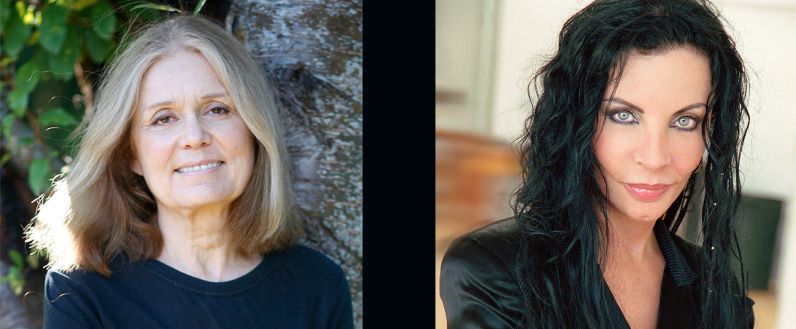
Loreen Arbus is an author, writer, producer, television executive, entrepreneur, philanthropist, and activist. She has spent decades as an advocate for women and girls and for people with disabilities. Through her organizations — the Loreen Arbus Foundation, the Goldenson-Arbus Foundation, and Loreen Arbus Productions — and through her personal endeavors, she also supports scientific and medical research, gender and racial equality in media, the arts, animal rights, and global peace.
Arbus co-founded the Media Access Office to increase employment and improve depictions of people with disabilities, and to raise consciousness regarding disability. In addition, she was co-founder and, for seven years, co-chair of the Lucy Awards for Women in Film/Los Angeles. She is also among the core group of founders of the Los Angeles Donor Circle of the Women’s Foundation of California.
Loreen Arbus will be the recipient of the WMC Leadership Award at the Women’s Media Center Women’s Media Awards on Thursday, November 17. On the occasion of this honor, Arbus joined WMC co-founder Gloria Steinem for a discussion about leadership, advocacy, and being a groundbreaker.
Gloria Steinem: Loreen, you have distinguished yourself as a tireless advocate on a wide array of global issues. For this interview, I want to focus on two issues that you are most passionate about, women’s leadership and advocacy for people with disabilities. You were the first woman in the United States to head up programming for a national network — twice at Showtime and Cable Health Network, which later became Lifetime. What was the biggest challenge you faced as you worked to establish yourself as a trailblazing leader and decision maker in the entertainment industry?
Loreen Arbus: The biggest challenge was the fact that no woman had had this opportunity, so extra pressure was on me and there was a degree of skepticism from many. The other challenge was to make people believe that we really wanted to present programming that was different. People invariably pitched us more of the same, assuming that’s what we wanted — not true. A third challenge was to ascertain what my salary should be (there was no precedent) and to achieve it.
GS: Your philanthropic work is comprehensive, encompassing many areas ranging from women in media to people with disabilities. You often ask people: “What do you think the biggest minority in the world is?” And you say that people are always surprised at the answer: “People with disabilities.” What are the most important areas that need to change when it comes to improving the lives of people with disabilities?
LA: One of the biggest challenges is to help people surmount fear — the fear of people who are different. Secondly, to generate access for people who are underrepresented and integrate them into the job pipeline. The perception has to be shifted to show that people with disabilities can perform at equal levels to able-bodied people in almost every capacity.
GS: You are a past board member of the Women’s Media Center. Where do you think we are today in terms of visibility of women in the media and also women in key decision-making positions in the media world?
LA: I think that the visibility of women on camera in news and public affairs has improved immensely. Often we see more women than men on panels. The addition largely is because African Americans are increasingly represented. But we do not see other minorities. I think we have a long way to go with women in positions to make decisions. We have more women creators than in years past, but it’s still men who predominantly greenlight projects.
GS: Tell me how the word “marginalization” has played and continues to play a crucial role in your work and life?
LA: As a woman and as an executive and as an artist, I have always had to contend with dismissive people in power. In one of life’s great ironies, I may be the power person in the room, but the men focus their conversation on having other men hear them and react. The acceptance of women and the recognition of their contributions continues to be reluctantly granted. Beyond my gender, I have also experienced discrimination along religious lines and the circumstances into which I was born. While the marginalized are gaining in visibility, we have a long way to go to be mainstreamed.
GS: Much of your life’s work has focused on inclusion — for women in leadership, and for people with disabilities. What can we all do on a daily basis to promote inclusion?
LA: I make it a point to put myself on membership committees. In doing so, I commit to being the conscience in the room. This is actionable: You can be the one to make organizations, boards, committees, and job searches diverse. Set a personal goal to step up on behalf of minorities, even if that means being criticized and marginalized. Examine your own biases and leave your comfort zone. The input of others can be invaluable to obtain different perspectives. We must strive to reduce homogeneity.
GS: Do you have a philosophy of living, and if so, what is it?
LA: “The act of giving is the soul of living.”
More articles by Category: Disability, Gloria Steinem, Media
More articles by Tag: Women's leadership, Women's Media Awards


