















Equal Pay Day Spotlights Wage Gaps
March 25 marks All Women’s Equal Pay Day — which represents how far into 2025 women, on average, must work in order to earn what men earned by the end of 2024. The National Committee on Pay Equity first recognized “National Pay Inequity Awareness Day” in 1996, hoping to raise awareness about persistent wage inequality. Each year, it now serves as a reminder of how much work remains in the fight for women’s economic equality.
According to the American Association of University Women (AAUW), women who work full-time and year-round are now earning 83 cents for every man’s dollar, based on the median annual salary paid to men — and that figure is 75 cents for part-time or seasonal workers.
The U.S. Chamber of Commerce reports that the shortfall in women’s median wages, which now trail men’s by $203 each week, add up to a loss of $10,000 per year.
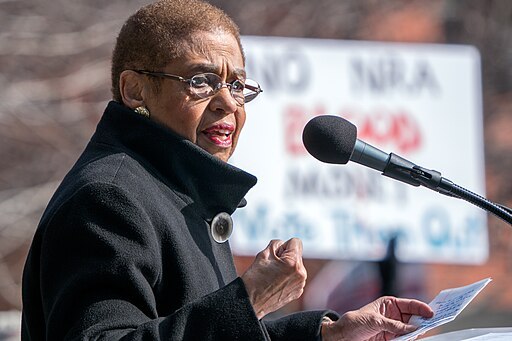
Rep. Eleanor Holmes Norton of Washington, D.C., who in 1977 became the first woman to chair the U.S. Equal Employment Opportunity Commission, introduced legislation ahead of this year’s Equal Pay Day commemoration to prohibit employers from asking job applicants about salary history. Because women often begin their careers earning less than their male counterparts, the use of previous salaries or declared salary expectations during the hiring process can perpetuate and widen the wage gap.
"Equal Pay Day is an annual reminder that American women earn less than men for performing the same work,” Norton said in a statement about the Salary History Question Prohibition Act of 2025. “The disparity often takes root in the interview process, before a job is even offered. The single question of salary history frequently disadvantages women and minorities, whose disproportionately lower salaries carry through their entire careers simply because wages at their first job were set unfairly because of their race or sex."
Salary history bans are on the books in 22 states and 23 local jurisdictions. In Pennsylvania, a state with a wage gap larger than that of the U.S. overall, lawmakers in the state House are re-introducing equal pay legislation that similarly prohibits the use of pay history to set new wages for a job applicant, as well as outlawing gender and racial wage discrimination and protecting workers from retaliation in wage-related matters.
“Closing the gender wage gap isn’t just about fairness, it’s about acknowledging and repairing systemic biases that perpetuate inequality in the workplace,” Pennsylvania Rep. Jennifer O’Mara said during a rally last week. “It’s time to accelerate progress towards true equality by demanding equal pay and equal opportunities for all individuals.”
Members of the City Council in Cleveland, Ohio, also recently introduced legislation addressing gender and racial wage gaps that would guarantee equal pay for equal work, expand pay transparency, and create a citywide equal pay task force. “It’s a win for working people of Cleveland,” Local 1 SEIU union member Sandra Ellington said at a press conference announcing the measure. “A ZIP code should not determine whether or not how much money you bring to your household.”
The first national legislation taking aim at the gender pay gap was proposed 80 years ago, near the end of World War II, when a rise in women workers revealed wage inequity. Nearly two decades later, in 1963, President John F. Kennedy signed into law a revised Equal Pay Act, mandating equal pay for equal work.
In the six decades since the Equal Pay Act became law, only one other piece of equal pay legislation has been made into law by Congress: the Lilly Ledbetter Fair Pay Act, enacted in 2009, which amended the Civil Rights Act of 1964 to expand relief and redress options for victims of wage discrimination.
Rep. Norton’s legislation echoes the 2016 Pay Equity for All Act, which aimed to prohibit prior salary history from shaping job offers. That legislation, as well as other pay equity laws — the Fair Pay Act of 1994, which sought to equalize pay between female- and male-dominated jobs, and the Paycheck Fairness Act, which closed loopholes in the Equal Pay Act — has never been passed by both chambers of Congress. In 2019, the House passed the Paycheck Fairness Act, but it was never brought to a vote in the Senate.
When the Equal Pay Act was signed, full-time, year-round working women made 59 cents for every dollar earned by their male counterparts — and the average for all women was just 37 cents. Yet, despite the advancements women have made in the workforce, the gender wage gap has persisted. In 2023, the wage gap widened for the first time in 20 years. And again this year, Equal Pay Day falls later in the year than it did in 2024, meaning women are working further into the year to make up for their losses than they did the year before.
For women of color, the calendar stretches even further. According to the AAUW, Asian American women, who earn between 83 and 94 cents for every dollar paid to a white man, have to work until April 7. Black Women, who earn 64 to 66 cents, won’t reach Equal Pay Day until July 10. Native Hawaiian and Pacific Islander women, who are paid 61 to 65 cents, won’t get there until August 28. Latinas — who earn 51 to 58 cents on the dollar — won’t make as much as their white, male counterparts until October 8. For Native women, who earn 52 to 58 cents, Equal Pay Day will come just weeks before the end of this year, on November 18.
The “motherhood penalty” also worsens the wage gap for women with children. Mothers’ Equal Pay Day is on May 6 this year, and the AAUW’s analysis finds they earned 62 to 74 cents for every dollar paid to dads in 2023.
In 2024, the first Disabled Women’s Equal Pay Day was recognized in the U.S., on September 14. Disabled working women, who in 2023 made 50 cents to every dollar paid to nondisabled men and 72 cents for every dollar earned by disabled men, will have to work until October 23 this year to equalize their earnings.
There are multiple causes for the gender wage gap, including occupational segregation shaped by gendered divisions of labor, the impacts of women’s disproportionate burden of caregiving and unpaid labor, the lack of a strong child care infrastructure in the U.S., employer practices that compound wage inequality, and — of course — outright discrimination.
According to an updated analysis from the Pew Research Center, half of U.S. adults believe that discrimination is to blame for the persistence of the wage gap, and women were more likely to say so than men. Sixty-one percent of women believe employers treat women differently, and 45% think women’s complicated decisions about balancing work and family are a major factor. Nearly half of women reported they felt “a great deal of pressure to focus on responsibilities at home” — while only 35% of men responded with the same.
The Center for American Progress has noted that, at this pace, it could take women another 45 years or more to close the wage gap — and the AAUW predicts it could even take until 2088.
The National Women’s Law Center warned in a 2023 report on state laws on pay equality that “if today’s gaps don’t close, over the course of a 40-year career, a Latina stands to lose more than $1 million to the wage gap in 28 states, and the same is true for Asian women in three states, for Black women in 13 states, for Native American women in 17 states, and for Native Hawaiian or Other Pacific Islander women in 13 states.”
All told, the report said, “across the country, the career losses amount to $1.2 million dollars for Latinas and $964,400 for Black women.”
More articles by Category: Economy
More articles by Tag: Work, workplace, pay equity


