















Will the Media Get Past the "Resiliency" of Puerto Ricans?
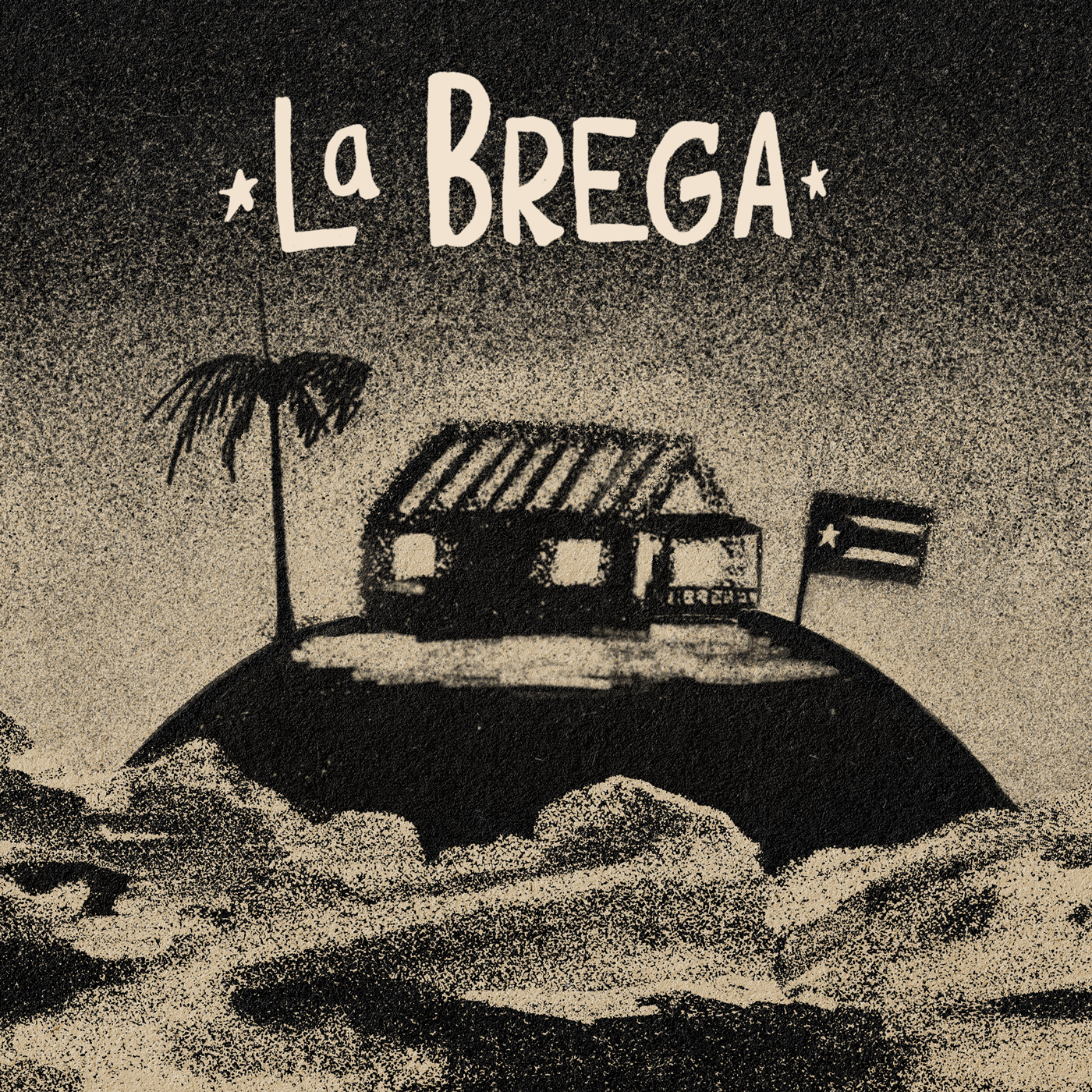
Alana Casanova-Burgess is a reporter and producer for the national public radio show On the Media from WNYC Studios. In collaboration with Futuro Studios, a new seven-part series called “La Brega” —a Puerto Rican phrase for "the struggle" — takes a deep dive into the politics, life and history of Puerto Rico. IDAR/E talked to Casanova-Burgess, host of the series, about how La Brega is disrupting the trope of “resilience” when it comes to covering Puerto Ricans. Our conversation was edited for clarity and length.
What brought you to journalism?
I always wanted to be a writer and being a journalist seemed like a way to have a career and do that at same time.
What sparked La Brega?
The biggest factor was a conversation I had with Marlon Bishop from Latino USA, from Futuro Studios now. After Hurricane Maria, which we both reported on, we felt there was an appetite for deeper stories about Puerto Rico.
A few months after we met and were planting the seed for doing a deep dive, historical series, Guernica magazine came out with this beautiful anthology series around Rewriting the West. Michelle García was the editor of that anthology. And that was a number of different writers and voices, not all women, but many of them women, and Latinas in particular, who were writing about this place that they knew. I thought it would be really fantastic to take that model, showcasing the talent we have and marrying it with Marlon’s idea of doing a podcast series about Puerto Rico.
Tell us about getting buy-in.
I work at On the Media. This project comes from that —this idea of who gets to tell their own stories and who can tell their stories best...Katya Rogers, executive producer of WNYC, and Brooke Gladstone, co host and managing editor of On the Media, were really supportive. This series isn’t about media narratives, but in its own way is an experiment in how to break through some of the tropes that are very common around Puerto Rico. Folks at Futuro Studios and at Latino USA were really engaged with this project because it’s in their wheelhouse as well.
What is an example of those tropes?
In the first English episode of La Brega, I have this montage on the word resilience. It’s on how mainstream outlets in the United States talk about the challenges in Puerto Rico —these poor people who are so good at being resilient and congratulating Puerto Ricans on being so tough. That came up in coverage of New Orleans after Hurricane Katrina as well, the idea that if you have a group of people who are struggling and trying to recover from a natural disaster and then, even though the state does not respond adequately to their needs, we sort of celebrate that resilience, instead of questioning why resilience is needed in first place.
Why do tropes like this persist?
This is not an original observation —I’ve read other people make this connection— on how research shows that people in the medical field imagine that Black and brown people feel pain less than other folks. I could see how there could be a connection there —‘oh these people are so resilient.’
Media also often look for a feel-good story. I think if you see some surviving in the face of adversity that feels like something worth celebrating. And in a way it is. We as Puerto Ricans do that ourselves. We celebrate la brega. But we also have to ask why do we do that, and is there a point where it’s not appropriate for us to be struggling so much.
“In some ways, we have been gaslit into not realizing we have colonies as the United States”
Is there a colonial gaze by U.S. media on Puerto Rico?
I don’t want to suggest that if you’re not Puerto Rican you can’t cover Puerto Rico correctly, but there is a lot of parachute journalism. But there are wonderful reporters who have really done the homework. I’ve also had to do the homework.
But, for example, every time Trump said something about Puerto Rico, there was a lot of attention on that. It felt very frustrating to watch that and also wonder whether there is any universe in which this yields a better conversation around Puerto Rico.
When we talk about the colonial gaze, it’s also a lot of liberals who noticed for the first time, during the Trump Administration, that the Island exists. An MIT media lab study that looked at the reporting and conversations following Hurricane Irma in Florida, Harvey in Texas and Maria in Puerto Rico showed that the Island received the least coverage in English-language media and how that began shifting the moment President Trump started going on the attack.
What would you like the impact of this series to be?
What’s been really rewarding is to see what the Puerto Rican response has been. We’ve received incredibly heartfelt messages about how nice it is to hear their own accent, nice to hear their stories in a way with a lot of care and sharp writing, because that doesn’t happen very often.
A lot of the history that is included is not taught —like about the carpetas (secret files). So people have been reaching out to say they are learning for the first time about the massive surveillance of Puerto Ricans.
Applying care, context and history are supposed to be standards in reporting. Why is U.S. media largely falling short?
It’s a complicated place. It’s a complicated place to report on where you are from there.
In some ways, we have been gaslit into not realizing we have colonies as the United States. Very rarely is that word used, even in the best coverage of Puerto Rico. By the way, that’s not a political statement. A lot of Puerto Ricans from different political parties in the island, they all use the word colony. I wonder why it’s so hard for people in the states to use that word. I suspect editors feel uncomfortable about it.
What pointers would you give to journalists covering the island?
Listen to this series. Think carefully about the language you are using when you describe Puerto Rican people.
Also, I don’t know that it’s always helpful to be amazed that Puerto Ricans are citizens of the United States. Asserting and reminding your readers and listeners that Puerto Ricans are citizens is not the beginning or end of the story.
More articles by Category: Media
More articles by Tag: Puerto Rico, Media, Coverage, La brega, Alana Casanova-Burgess, On the Media, WNYC, Futuro Studios


