















After Tuesday's Presidential Debate, Some Latinas are Still Not Cheering for Either Candidate
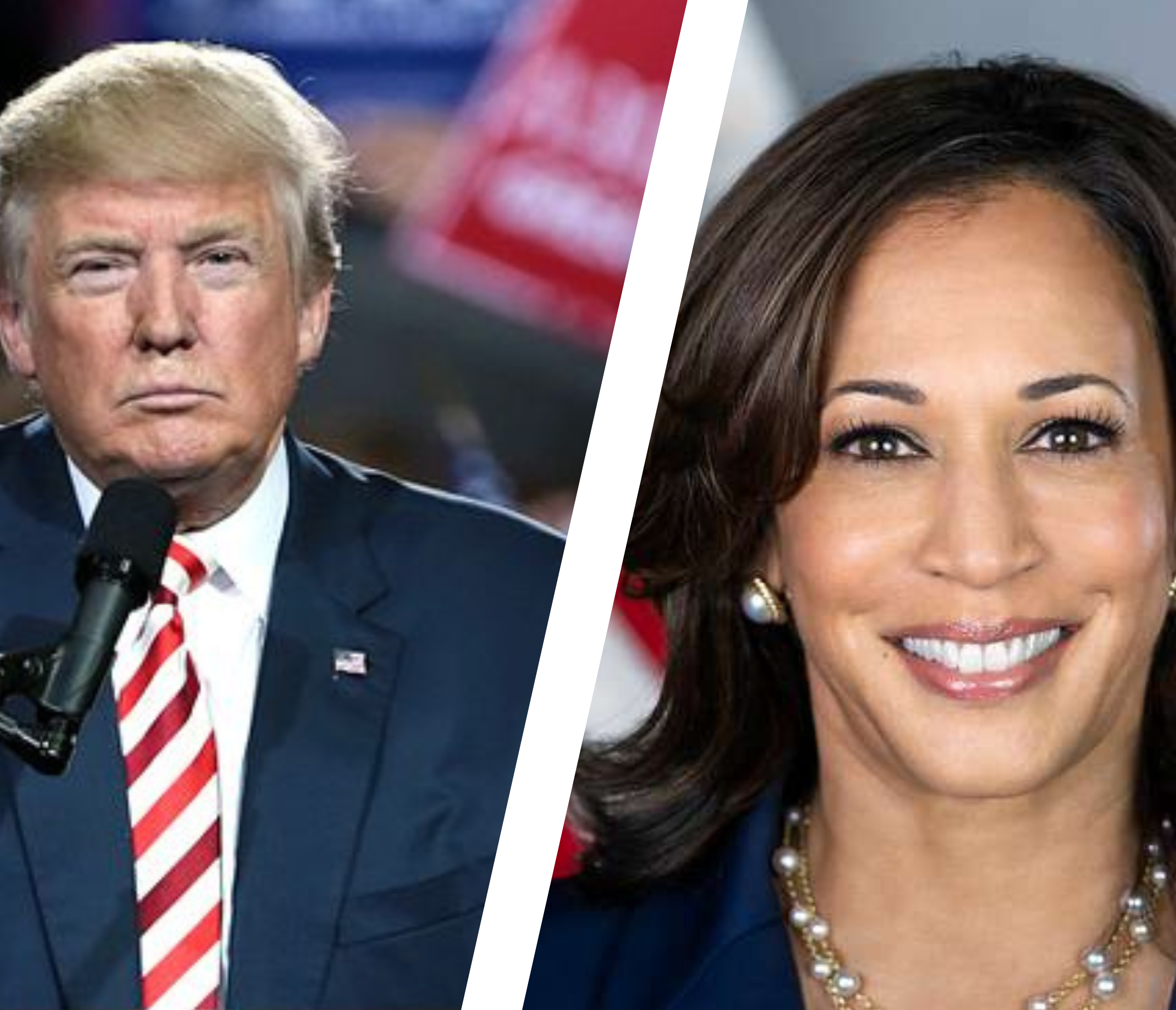
At 63.7 million, Latinos/Latinx/Latines are the largest ethnic or racial minority in the United States. A report by the Pew Research Center projects that 36.2 million are eligible voters, of which 51% —over 16 million— are Latinas. In what remains a tight race for the White House, winning their votes is not optional.
IDAR/E spoke to Latinas who are getting ready to vote, or not, in their first U.S. presidential election about the issues they are weighing.
Carolina Delgado, a 19-year-old Puerto Rican student from Texas, believes voting is essential, but has yet to decide who she will vote for. She’s very concerned about how the housing crisis affects Latinos. “I think a lot of Latinos are struggling with the housing crisis, trying to pay for houses. A lot of people here in Texas come from different parts of Latin America and they're having problems finding a way to pay for the houses when they can't get a job because they don't speak English.” Despite focusing on unbiased reports, she’s been skeptical of the candidates, former president Donald Trump and Vice President Kamala Harris. “They're just saying words, hoping that people will just be like, okay, well, let's vote for them.”
The first debate on Tuesday night between Harris and Trump did not move the needle for Delgado. “I didn't change my mind but it does worry me for my future. I still haven't chosen a candidate and the debate didn't help me pick.”
A 34-year-old tech worker of Ecuadorian heritage, B. Calderón has yet to vote in a presidential election, explaining that no candidate has felt worthy of her ballot. “These [presidential] candidates are two heads of the same snake,” the Georgia resident said. “Neither candidate has the most aligned beliefs with what I'm hoping for.”
Calderón added that she also considers progress over perfection and wants to play a role in shaping the future. “Progress happens through many, many years and decades of change and conversation and movement.”
Prior to the Sept. 10th debate, she criticized what she said was Harris’ lack of a platform on her website. Now she says that “there will never be a perfect candidate. But honestly, it’s about trying to get the lesser of two evils, and Kamala is that. Trump is just so insanely ignorant.”
“The debate, she added, 'made me not want to vote but I will vote regardless, especially because of the whole president-judicial power relationship'”
Alondra González, a 20-year-old Mexican student from Texas who is currently studying abroad, plans to submit an absentee ballot. She believes that it’s important to exercise voter rights, especially when there are so many people in the country who are prohibited from doing so. Her biggest concern is the SB-4 anti-immigrant policy in Texas that would allow local police there to detain anyone they merely suspect to have illegally crossed the border.
“Unfortunately, during these elections, it's probably the worst two candidates that we have, but I'm voting for one of them because Texas is a red state. The presidential elections really impact local elections, so that's why I'm voting for them,” González said, referring to Democrats.
The debate, she added, “made me not want to vote but I will vote regardless, especially because of the whole president-judicial power relationship.”
Lismary González Salazar, a 20-year-old Dominican student from New York, says she will not vote this year. Her top concerns are Puerto Rico, Palestine and land back for Indigenous people. She says no candidate cares about these issues and that from a moral standpoint, she cannot support any of the leading contenders. “Kamala as president means yes to reproductive rights but funding a genocide [and] keeping PR [Puerto Rico] as a territory so they can profit from it but not have to actually take care of the people living there.”
González Salazar says she watches campaign speeches and monitors the political discourse online, but doesn’t see the voices and perspectives of Latinas being reflected. Because their voices aren’t in mainstream media, she says she has to search for them.
Tuesday night’s debate reaffirmed her discontent with the candidates. “The American political system is a joke. Politics really is a lot about how charismatic the candidate is and not how competent they are to lead a country. Like I kept laughing during the debate but at some point, you stop and you're like - this is who wants to be in power and they have supporters. It's like politics is all about feeding your ego.”
“When Latinas are informed about the impact of elections on their communities, they turn out to vote and sometimes bring along family members”
The desire for progress, housing affordability, opposition to anti-immigrant policies and discontent with candidates' stances on international issues all underscore a need for candidates to concretely address a range of Latina concerns.
And this matters because compelling Latinas to vote has a ripple effect.
“When Latinas are informed about the impact of elections on their communities, they turn out to vote and sometimes bring along family members,” said Veronica Terriquez, Director of the Chicano Studies Research Center and Co-Founder of the Latina Futures 2050 Lab. “In such a close election, the Latina vote can be decisive, particularly in swing states like Arizona, Nevada, New Mexico, and Florida, where they comprise a significant segment of the population that is eligible to vote.”
More articles by Category: Politics
More articles by Tag: Latinas, Latines, Latinx, Elections, harris, Trump, debate


