















Women and Girls Are Suffering After Three Years of Taliban Rule
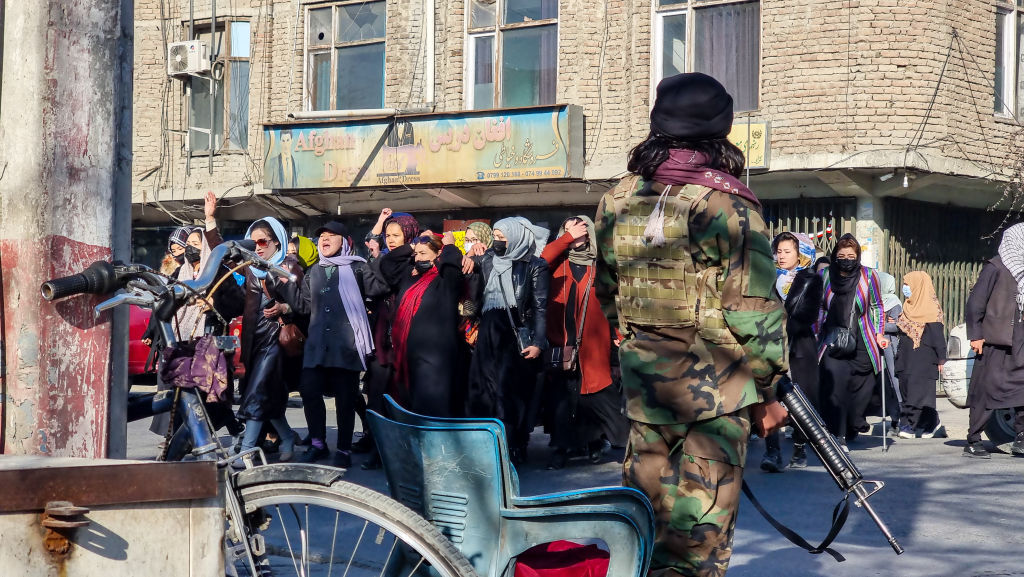
Over the last three years that the Taliban has had control of Afghanistan, most of the devastating impacts have been on women and girls.
The Taliban’s comprehensive attacks on women’s rights have limited them from accessing an education past secondary school, most employment, public areas like parks or beauty salons, and even raising their voices in public.
The United Nations Security Council said Dec. 13 that it was deeply concerned about the most recent decision made by Taliban leader Hibatullah Akhundzada, which will bar women from receiving medical education and training. As women and girls in Afghanistan cannot be treated by male health professionals and doctors, this could lead to little to no healthcare for millions over the next several years.
Zulikha Akrami, a graduate student and career services navigator at a nonprofit to empower immigrants, said the newest “vice and virtue laws” imposed by the Taliban are efforts to imprison women in their own homes.
“ The collapse of Afghan government in 2021 was not only a collapse of political settlement, but it also was a collapse of Afghan women's rights, dreams, and a life that will eventually lead to the women's complete exclusion from the society,” Akrami said. “This legitimized exclusion of women from society, long-term, may lead women to think this is okay to be discriminated against.”
Akrami, who comes from a family of 12, was the only one who could leave Afghanistan to continue her education.
“My sister graduated from sixth grade two weeks ago and had to deliver a speech to say goodbye to her teachers and classmates,” Akrami said. “She wanted to say a few words of encouragement to show gratefulness and appreciation, but it turned into tears. It turned into advocacy. The uncertainties, the disparities that she [carries] in her eyes is unbearable.”
Atefa Ibrahimi, a master’s student and Every Woman Treaty advocate, fled from Afghanistan to Australia in 2021 but then moved to the U.S. to pursue a graduate degree.
“ I completed my primary education, my secondary education [and] even my bachelor’s degree in Afghanistan,” Ibrahimi said. “I never thought that a country that got me educated for 20 years would [become] so destructive of education.”
Ibrahimi previously opened a co-ed library in Afghanistan to promote a sense of belonging for women and girls.
“A lot of children were coming to our library to learn about freedom and learn about peace,” Ibrahimi said. “[Boys and girls] were playing together. Now, the men have access to more education, but girls are now scared every day to go anywhere.
Ibrahimi said doctors in Afghanistan already had limited access to medical education because of a lack of updated technology, which will only get worse as the bans happen.
“Women who have difficulty with pregnancy, girls having difficulties with other [reproductive] issues, they all won't have anyone to go to,” Ibrahimi said. “A lot of women might die. I don't know what is going on in the minds of [the Taliban], but things are going to become very difficult.”
Both Ibrahimi and Akrami stress the importance of continued advocacy for the physical and mental health of Afghans, specifically women and girls, as they finish their schooling in the U.S.
“Even though all of my family lives in Afghanistan, I sometimes feel disconnected because I am not currently experiencing that situation,” Akrami said. “People are forgetting about the people of Afghanistan and the women of Afghanistan. [We must] document and talk about the issues happening in the country, and we cannot recognize the Taliban as a government.”
More articles by Category: International
More articles by Tag: Afghanistan


