















Why we need a #GirlsToo movement
Near the end of the school year, Memphis eighth-grader Savannah Thompson was violently slammed into the lockers while taking her lunch out of her own locker. The aggressor then started to dry hump her while calling her sexist, pejorative names. Students and five teachers watched and did nothing to end it. The aggressor was the same boy who had harassed her all throughout middle school.
According to the National Sexual Violence Resource Center, Savannah’s experience isn’t uncommon: two out of three girls are harassed and one in four girls are sexually assaulted by the age 18.
Savannah’s experience led her to join her local chapter of Girls Inc. — an organization that advocates for girls and offers programming for them — which in turn led her to become an advocate for the organization’s #GirlsToo movement, an offshoot of the #MeToo movement that focuses on girls under 18 years old.
Girls Inc. Public Policy Director Lara Kaufmann recently told the FBomb about why it launched the #GirlsToo movement and what the organization hopes the movement accomplishes.
The FBomb: How did Girls Inc. come to launch the #GirlsToo movement?
Lara Kaufmann: Girls Inc. surveyed our girls in 2016 and found that the top issue they were concerned about was sexual harassment and violence (this was even before #MeToo went viral). We also heard anecdotally from our affiliates that this is something affecting girls every day, which led to a larger conversation within Girls Inc. regarding how to raise more awareness about sexual harassment and violence in the lives of youth, particularly girls. The conversation coincided with the explosion of #MeToo, and the #GirlsToo campaign was born.
Why is it important to have a #GirlsToo movement distinct from the #MeToo movement?
We are very grateful to Tarana Burke for her leadership and to all of the women who have come forward and shared their #MeToo experiences. As an organization that serves girls, it was important for us to help draw attention to how this epidemic impacts young people and how we must address the norms and stereotypes that fuel these behaviors from a young age.
Sexual harassment and discrimination start young. According to national statistics from the CDC, it’s estimated that one in four girls will experience sexual abuse before they turn 18. Additionally, about seven in 10 girls are sexually harassed by the time they leave high school. A survey released last year of teen girls between the ages of 14 and 19 found that the majority said they hear boys making sexual comments at least several times a week.
What has Girls Inc. done, and what does it continue to do, to promote the #GirlsToo movement?
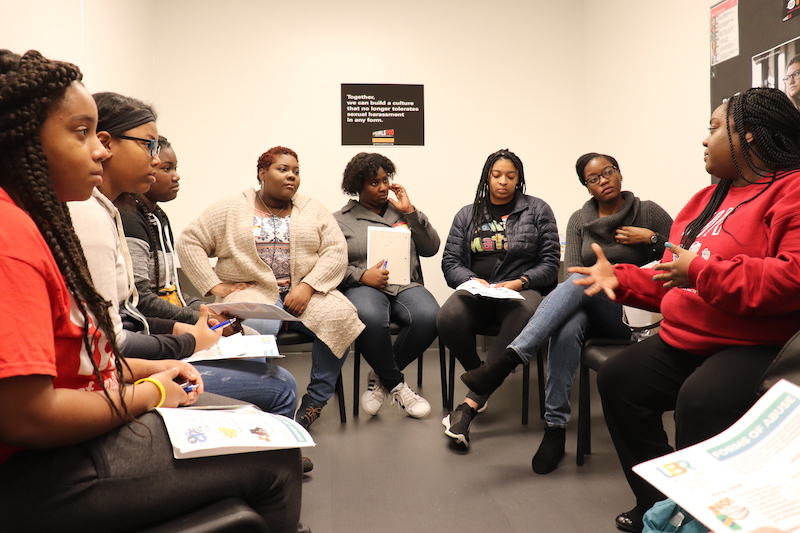
In October 2018, Girls Inc. launched the #GirlsToo campaign and website with the #GirlsToo pledge. This year, we began holding local conversations called “Teen Talks” all across the country, including in Memphis, Tenn., and Orange County, Calif. These events have allowed us to elevate the voices of young people amid the ongoing discussion of the pervasive sexual harassment and violence that girls and women face. Teens have shared thoughts and perspectives on a wide variety of topics including healthy relationships and consent, sex education, school culture, gender and social norms, stereotypes, and supporting survivors. The next Teen Talk will be held in early May in Portland, Ore., and a more national-focused Talk will be held in late May.
Does Girls Inc. and/or the #GirlsToo movement foresee any attempts to engage and educate boys about sexual harassment? If so, how?
We must engage boys in this work. It should not be up to girls to fix this problem. And we know that boys also experience sexual harassment and violence, with LGBTQ+ youth disproportionately affected. The changes Girls Inc. and our network of girls and partners are advocating for will benefit all youth. Teens and adults alike must examine their values, beliefs, and behaviors and commit to doing their part to change the culture. That’s why we encourage everyone to take the #GirlsToo pledge and have developed resources for girls, boys, nonbinary youth, and adults.
The #MeToo movement took off in large part thanks to the participation of celebrities and other well-known figures. Do you think this would be helpful or even necessary to the #GirlsToo movement as well? What are other ways you hope to get the word out about the movement?
We appreciate the help we've gotten from certain celebrities, and we are always looking to partner with more, particularly those who influence youth. We have been lucky to have help in getting the word out from some of our favorite and influential supporters, including actress Tracee Ellis Ross, news anchor Gretchen Carlson, activist Wendy Davis, and Massachusetts Rep. Ayanna Pressley. Girls Inc. hopes to also get the word out by spreading the hashtag on social media, hosting Teen Talks, speaking with lawmakers, and working with girls on advocacy in their schools and communities.

More articles by Category: Girls
More articles by Tag: High school, Discrimination, Sexual harassment, Women's leadership, #MeToo


