















When will we finally address the link between gun violence and domestic violence?
There have been at least 21 deadly mass shootings in the United States in 2019. Politicians responded to each of these events like they always do, with antiseptic murmurs of thoughts and prayers, claims that we must address an epidemic of mental illness to address gun violence, and empty calls for better gun control legislation. There is one common thread that unites these mass shootings that is often lost in these responses, however: the histories of domestic violence among most mass shooters. We debate the meaning of the Second Amendment endlessly, but rarely stop to interrogate how and why the people who decide to kill dozens of people have also demonstrated that they hate women.
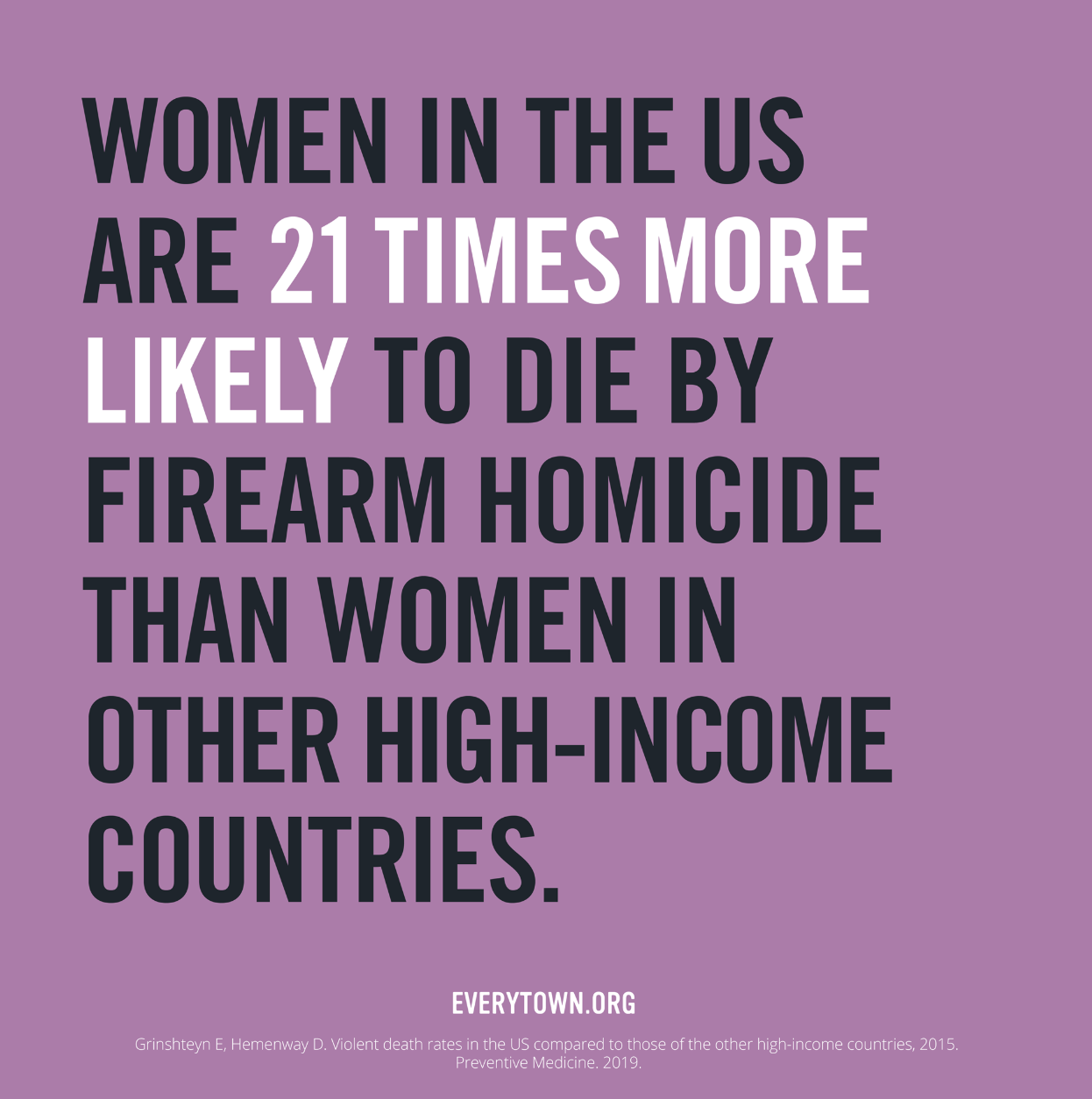
Not only are virtually all mass shootings perpetrated by men, but the majority of those shooters have committed violence against women, threatened violence against women, or disparaged women. A 2018 Everytown for Gun Safety report found that in at least 54 percent of mass shootings, the perpetrator had also shot a current or former intimate partner or family member. Robert Lewis Dear, who killed three people at a Planned Parenthood clinic, was accused by two ex-wives of domestic violence. Nikolas Cruz, who murdered 17 people in Parkland, allegedly abused his girlfriend. Adam Lanza shot his mother four times before killing 26 people at Sandy Hook Elementary School. So why do we continue to have indiscriminate conversations about gun control that fail to acknowledge this reality? We fail to make the connection between the gendered violence that always has persisted, and is even growing, in private spaces to the escalation of rage in public spaces. We know that when a domestic abuser can access a gun, the risk of homicide in the relationship increases by 500% — and, according to an April New York Times article, homicides committed by gun violence by intimate partners are on the rise. American women are 21 times more likely to be killed by a gun than women in other developed nations, and domestic violence is the most common killer of women worldwide.
Given this context, it makes sense that while 60% of gun owners are male, women gun owners are more likely than men to cite the need for protection as their reason for that ownership. As Ashley Fetters writes in GQ, “For all the strides we’ve made towards equality, there’s still a more violent sex.”
At its core, exploitation of guns is a gendered problem. As Jennifer Wright writes in Harper’s Bazaar, “Women lose jobs. Women feel neglected by their loved ones. Women are romantically rejected. Women, as a rule, do not respond by shooting up schools or workplaces.” Only three mass shootings since 1982 have been carried out by women. That’s less than one per decade.
So what can we, should we, take away from this connection? We need legislation that prohibits people with a history of domestic violence from having the right to own a gun. Our public conversations about gun control must grapple with the undeniable connection between violence against women and gun violence. Until we recognize the underlying structures of misogyny so ingrained in our culture of violence, we will fail to understand the real roots of these atrocities and they will inevitably continue to occur.
More articles by Category: Violence against women
More articles by Tag: Domestic violence, Sexism


