















What Does Taylor Swift’s Constant Reinvention Really Mean?
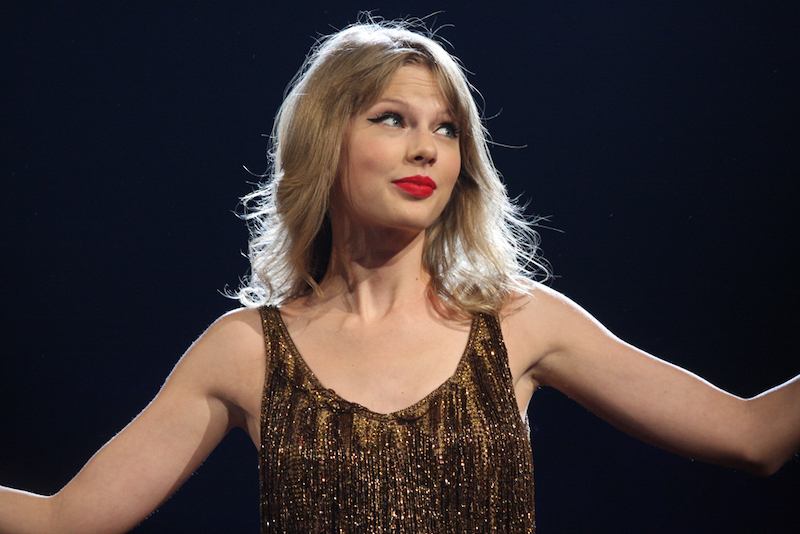
As her fans are well aware, Taylor Swift is in the middle of re-recording her first six albums. The move was precipitated by a now-infamous fight with music manager Scooter Braun and Big Machine Records. Scott Borchetta, the founder and CEO of Big Machine, refused to sell Swift the rights to the masters of her first six albums, which included live performances and re-recordings. Then, Braun bought Big Machine Records and, with it, Swift’s music. Because her original music will never belong to Swift, her re-recordings are a complete middle finger to Braun, the (now-ex) owner of her masters, and a warm gift to her long-time fans. Braun eventually sold the masters to an unknown investment fund for the payday of a lifetime.
But while Swift’s fight to own her intellectual property is setting a new standard for women in the music industry, the resurfacing of the “old” Taylor Swift also reminds us that there are still fundamental issues regarding women’s value in the entertainment industry, and they needed to be addressed yesterday. Specifically, Swift’s years of work highlight how we hold women entertainers to the impossible task of fighting day in and day out to remain relevant.
When Swift’s albums were released years apart, the excitement of hearing new music made her old work seem obsolete. Who cared if the music changed genres or Swift presented herself a little differently? Fans have even categorized each of Swift’s albums into different “eras,” or each album being defined by a specific sound, a specific style, and a specific Taylor. Fans would mock you for even humoring the idea that the Swift in her Fearless era was the same Swift as the one in her Reputation era. One is sweet and soft-spoken; a true country girl. The other is ruthlessly independent and maybe even a little insane.
The sad truth is, however, that it’s highly unlikely each of these albums represent Swift’s genuine attempts to find out who she was, but rather, which version of her everybody liked best. That’s never been so clear until now, when we have this chance to reflect on all of Swift’s old music at the same time. It’s more clear than ever how much pressure we put on Swift — and all women in entertainment — to be exactly who we want them to be no matter how insurmountable that might be for them.
Perhaps one of the greatest Taylor transformations the world has ever seen is the metamorphosis from pop perfection 1989 to endearingly insane Reputation. Of course, in true Taylor fashion, the conversion wasn’t complete without an outright social media reset and a year without physical sightings. Dramatic? Maybe. But after years of conflict with the Kardashian family, Swift thought the best version of herself would be one that didn’t exist. The public complained about the staleness of Swift’s I-wrote-your-name-in-my-burn-book discography. They trended #TaylorSwiftIsOverParty on Twitter. Thus, Swift declared in her comeback single “Look What You Made Me Do” that the old Taylor was dead. Instead, here’s a song about the media, here’s another about gossip, and, oh yeah, here’s one about how much you guys hate me.
Or what about Swift’s 2019 release of Lover? It’s as if a career of pent-up aggression manifested into 18 tracks without a trace of heartbreak jargon. It was an entire album about pure, unadulterated bliss and being in a long-lasting relationship. Swift looked at the public with pleading eyes and cried, “Is this enough?” Alas, it was not. Where was the Swift who wrote lyrics that made you feel like a dagger was stuck in your chest and twisted around a couple of times? Fine. In walks Folklore, Swift’s surprise album that came out only a year after Lover. The lyric “they told me all of my cages were mental / so I got wasted like all my potential” speaks for itself.
Could this constant pressure of reinvention be chalked up to the entertainment industry being generally cutthroat? Sure. Being an entertainer is a ruthless job; you can either be admired or get out of the spotlight. But for women entertainers especially, admiration isn’t given — it’s earned. You can be shiny and new for a couple of years, but you’ll eventually need an upgrade. Better yet, why don’t you just become something completely different?
Need proof? Look at the way Kanye West withheld an album on its promised release date and got a pass in the public eye. After teasing his newest album, Donda, in July, and packing Mercedes-Benz Stadium with eager fans for a massive album release event on August 5, the 44-year-old rapper couldn’t deliver what he promised. Even though Donda didn’t see the light of day until August 29, one Twitter user wrote, “Kanye can take as long as he wants to drop Donda it just means it’ll be better.” Compare this to the release of Swift’s critically acclaimed pop album 1989. In 2014, the new album was expected to be an overwhelming hit, so its absence from streaming platforms such as Spotify was notable, if not completely shocking. Swift rightfully defended her decision by emphasizing the value of her work. You see, artists make far more money from record sales than they do streams, so the delay in streaming capability allowed Swift to sell more copies of the record itself. It was an act of self-appreciation that was met with furious backlash. Forget the pacifying tweets, now it was “Taylor Swift’s album 1989 is not on Spotify. That really sounds like 1989.”
The answer is simple. Men entertainers are not held to the same standards as women entertainers.
Swift seems well aware of this, as she states in her Netflix documentary, Miss Americana, “The female artists that I know of have re-invented themselves 20 times more than the male artists.”
Yet it’s something Swift is also good at; she has managed to remain, if not universally liked, at least relevant in pop culture and financially successful for the long run.
Currently, Swift seems to be in favorable social standing. She surprise-released her re-recorded version of “Wildest Dreams” just weeks before announcing that Red (Taylor’s Version) would be available to the world on November 12. The public is head-over-heels for its sweetheart right now, but the real question is whether or not Swift is fully enjoying her time in the spotlight, or if she’s too busy planning which person she’ll have to commit to being next?
More articles by Category: Arts and culture
More articles by Tag: Music


