















We need female leaders to achieve gender parity
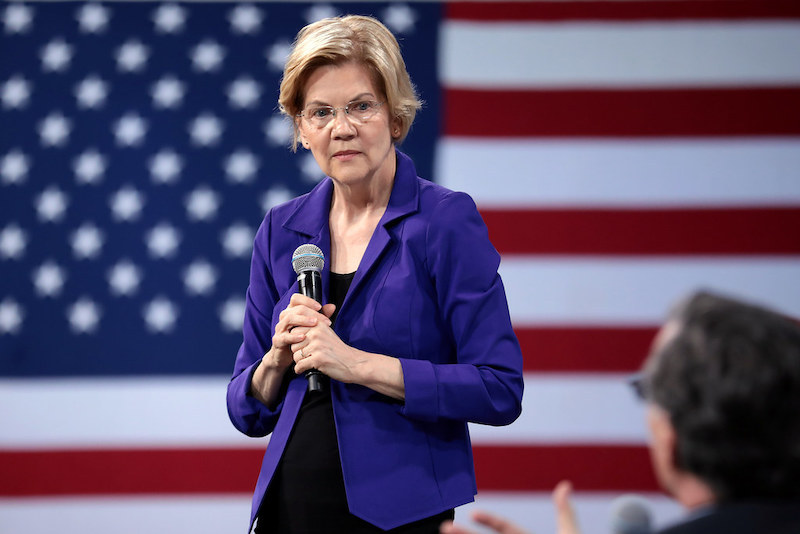
On March 5, one of the final female candidates running for the Democratic nomination, Elizabeth Warren, dropped out of the race, despite having risen in the polls earlier in the race. I was shocked to hear people around me — people who consider themselves progressives — fail to recognize how sexism routinely disenfranchises female political candidates. I even heard those so-called-progressives engage in that kind of sexism, too.
Americans have developed a wide range of vocabulary to describe our dissatisfaction with female candidates over the relatively short period of time women have been running for office in large numbers — language that is often contradictory. Warren was described as too centrist by some, too radical by others. As a former Harvard professor, she was described as too intellectual, despite the fact that Barack Obama taught constitutional law at the University of Chicago. A peer in one of my classes said, “She’s too old — I hope she retires soon” — a comment that was affirmed by several nods and has been echoed in the media. Yet Elizabeth Warren is 70 years old, while the frontrunners, Bernie Sanders and Joe Biden, are 78 and 77 respectively.
Likability persists as one of the main factors necessary for female candidates to succeed, but is not as important for men. “What goes unsaid is that women might be more ambitious and focused because we’ve never had the choice,” Roxanne Gay writes in her book Bad Feminist. “We’ve had to fight to vote, to work outside the home, to work in environments free of sexual harassment, to attend the universities of our choice, and we’ve also had to prove ourselves to receive any modicum of consideration.”
“As a feminist, I held her to the same standards as the rest of the candidates,” a friend of mine wrote to me about Warren. Several other progressives I know argued that they didn’t see gender. What that argument ignores is that sexism is structural; until we acknowledge the preexisting prejudices that dictate how we perceive others, we cannot claim we are fully committed to political and social gender equality.
These attitudes perhaps, sadly, make sense given that more than a quarter of Democratic primary voters scored higher than average on a hostile sexism scale, according to a July 2019 poll.
Political scientists have found over time that even when women vote for female candidates, it is not because they are women. But we must start voting for women both because they are qualified and because they are women — because research shows doing so will benefit us. According to the Harvard Kennedy School’s Women and Public Policy Program, when women hold public office, they prioritize public goods that affect women, including infrastructure, education, health, and water. Under female leadership, female citizens participate in more civic dialogue and minorities are more likely to report crimes committed against them.
Research also shows that this effect holds beyond politics. When women are appointed to more leadership positions in the workplace, there are often decreases in sexual harassment in those offices.
At the very least, we can make up for the enormity of the loss of forgoing another chance to have a female president by electing more female leaders elsewhere, like in our student governments and local offices, and by uplifting the women around us in any way we can. Above all, we can acknowledge that sexism in U.S. politics poses a pernicious threat to restoring political and social justice.
More articles by Category: Politics
More articles by Tag: Women's leadership, Elections, Sexism


