















Two Women on the Front Line of COVID-19 on How Their Experiences Will Shape Their Vote in November
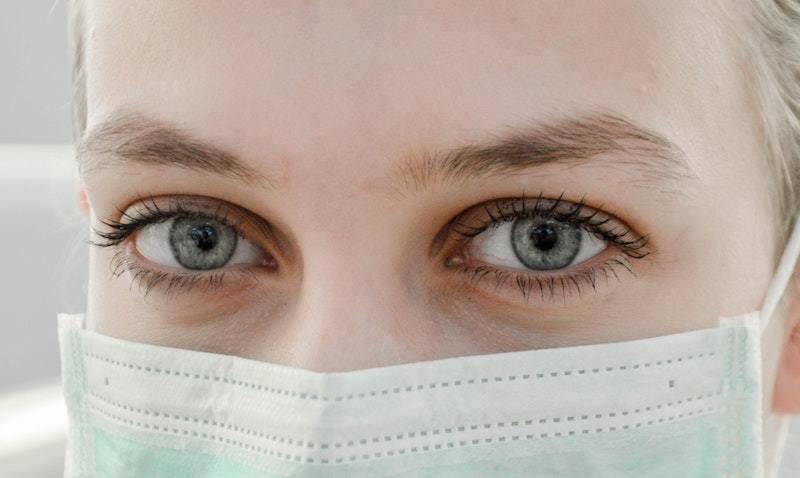
Sara, 29, works in a community hospital about 40 minutes north of Pittsburgh. As an emergency medicine physician assistant, Sara’s job normally involves acute patient care, like medical evaluations and procedural tasks including wound care and casting broken bones. But in March, that changed; she began to work strictly on COVID-19 patients’ care, and felt the impact right away.
“At the very start, when things were very unknown, there was lots of fear and panic as all the rules and regulations were changing,” she said.
Sara talked with her girlfriend, Alix, with whom she lives, along with their cat and dog, about the health risk Sara would now be bringing home to her every night.
“Some of the people I work with separated from their loved ones and families based on potential risks and the ones they lived with at home — they moved to other areas of the home or would sleep in separate beds,” Sara said.
The two decided they were young and healthy, and would much rather spend their time living together in quarantine than separating for an unknown period of time.
“We adapted; I would go to work, come home, immediately change and shower, and we monitored for any symptoms,” Sara said, noting that the experience “was incredibly difficult and stressful for both of our families, who we are used to seeing very regularly.”
But despite the intensity of this experience, COVID-19 has not had much impact on how Sara will vote in November. Sara finds the two-party system very rigid, and says she tries to make the best decision she can based less on party affiliation and more on which leader she thinks will best represent her personal beliefs and best represent the nation as a whole.
To Sara, the most important thing for her as a physician assistant is to continue to do what she was trained to do: refer to verified, trusted sources of information from proven experts and make unbiased decisions based on science and facts. To that end, she concedes it “would be valuable for the government to put the most up-to-date, verified information and recommendations that are unbiased and not centered around anything else other than what will be the best answer to ensure the safety of all Americans.”
Sara also called for the federal government to support affordable and accessible COVID-19 testing, so that health care providers can treat patients as effectively as possible and focus on getting life back to normal as quickly and safely as possible.
When a Connecticut-based nurse practitioner in her early 30s (who wishes to remain anonymous) returned to work from her maternity leave in June, she was told her role had changed. While before, she had done consults in the emergency department, she returned to join an inpatient consult team that required covering two different hospital campuses. “It was very difficult trying to come back as a new mom in the midst of a pandemic to a brand-new role,” she said.
Additionally, her husband, who is a resident at the same center, was pulled off his rotations to help staff six COVID-19 intensive care units (ICUs) over the course of a four-month time period that coincided with her first month of maternity leave. Additionally, he was exposed to COVID-19, and she found herself home post-C-section with an infant and a husband in quarantine.
When she returned to work, select staff (without sound reason, the woman said) were expected to return to in-person visits while the majority of the hospital stuck to remote evaluations.
“My manager would give us one surgical mask per week, and those with self-reported symptoms could get tested,” she said. “I received one N95 mask, which I have been wearing since I returned from maternity leave.”
After this experience, the woman’s frustrations with the current political climate were magnified. “I think it has become clear on a national level that there was and is extremely poor leadership,” she said. “While I had not trusted our president’s ability to lead the country, this made it much more real and terrifying.”
The experience has given the woman a new sense that medical professionals are thought of as “disposable” and little has been done for them to protect their loved ones. She also expressed frustration that “the public has been told by our national leadership direct contradictions from what the experts and medical professionals are saying, and even still wearing a mask is a political statement when it should not be.”
As far as voting this November, the woman said she has always been left-leaning, so nothing has changed her thoughts as far as going to the polls. “[This] has certainly reinforced my current political beliefs and values,” she added.
More articles by Category: Health
More articles by Tag:


