















Trans Votes Matter
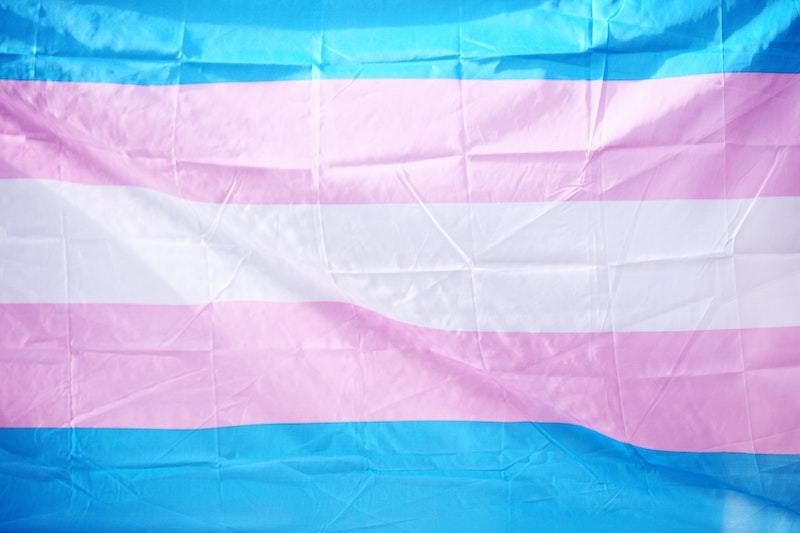
With the 2020 presidential election looming, America’s voting infrastructure remains as flawed and exclusionary as ever. While many people are aware of America’s history of suppressing the votes of racial minority communities, it’s a pattern that affects other minorities, too — especially trans voters.
“When you have a law that’s intended to disenfranchise people, of course it’s going to affect the transgender community, because there are trans people in every kind of community,” Ash Hall, digital coordinator with the Texas Civil Rights Project, told Vice in August.
Take photo ID laws, which require voters to present a form of photo ID that matches their name in order to vote. The law seems innocuous until one considers the fact that many transgender voters have difficulty getting forms of ID that appropriately and accurately reflect their name, gender, and current appearance. A February 2020 study from the UCLA Law School’s Williams Institute found that “many transgender people who live in accordance with their gender identity do not have ID documents that accurately reflect their correct name and gender,” which could result in “over 378,000 voting-eligible transgender people facing barriers to vote due to voter registration requirements and voter ID laws, including 81,000 who could face disenfranchisement in strict photo ID states.” So, for instance, if a person originally registered to vote under one gender identity, but had since transitioned to another identity, a poll worker has the right to turn this person away. This is the primary imperfection with most voter ID laws, Hall told Vice: Poll workers have too much authority to interpret or validate identification.
According to Hall, going through the channels necessary to update one’s ID can discourage trans people from voting in the first place, since changing one’s ID can be a time-consuming and expensive process, and sometimes even requires a court order. Hall adds that it’s unreasonable to expect trans people to dedicate time, money, and energy to participate in a system that has made no attempt to make things any easier or more inclusive for them. Another problem is that while proponents of strict ID laws often cite voter fraud as reasoning for their support, voter fraud is essentially a myth. Since 2000, there have only been 44 documented cases out of 1 billion votes cast, averaging out at a rate of 0.0000044%. Stricter ID laws, therefore, essentially serve the purpose of obstructing the voting process for certain groups, and is an act of suppression.
ID restrictions extend beyond voting as well. For example, in June of 2020, the U.S. Department of Housing of Urban Development floated a proposal allowing single-sex homeless shelters to turn away transgender people. The National Center for Transgender Equality reports that one in five transgender people have been discriminated against when seeking housing, and more than one in ten have been evicted because of their gender identity. A National Center for Transgender Equality survey released in 2015 revealed that 48% of respondents confirmed that they had been verbally harassed, denied equal treatment, and/or physically attacked because of their transgender identity over the course of their lifetime.
One way to address this discrimination would be to vote for a policy or political leader that could potentially improve the protections provided for trans people — but many trans folks find themselves in a catch-22 of having to risk bodily harm and harassment just to attempt to address the harm and harassment they experience every day. Trans voters risk invalidation and potentially being outed because poll workers are improperly prepared or ill-equipped to navigate discriminatory ID laws and because the system is inherently anti-trans. We cannot claim to live in a democracy if the democratic process intentionally ignores large swaths of the population who are no less deserving of having their voices heard.
More articles by Category: LGBTQIA
More articles by Tag: Transgender


