















This Recently Re-Released Novel Was One of the First to Fictionalize the 1921 Tulsa Race Massacre
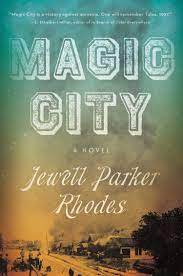
Like most Americans, novelist Jewell Parker Rhodes never learned about the 1921 Tulsa Race Massacre in school. It wasn’t until she was an adult that she read about the white-led mob violence that left hundreds dead and the historic Greenwood district in Tulsa destroyed. Parker Rhodes was particularly drawn to the story of Sarah Page, the young white elevator operator who refused to press charges against a teen shoe shiner named Dick Rowland after Rowland was falsely accused of assault.
That history would inspire Parker Rhodes to write her sophomore novel, Magic City, which was first released in 1997 and reissued earlier this year by HarperCollins. The FBomb recently had the opportunity to speak with Parker Rhodes about Magic City, forgotten histories, and the importance of finding the courage to speak out.
When did you first learn about the 1921 Tulsa Race Massacre?
It was in 1983. I was reading the Sunday paper and I saw it in Parade magazine. They had a headline that said ‘The only U.S. city bombed from the air,’ which I mention in the new afterward of the book. There were also photos that hit me in the gut — these photos of Greenwood being bombed and destroyed. I saw that and I thought, ‘What? How did this happen? How come I didn’t know about this history?’ I also began wondering about how Black folks got to Oklahoma and the story of that migration as well.
So I cut out the article and saved the clipping — I actually carried it across the country during two cross-country moves, and I still have it. I knew I wanted to write about Tulsa for my second novel, but I didn’t begin until several years later. But all along, I was collecting research, and in 1995, I actually went to Tulsa and met the historian Scott Ellsworth, who wrote the book Death in a Promised Land, one of the first major books about the Tulsa massacre. I was just spurred on from there.
How did you know you wanted to create a novel loosely based on Sarah Page and Dick Rowland (who are fictionalized here as Mary Keane and Joe Samuels) in particular? For those unfamiliar with the history, Dick was falsely accused of assault after historians say he tripped and fell in the elevator Sarah was in.
Yes, and Sarah Page actually did not testify against Dick Rowland. She refused because she said nothing had happened. She was a woman standing up and saying, ‘This is not right.’ She also made me think that there must have been more women who said, ‘No. You are not going to use me as an excuse to assault men of color.’ For me, Sarah Page, or Mary, was my sister. The story of Joe and Dick Rowland was the story of my uncles. They didn’t have a world big enough to fulfill their dreams because of racism.
In 1997, when Magic City was first published, there really wasn’t much widespread awareness of what had happened in Tulsa. How did you research this novel?
A lot of it was done through books, online, and through visiting the city. But yes, before then, I did not know that Greenwood was called Negro Wall Street, which is emblematic of how successful they were in terms of entrepreneurship. I think they had two movie theaters, and the neighborhood was home to many lawyers, doctors, and their own hospital.
I also loved learning about the World War I veterans, who had just come home from war, and who were leaders in the community. They were denied justice at home, yet nonetheless signed up to fight on America’s behalf. I really felt that learning about these things deepened my humanity and that this book was pivotal to me as an artist.
2021 was the centennial of the Tulsa Race Massacre, and a common theme in the coverage of the event has been that many people are sad and upset that they did not know about this history. What do you want readers to take away from this history and books like yours?
All stories deserve to be told and shared across time, but there’s this idea that certain stories get privileged in our history, and I think that limits us in addressing all kinds of social ills and limits us in making progress. Most people will tell you that Tulsa has come a very, very long way since 1921, but the seeds of segregation and the harm that it caused still exist. So we need to have the courage to talk about other stories and to talk about even the painful subjects.
More articles by Category: Arts and culture
More articles by Tag: Books, Racism, Race


